D 30-31 3 Days in Moorea, Society Islands
Lying 17 km from Tahiti, Moorea has an area of 134 sq km and a population of less than 20,000. Formed as a shield volcano 1.5 to 2.5 million years ago, the island is an atoll today with Mt Tohivea (1,207m) as its highest point. All the adjacent peaks of Mouaroa and Mouaputa are remnant of the eroded crater rim of an extinct shield volcano. The two large bays, Opunohu Bay and Cook’s Bay, are separated by Mount Rotui.
Known for its jagged and dramatic volcanic mountains, the island was first sighted by Pedro Fernandes de Queiros in 1606; and Samuel Wallis and James Cook were the first Europeans to arrive on the island. Cook arrived on the island in October 1777 to obtained supplies and first landed in Opunohu Bay (where many exterior shots of the 1984 movie The Bounty were filmed. Cook’s Bay was later named after him in his honour.
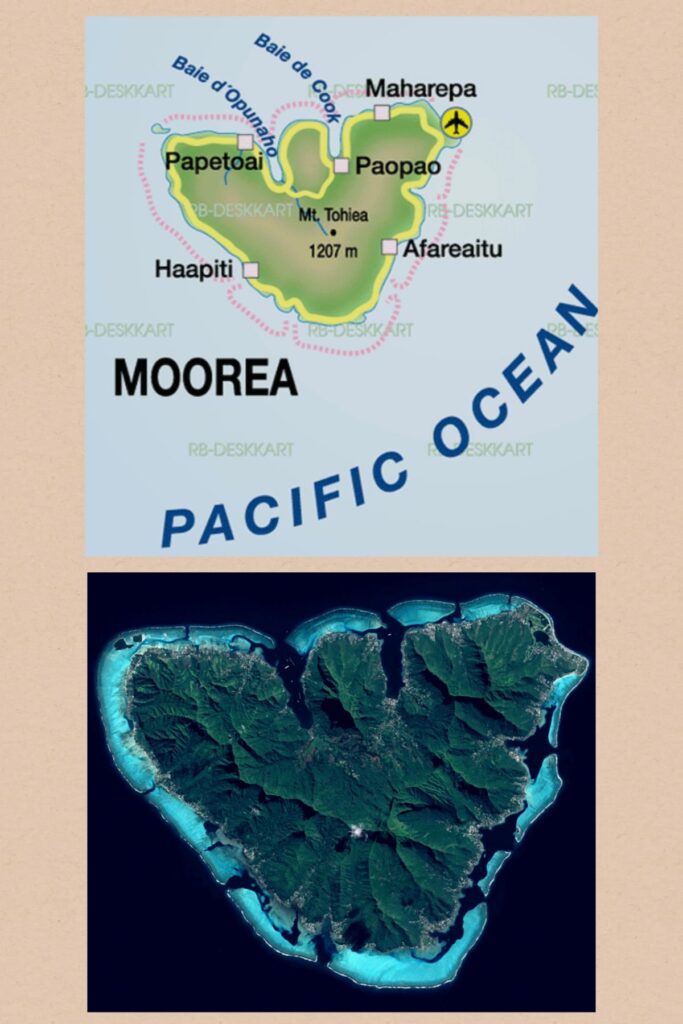
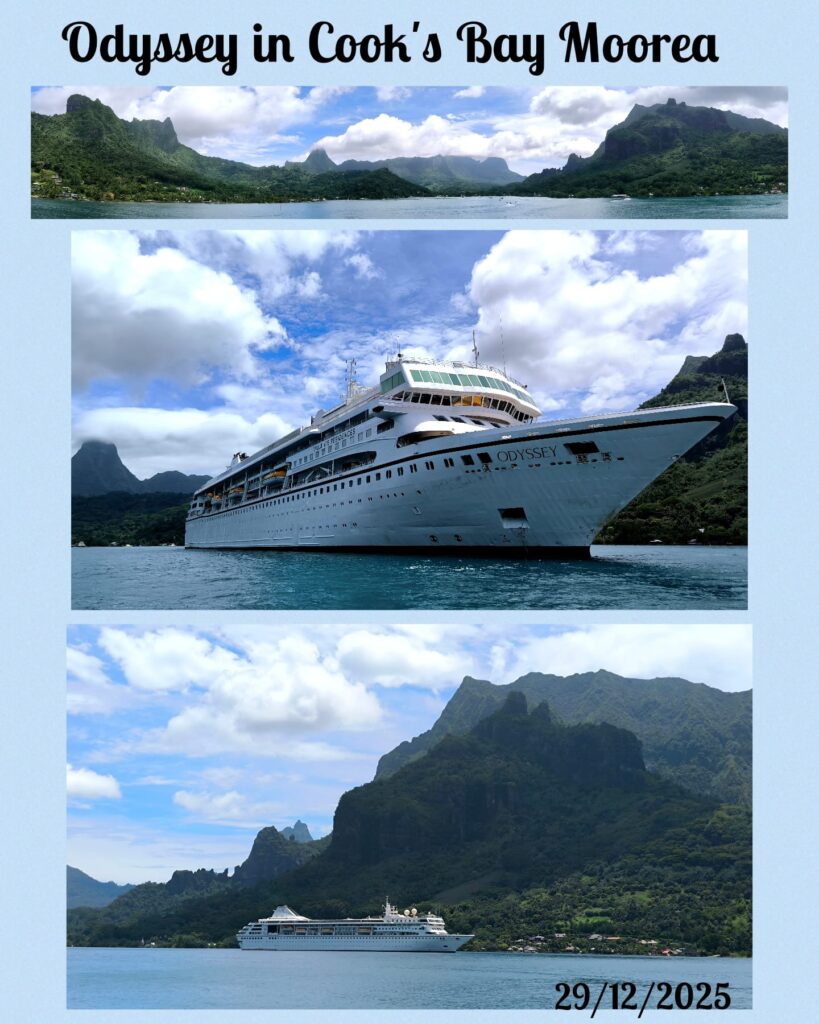
Dec 27 Odyssey anchored in Cook’s Bay in early morning. I went ashore without any booked tour. At the car park, I met a young driver/guide from Safari Tropical Tours who offered a 4×4 tour for about 4 hours for 50 USD for a group of six. With good luck, I met five passengers who would like to join. In addition, we asked him to drop us off in a beach after the tour and pick us up at 2:30pm. We began the our exploration at Magic Mountain which offers incredible views of the lagoon, Cook’s Bay and Opunohu Bay. We were by ourselves without other tourists. Wonderful!
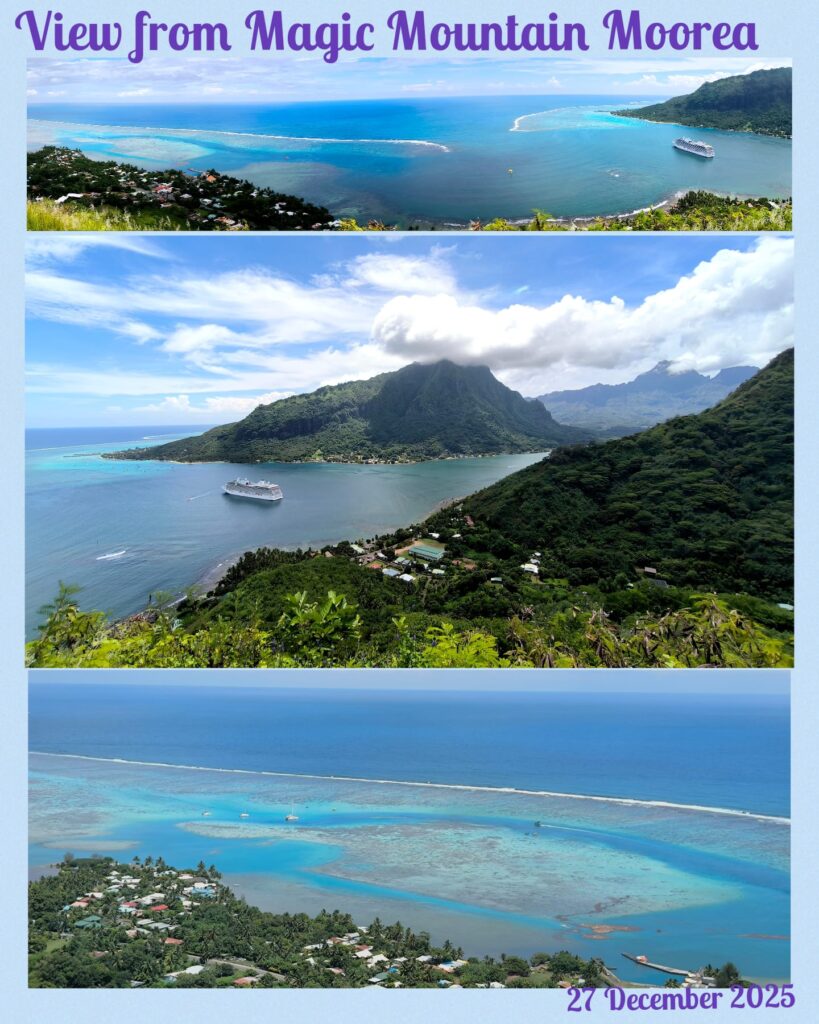
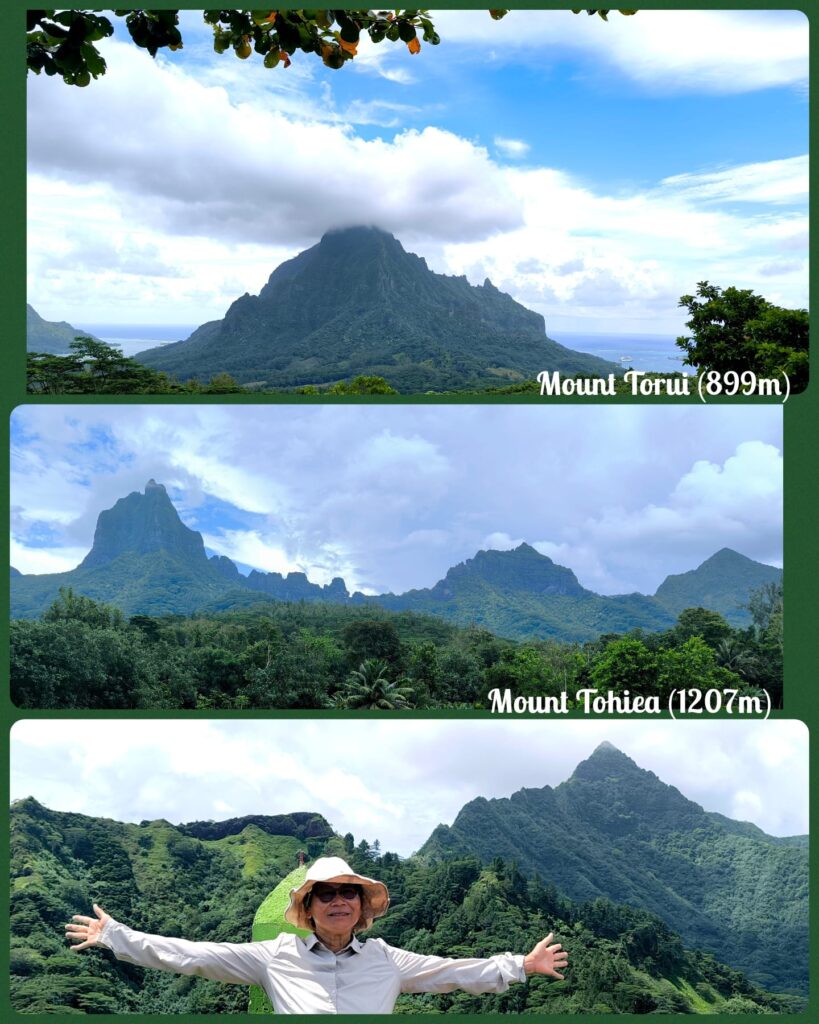
We tasted jams and fruits (pineapple, mango,and papaya) in a stand below Magic Mountain. I also had a delicious magic smoothie with coconut ice cream (8 USD). Then we drove through the crater valley which rich soil is excellent for growing pineapples. Our guide took us to a pineapple plantation and explained how to grow pineapple.
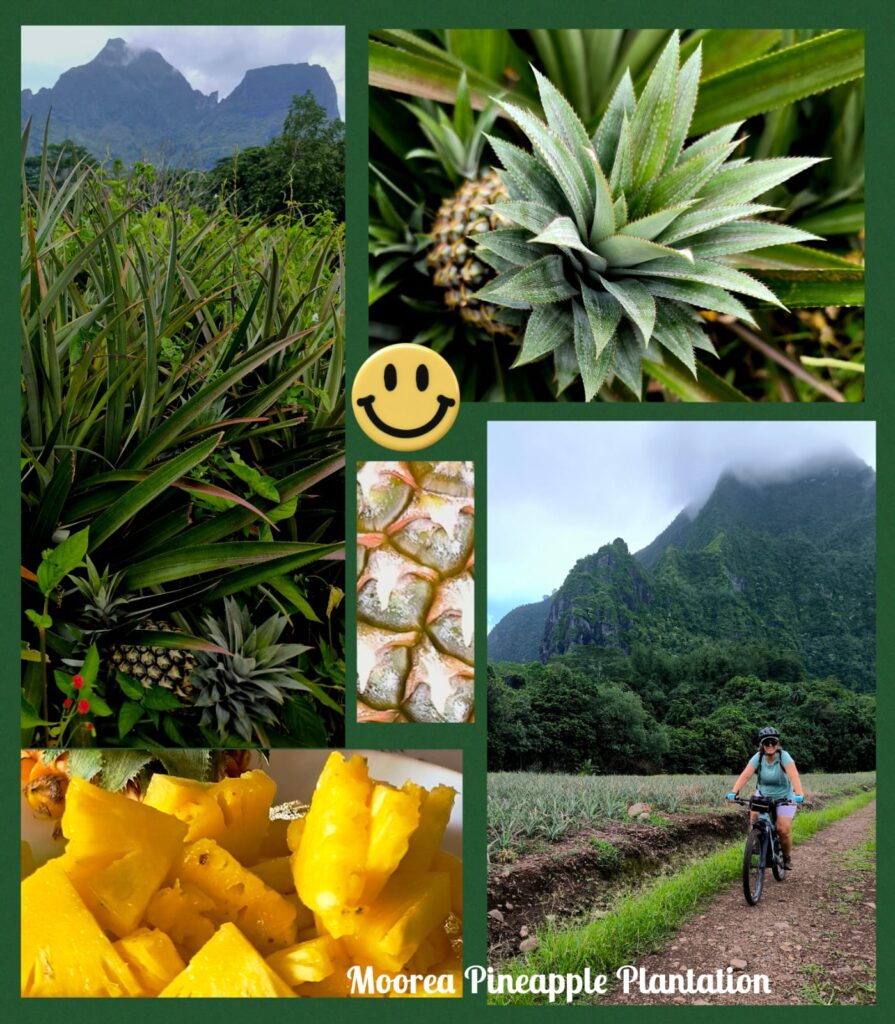
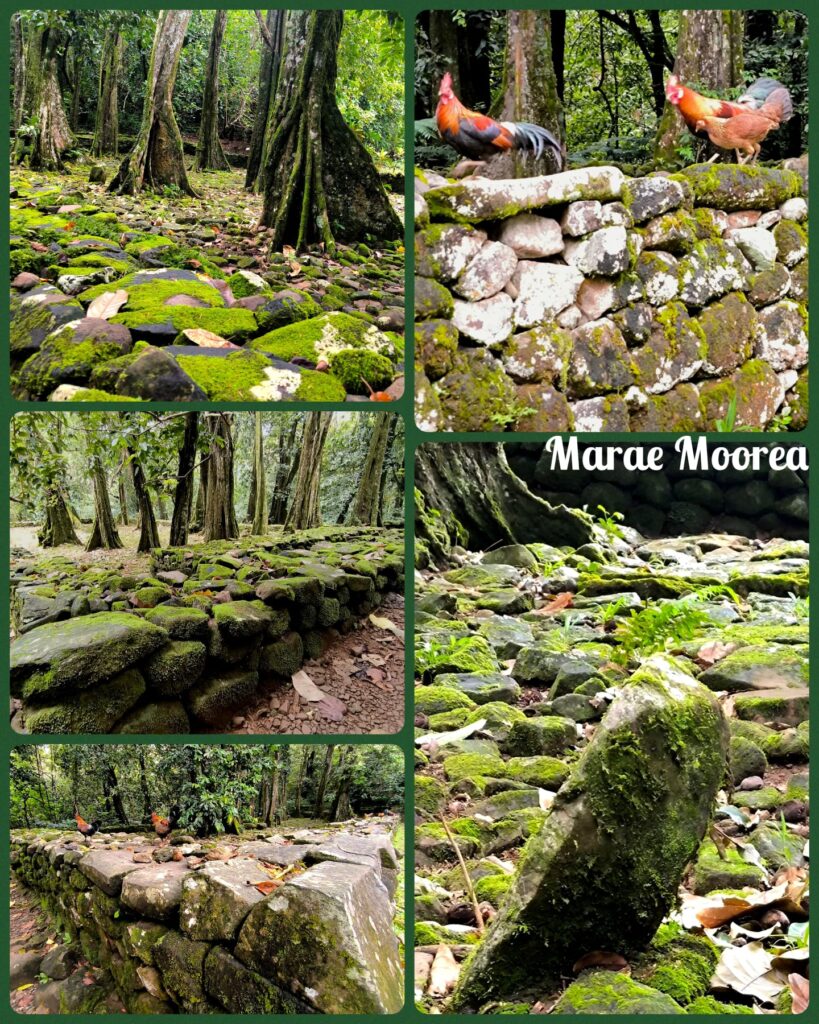
Our third stop was the Belvedere for views of the two bays, Mout Rotui and surrounding mountain ranges. Unfortunately, there were too many people. We did not stay long. The next stop was a marae in the forest. I found the place spiritual and atmospheric. The stones of the platform are covered with moss. The trees in the middle of the platform are old. Some roosters on the stone platform further added colours and life. Our final stop was Moorea distillery where we sampled half a dozen of cocktails, coco liquor and gin. I ended up buying a Coco aperitif (24 USD) as a gift for my niece.
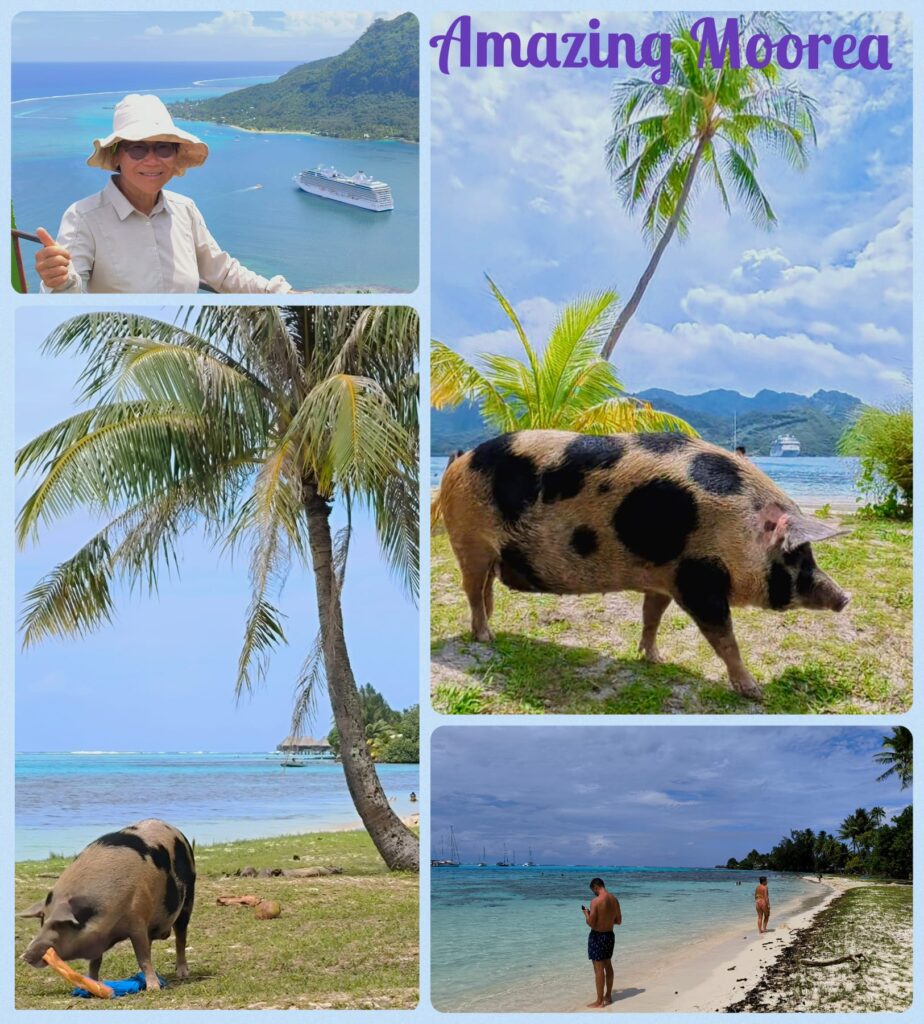
Around 1 pm, we arrived at the popular Ta’ahiamanu Beach in the Opunohu Bay. A fat pig arrived entertaining swimmers on the beach: I watched it stealing French bread from a plastic bag from a family close to me. It went into the water to cool down before looking for more to eat! I enjoyed the nice clear warm water and beautiful scenery. We were driven back to the pier at 2:30pm. A good and relaxing day! Our driver also suggested us join a Polynesian Festival in an island on Sunday (This event is held once a month). He put Angela in touch with the organiser. We eventually had some 15 passengers signing up and paid 70 USD pp.
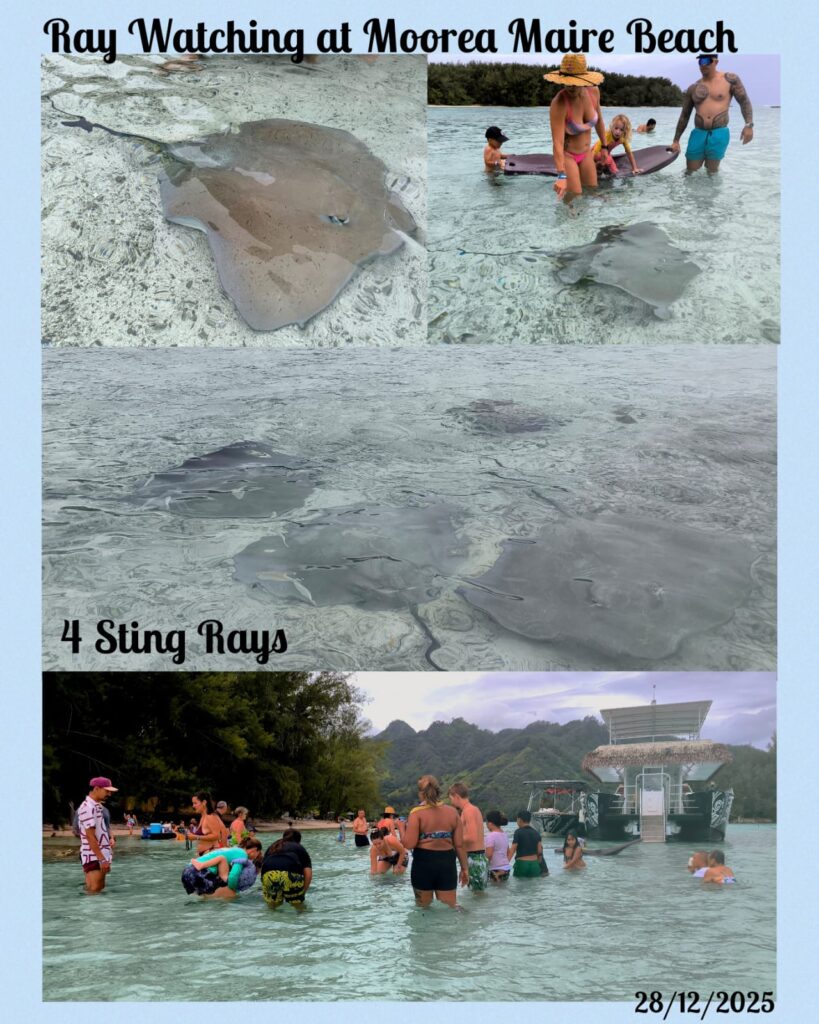
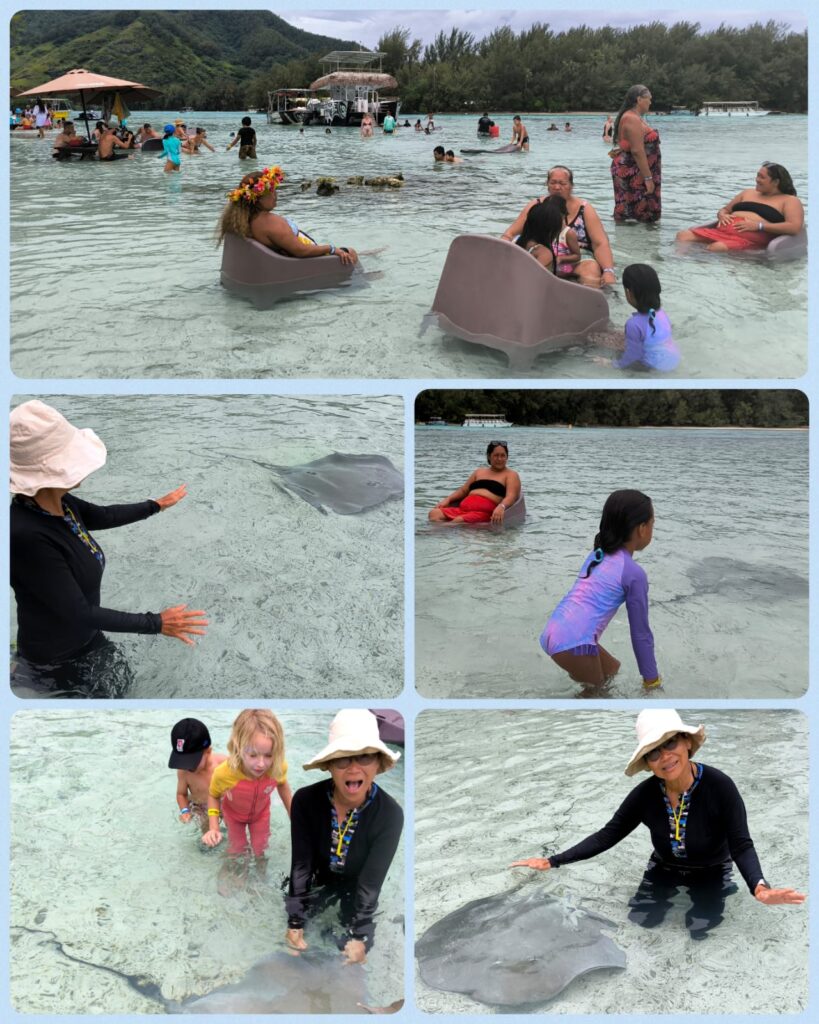
Dec 28 We were picked up by a bus after 8:30am and dropped off at a pier opposite Motu Fareone. A boat took us to Motu Tiahura where we stayed till 2:30pm. Some 150 people mostly locals, turned up at this festival. There was live music. The beach is well-protected without strong current and the water was shallow. I could see coral and fish standing in the sandy bottom by putting my head in the water. The coral garden is not too impressive: too many people have stepped on and damaged the coral. But I was lucky to see a sting ray swimming past me!
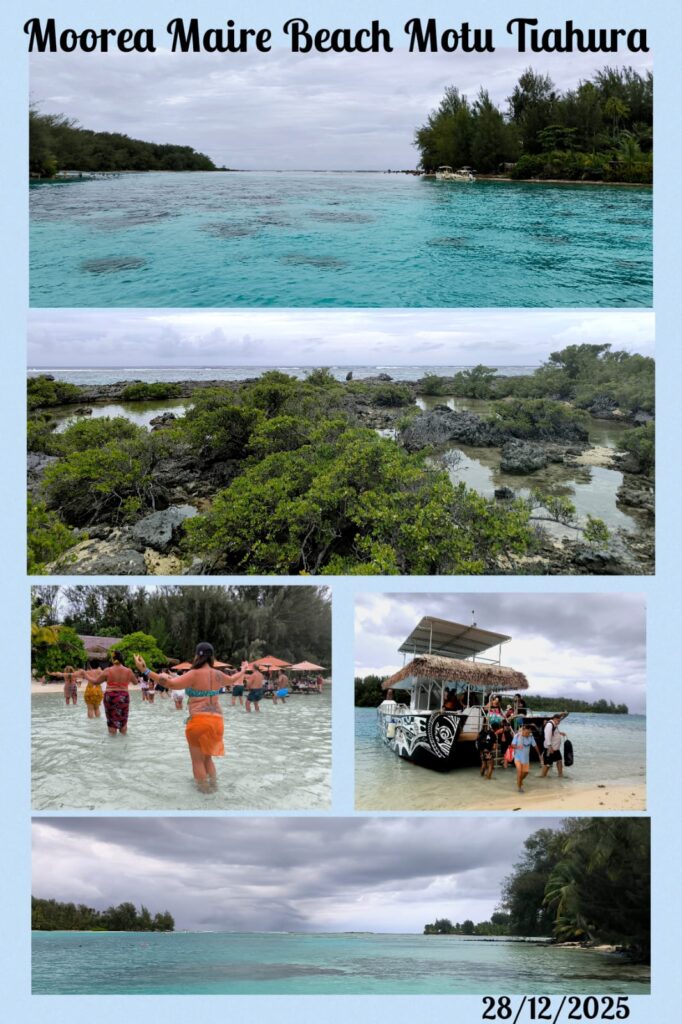
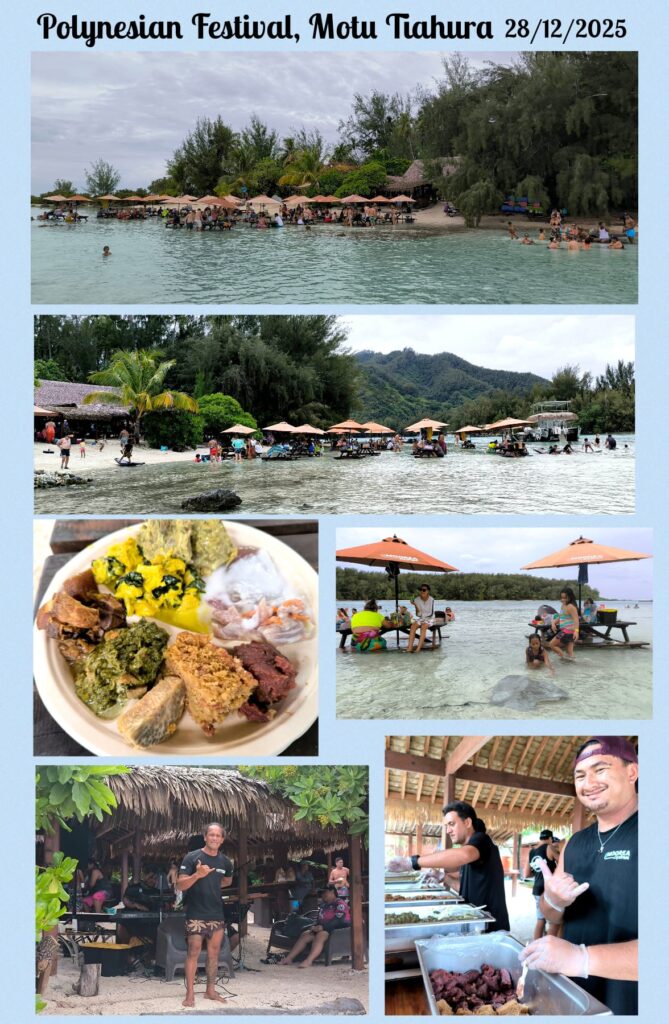
I spent most of my time enjoying the atmosphere watching locals having fun on the beach. At 11:30 am, we had buffer lunch with authentic and delicious Polynesian food (chicken with spinach, goat, pork, clam, raw tuna in coconut milk and garlic, cerviche etc). Soon, we saw plenty of terns hoovering above us: they were looking for food too! Then four sting rays arrived and were around when we left. There were also sharks around! On the way back, a group of locals were singing: they were all so cheerful with smiling faces. When we were back in the pier around 3:30pm, it started to rain heavily. We were indeed very lucky with the weather today.
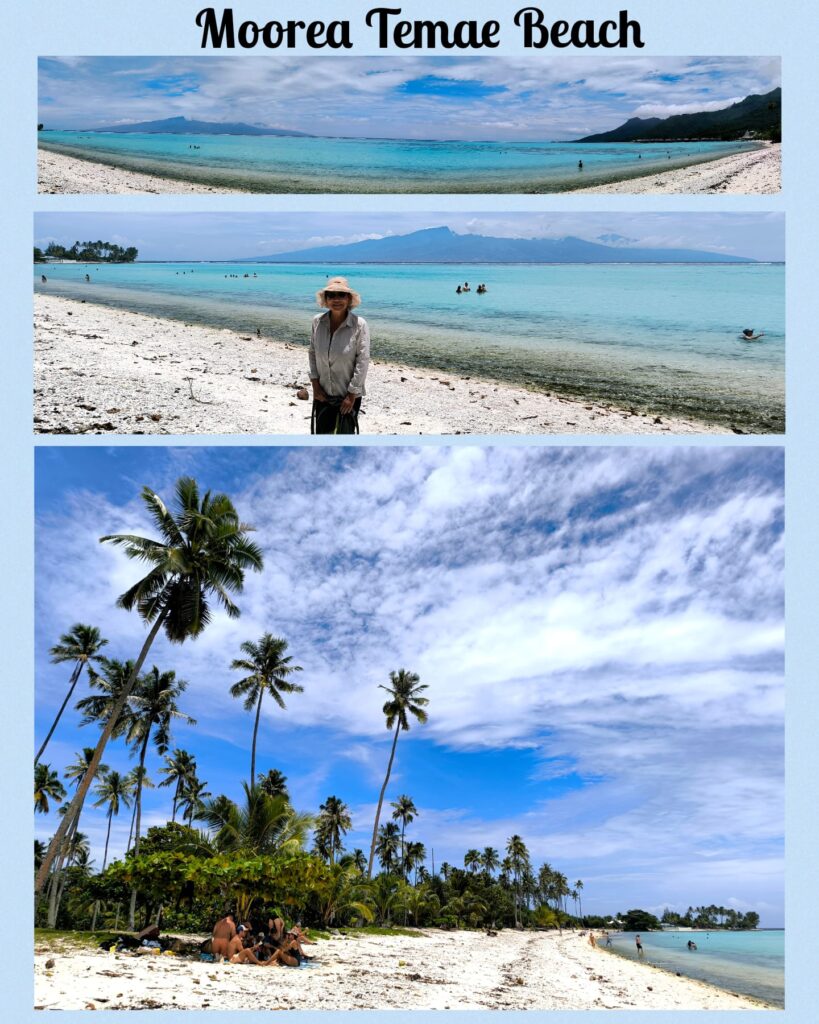
Dec 29 I joined Ilana to snorkel in the Temae Beach. It is a beautiful beach with full view of Tahiti. The coral garden with plenty of fish is fairly good. I shared a taxi with six other passengers and we only paid 10 USD each for the ride. We spent three hours on the beach and were back on the ship for lunch. I must be tired and fell asleep for two hours after lunch! A wonderful and relaxing day. Odyssey set sail at 6pm for Tahiti.
D32-34 3 Days in Tahiti, Society Islands
With an area of 1,044 sq km and a population of over 200,000, Tahiti is the largest island of and the most populous island in French Polynesia. It is the economic, cultural and political centre of French Polynesia with Papeete as its capital. The island is mountainous with surrounding coral reefs. Connected by a short isthmus of Taravao, the island was formed from volcanic activity in two overlapping parts, namely Tahiti Nui (bigger, northwestern part) and Tahiti Iti (smaller, southeastern part). Tahiti Nui is dominated by three extinct volcanic mountains namely Mount Orohena (2241m), the tallest in French Polynesia, Mount Aorai and Le Diademe (the rightful queen). Mount Roonui is the highest peak in Tahiti Iti.
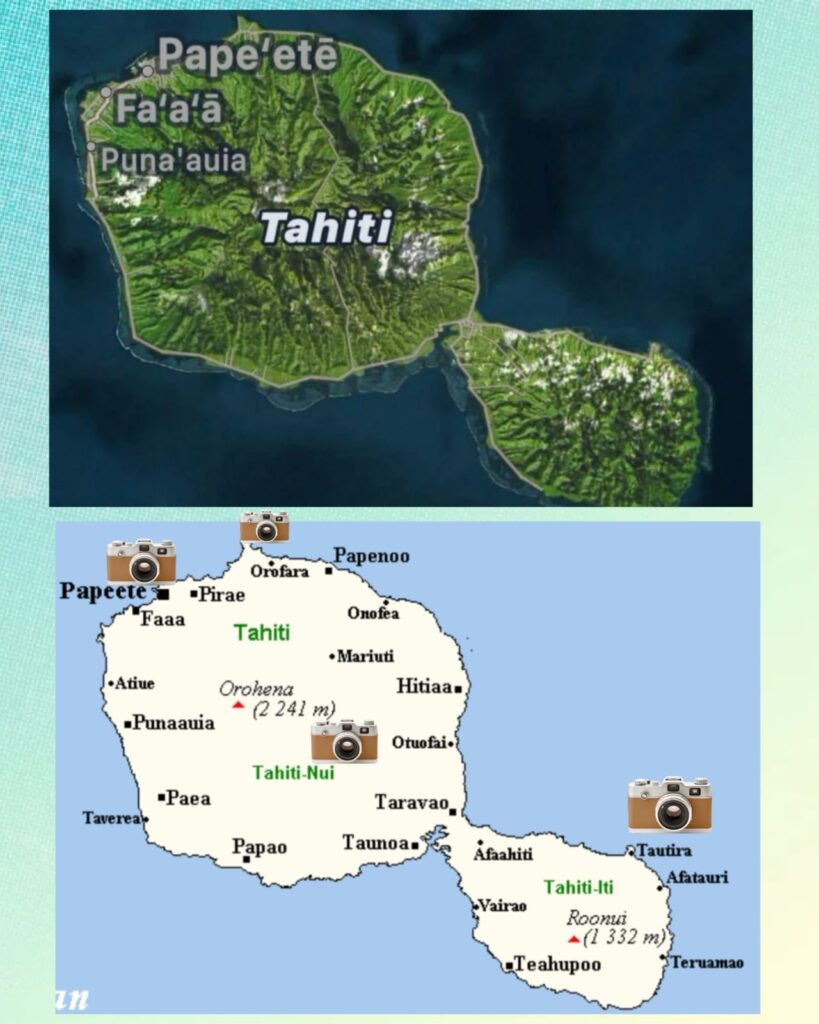
Before the arrival of the Europeans in the 17th century, the island was divided into territories with each dominated by a single clan. Among the European explorers, the most famous one was Captain James Cook who arrived in Tahiti’s Matavai Bay in April 1769 on a scientific mission associated with astronomy, botany and artistic details. He observed the passage of Venus at the present day Point Venus. Cook returned to Tahiti in 1773 and 1777. The island was part of the Kingdom of Tahiti until its annexation by France in 1880. Today, the indigenous Tahitians are of Polynesian ancestry making up 70% of the population. The remaining 30% are Europeans, East Asians (mostly Chinese), and people of mixed heritage.
Dec 30 By 7 am, Odyssey was moored along side a modern cruise terminal in Papeete. I was in Tahiti in 1999 after my first visit to Antarctic. I cannot no longer recognise Papeete which is now a metropolis of South Pacific. Today, I joined a Tahiti by 4WD tour for eight passengers arranged by Janette (80 USD pp). We were lucky to have a funny and experienced driver cum guide, Hotu. The weather was changeable and we had rain and sunshine!
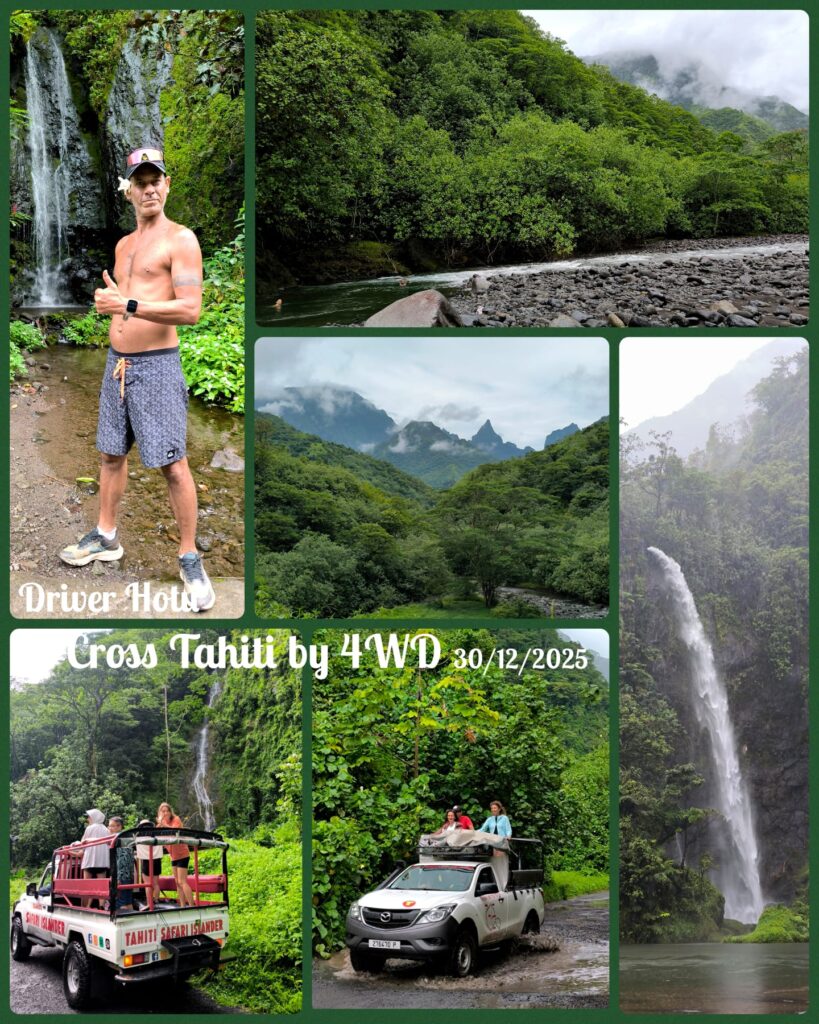
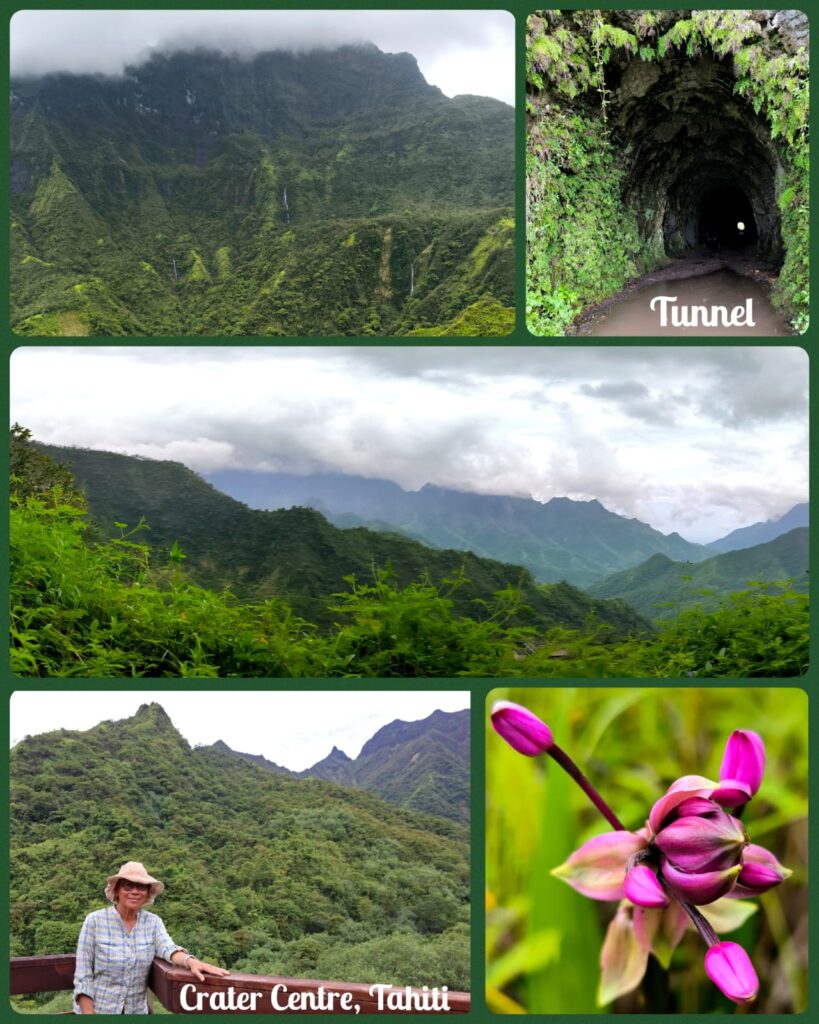
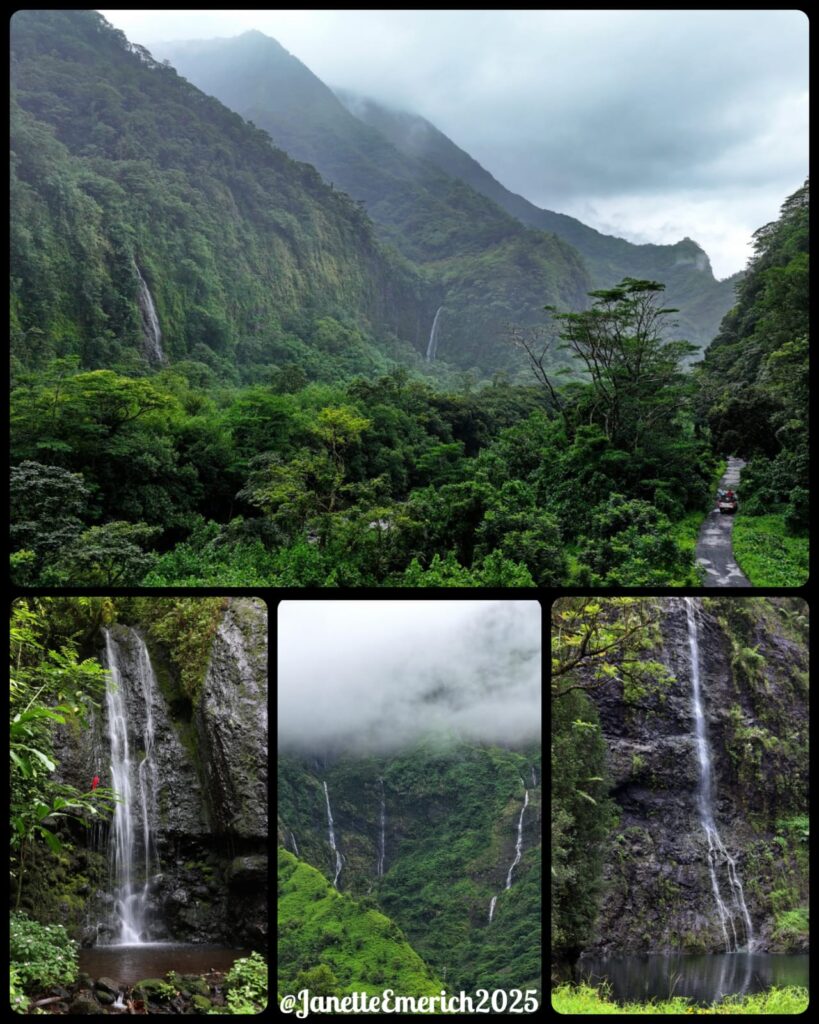
We followed the coastal main road to Paperoo where we tool the interior route through the Papenoo’s valley. This mountainous interior road was built in 1992. It is a most exciting and beautiful drive with lush green rain forests, dramatic towering peaks, ravines, rivers, countless waterfalls, the Blue Lake and some ancient Polynesian sites. The road conditions especially after heavy rain are challenging: the road at certain sections, is narrow, bumpy, and very steep. We were lucky to have Hotu who is an excellent driver.
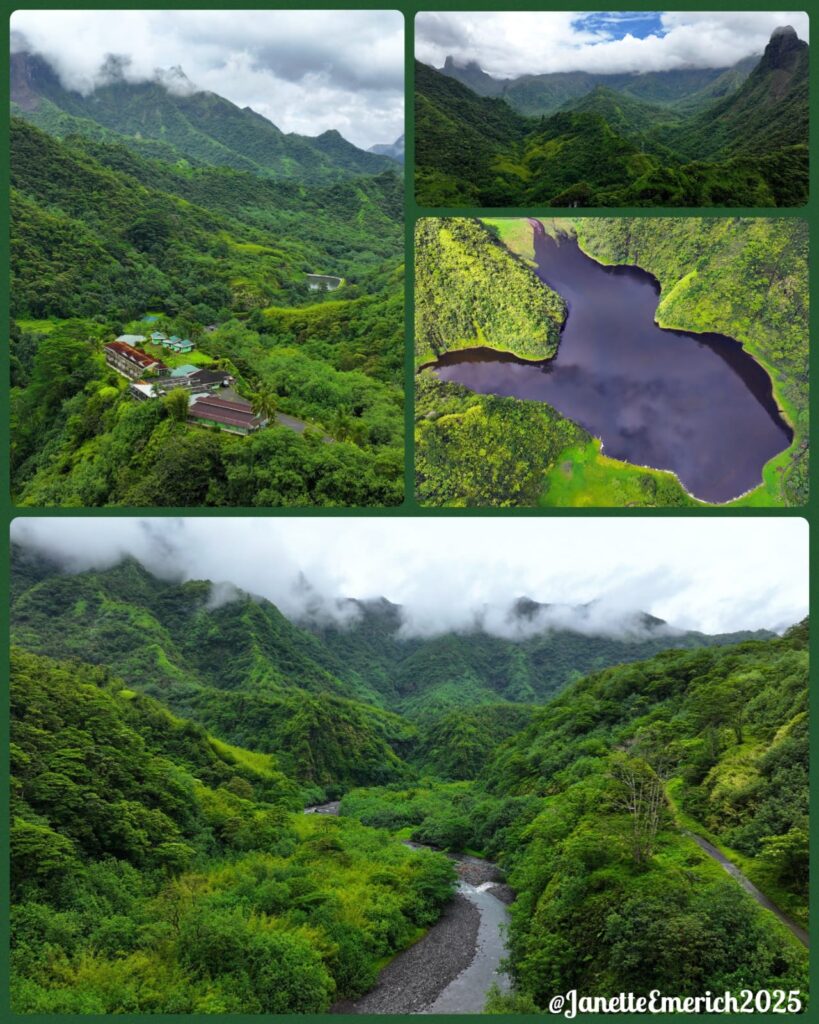
We had lunch at Relais de la Maroto. According to Hotu, this location is the centre of the crater. We had incredible 360 degree views of the three mountains and the Marae Fare Hape. At 1 pm, we continued our uphill drive to reach 800m before entering a 100-m tunnel to begin our descent to Blue Lake. The road condition is worse than the early part. Anyway, we arrived safely at the other side of the island at Mataiea. We had an uneventful drive along the circular road back to Papeete. The tour ended around 4:30pm. It was the best excursion I had since joining the ship on 29 November.
Dec 31 A Day of Joy and Gratitude . It was New Year Eve. I decided to travel around the island on public buses. I left the boat just before 8:30am and went to the visitors’ bureau to pick up a map and for advice. I was told to catch the 9 am Bus 30 near the cruise terminal. I bought a ticket for 200 CFP (2 USD) for two hours’ ride on the island. The bus travelled westward meaning I travelled on the same road between Mataiea and Papeete. I was able to look at the streetscape and countryside more closely. It was a long drive and I did not get off the bus at the Taravao bus terminal after 10:30 am. I would take another bus to Tautira on the eastern coast of Tahiti Iti. Unfortunately Bus 23 had just left and the next bus was at 11:30am. No problem. I went to a large super stall next to the terminal. It had everything though the food stuff, clothing etc were generally more expensive.
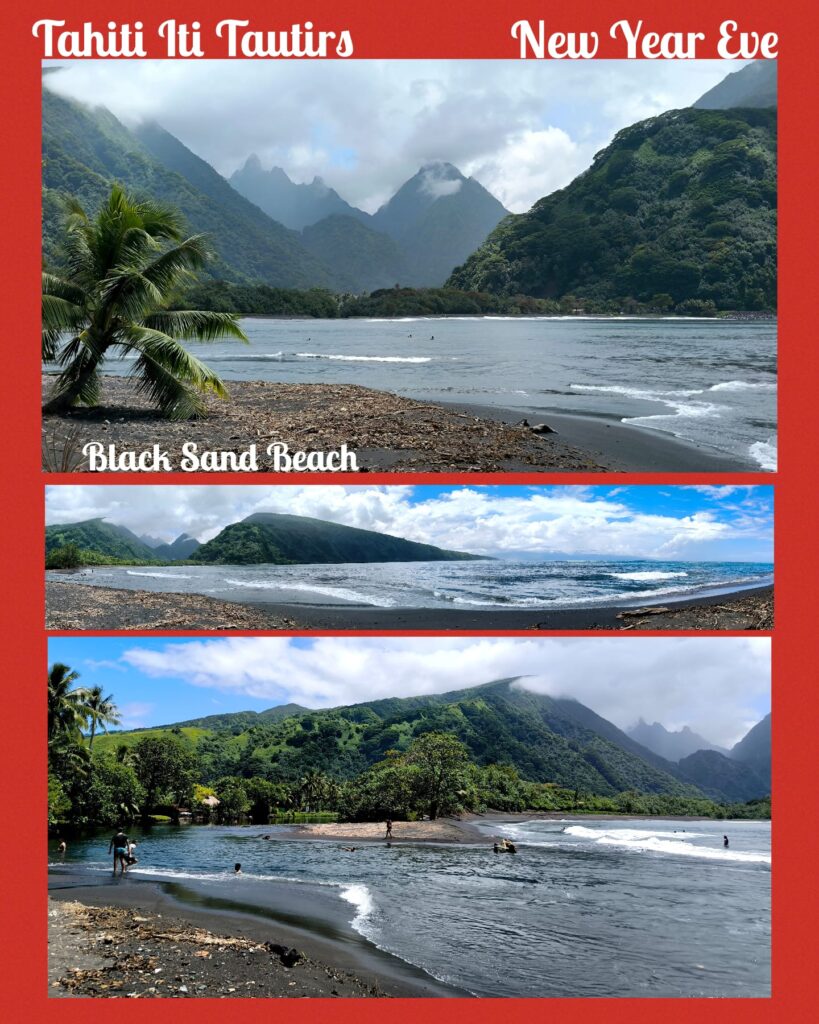
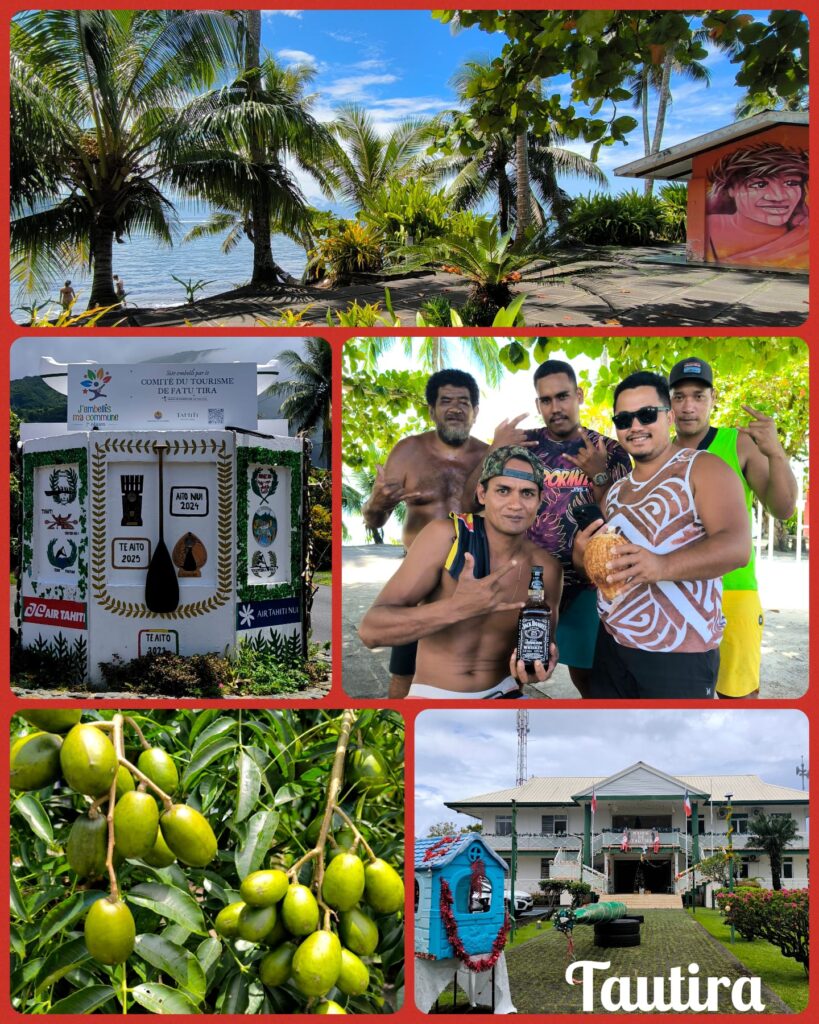
The driver of Bus 23 did not ask me to get another ticket knowing I had missed the earlier bus. I had a nice 40-minute ride to Tautira located at the end of the circular road. It is a village with about 2,000 residents. I had a nice conversation in French on the bus with a local lady sitting next to me. She told me the Tahitians love their place, culture and the easy way of life. Tahiti is safe with low crime rate. I spent an hour exploring the village, the town hall of Tautira, a picturesque stone church and the black sand beach. The employees of the town hall who had just had a party, invited me to have food and a drink. On my way to the church, I was scared by a dozen of dogs howling at me. Then a lady in a car driving next to me to scare the dogs away. When I reached the end of the path, I saw her car again: she was waiting for me to make sure I was safe! When I was at the beach, I met five local Tahitian guys. One gave me a coconut so that I could have fresh coconut juice. Another man treated me with a fresh mango from his garden. They made sure I got on the 1:15 pm bus to return to Taravao.
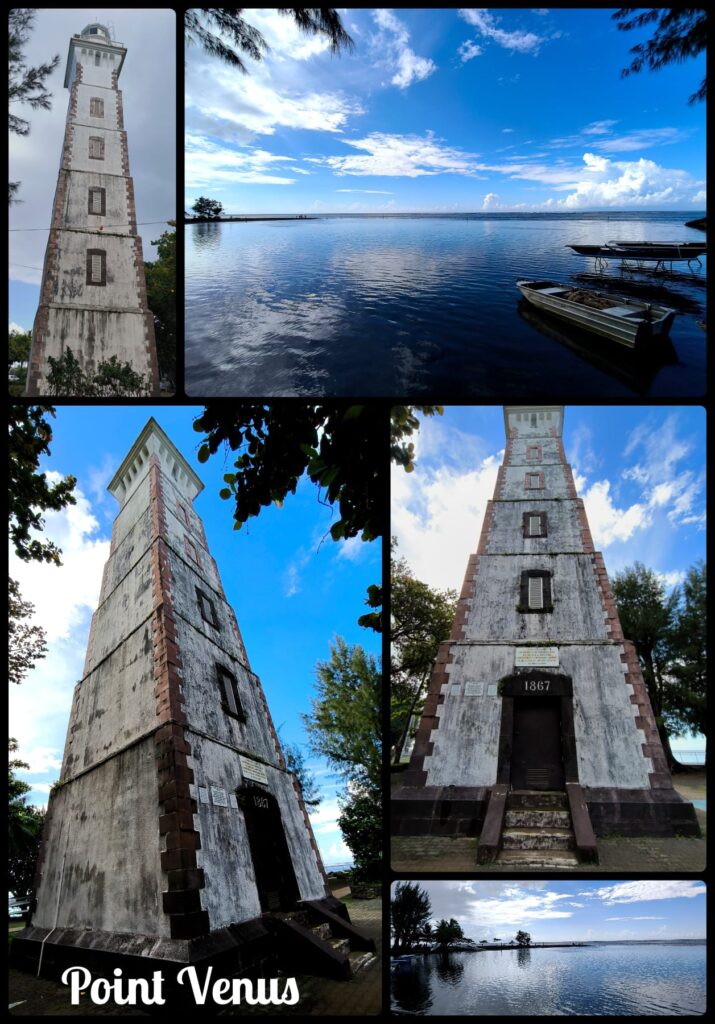
I took Bus 31 at 3 pm to return to Papeete and told the driver I wanted to visit Point Venus. She stopped at Mahina and told me to get off around 4:10pm. I had to walk as there was no bus. Point Venus is the historic point where Captain Cook observed the passage of Venus in 1769. It started to rain. I knew I would miss Bus 31 that would arrive after 4 pm. So, I decided to hitchhike: a Tahitian lady with her husband gave me a lift to the main road. But Bus 31 which arrived around 4:15pm, did not stop. I was anxious as I did not want to wait for another hour. It started to rain more heavily. I had no alternative but to hitchhike again. With good luck, a car stopped around 4:30pm: the lady said I looked like her friend and she wanted to help me. We had torrential rain all the way to Papeete and I was totally wet by the time I got back to Odyssey around 5pm.
We had New Year Eve dinner in the Thistle Restaurant. While others joined a party at the Coral Club after dinner, I had a lap and got up just in time to join the party to celebrate the arrival of 2026. Then I had my last joyful moment of 2025 when an officer gave me a cute ceramic turtle as a present. He said I was so happy when he pointed out a turtle to me at the Goat’s Island in Pago Pago. He felt he had bought me joy and my smile also made him very happy. He was so sweet! My last day of 2025 was indeed filled with warmth, human touch and surprises! We had champagne and watched fireworks from the ship.
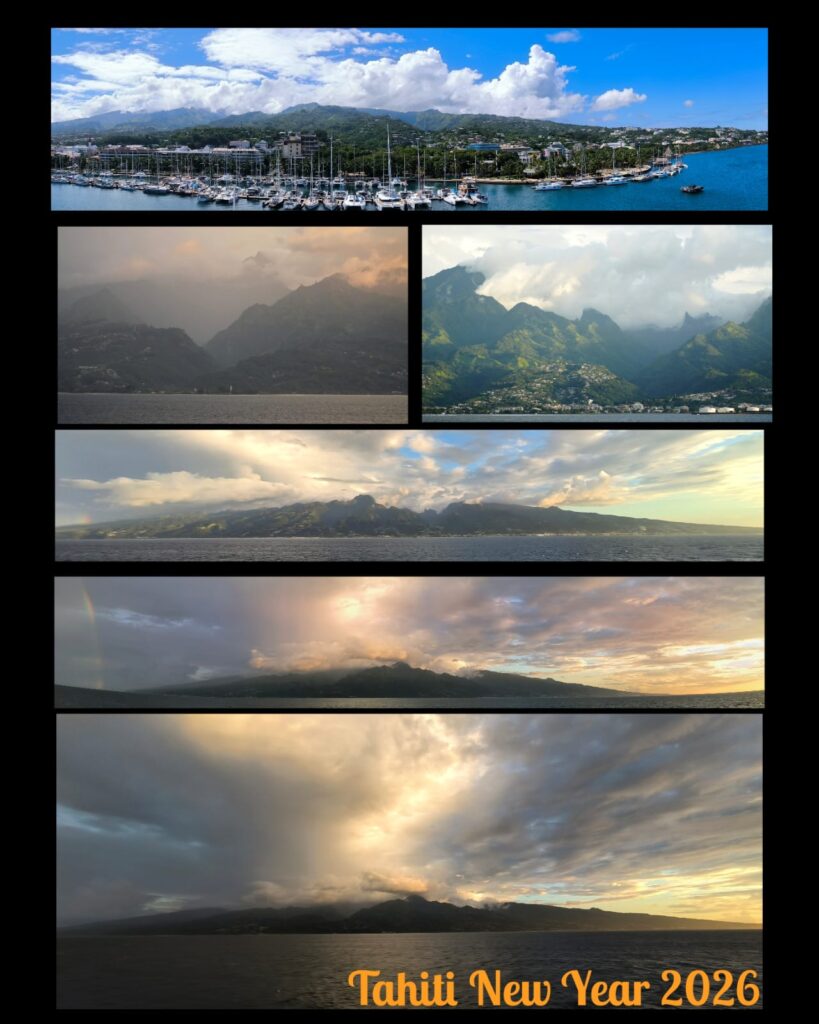
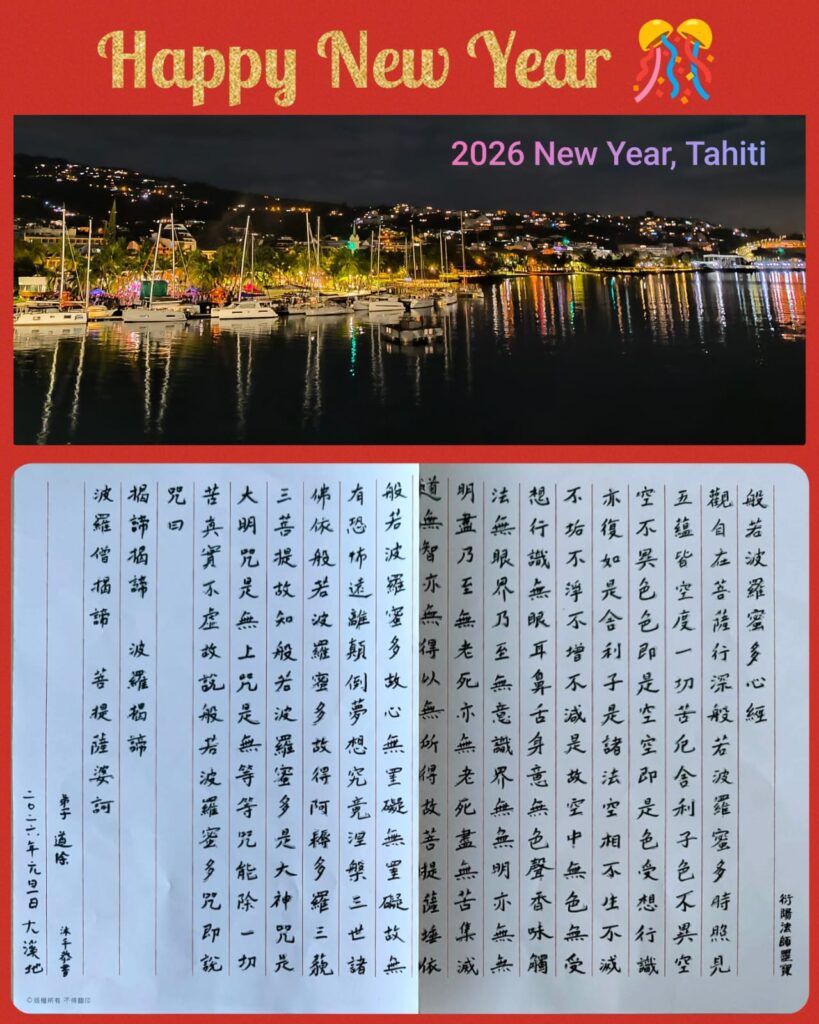
Jan 1 2026 Happy New Year. I decided to have a day for practice. I began with copying the Heart Sutra. Then I recited two other short sutras relating to Avalokiteshvara and Bhaisajyaguru (Medicine Buddha). I hope they would bring peace to the world and help all those who are suffering. I spent the whole day in retreat in my cabin. At 6pm, the ship set sailed to our next destination Fakarava.
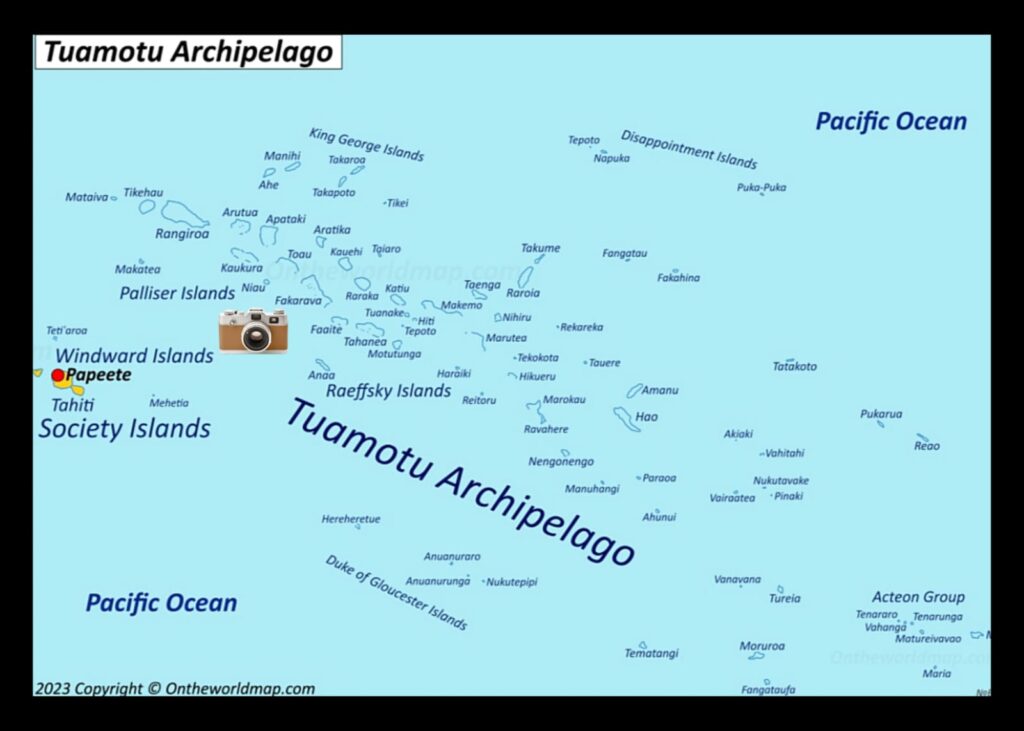
D35-36 2 Days in Fakarava, Tuamotu Archipelago
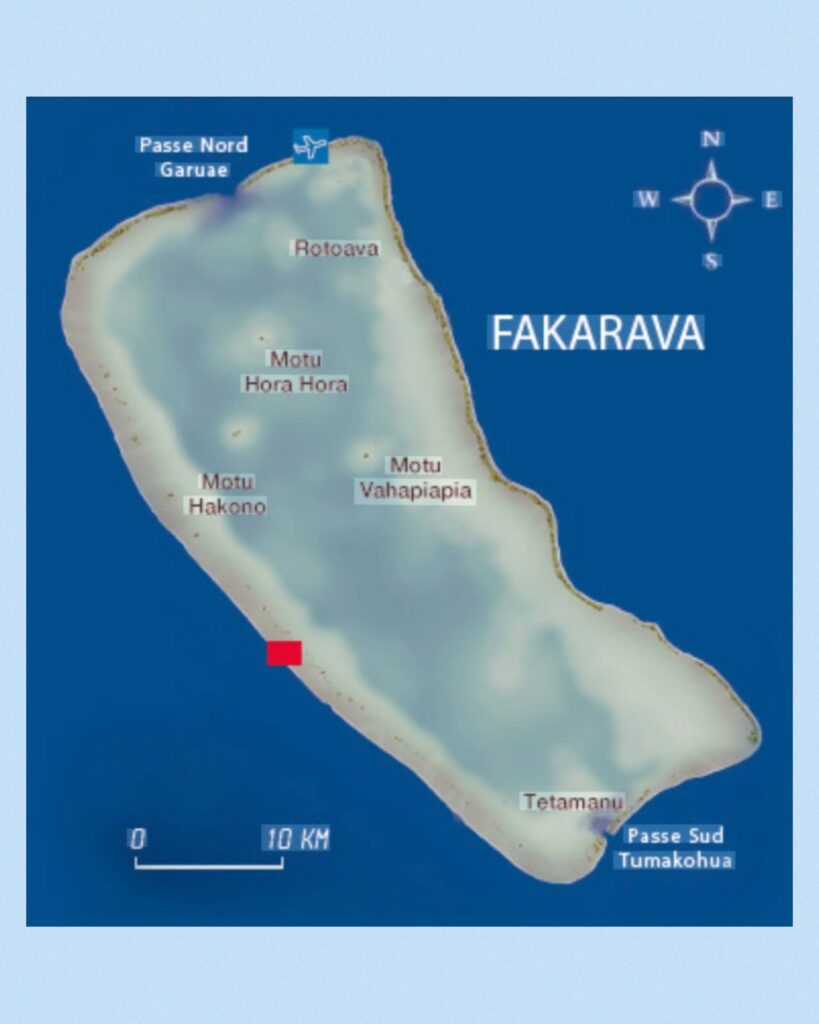
Located 450km northeast of Tahiti, Fakarava is the second largest atoll in the west of the Tuamotu group in French Polynesia.The land area is 24 sq km with a population of less than 1,000, while the area of the lagoon is 1,112 sq km. The atoll is roughly rectangular measuring 60km long and 25 wide. Rotoava is the main village. The Pomare Dynasty originated here before ruling the island of Tahiti. The island was first mentioned by Russian navigator Bellingshausen in 1820. French navigator Jules Dumont d’Urville arrived in 1838. Fakarava became a French territory in the late 19th century. It has some of the most pristine and undisturbed coral reef ecosystems in the world and the area is very rich in marine fauna, with rays, manta rays, barracudas, groupers, turtles and dolphins. As a result, Fakarava became part of the UNESCO Biosphere Reserve in 1977.
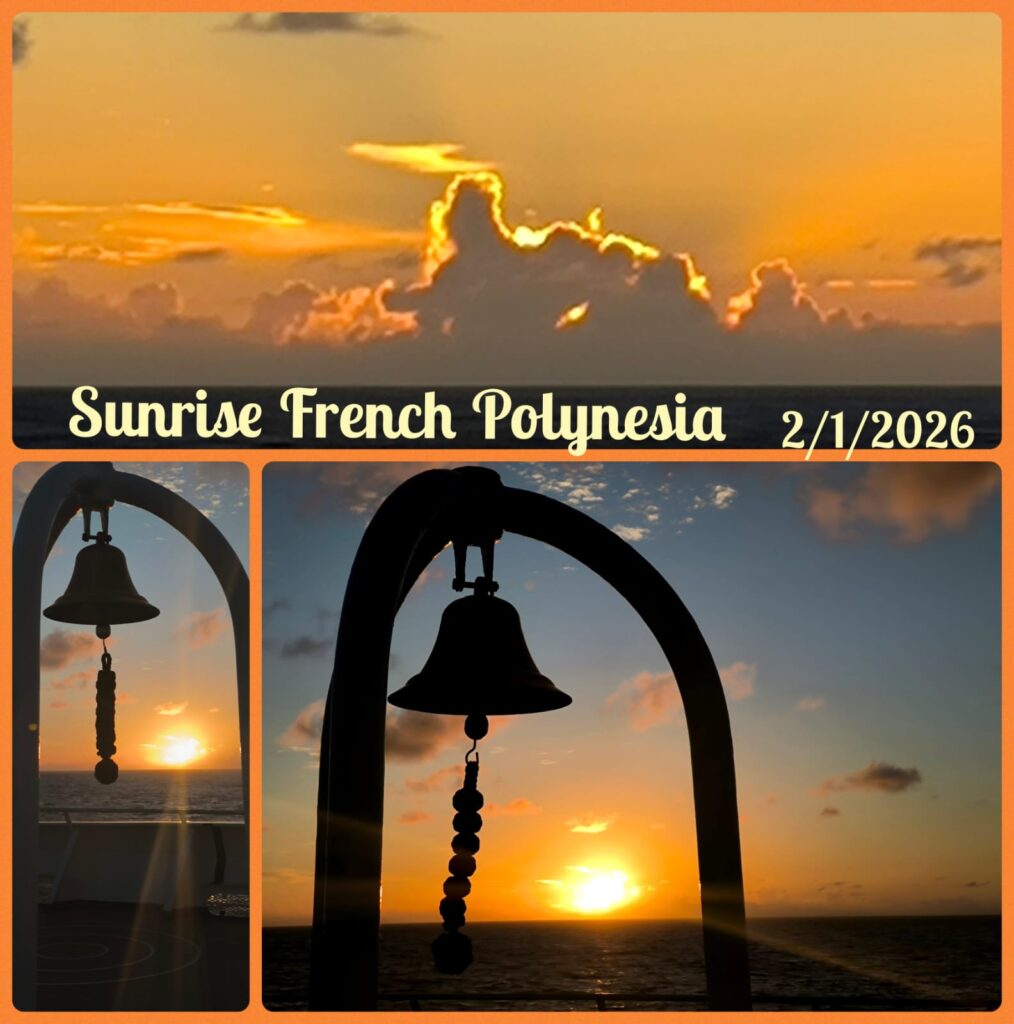
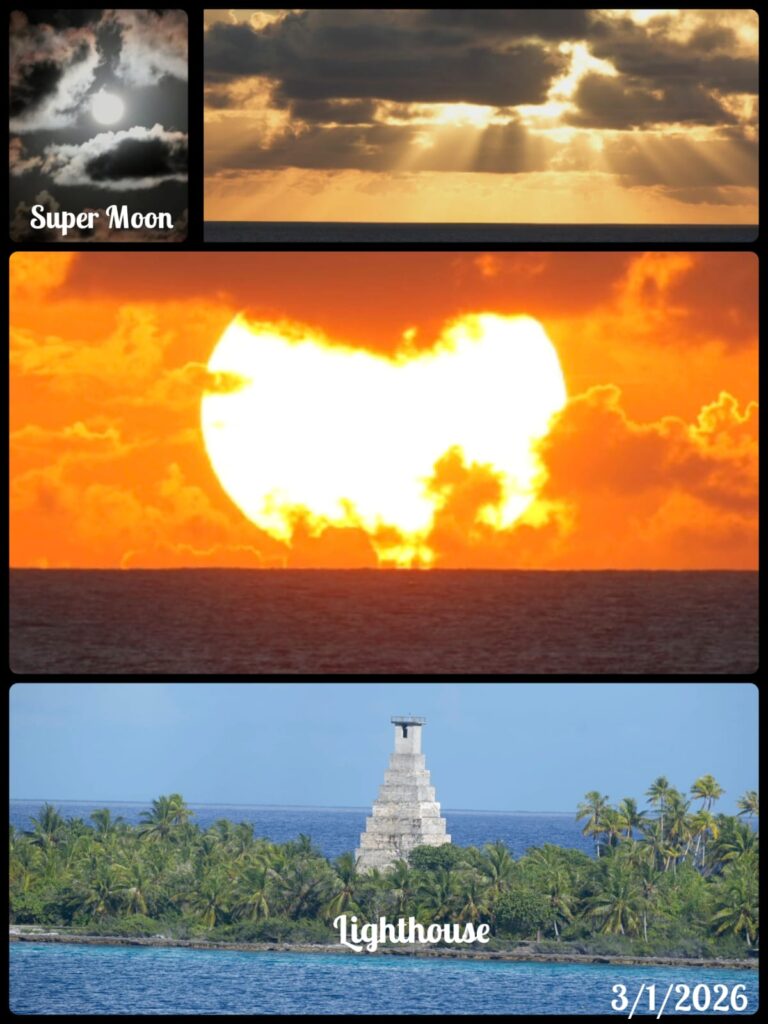
Jan 2 Inspired by Amanda who told me her family would always watch sunrise on New Year Day, I decided to get up to watch my first sunrise in 2026. I sat the alarm at 5 am and watched a beautiful sunrise around 5:20am. Then I meditated till 6 am. I was tired and went to sleep till 9 am!
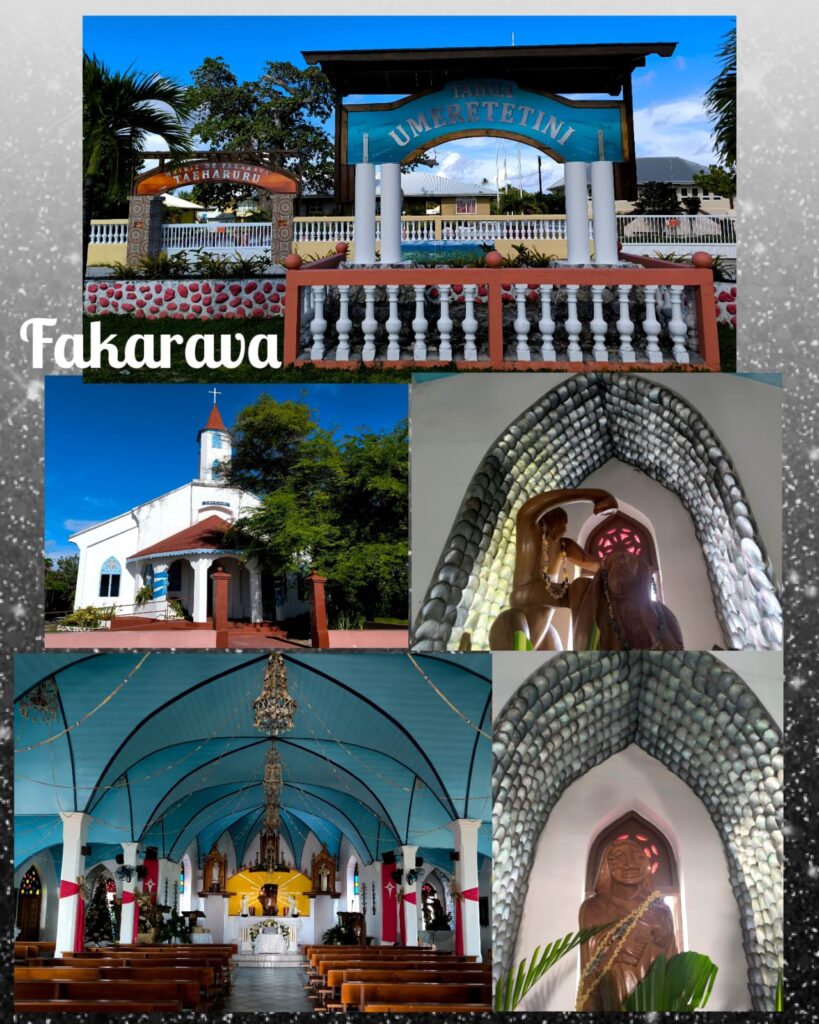
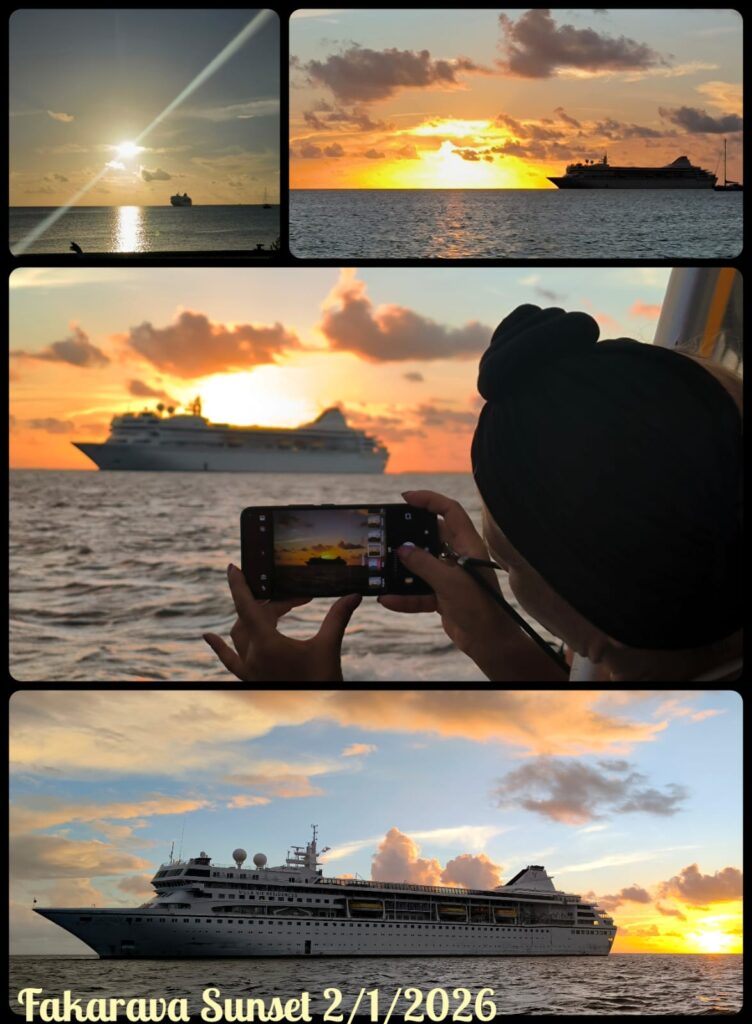
Odyssey anchored off Rotoava around noon. I had not booked any tour and hoped to find a tour to take me around the island. The only thing I saw was a 1.5 hour tour for 40 USD pp. With a hip problem, I can’t walk long distance or ride a bike or e-bike. With nothing to do, I walked aimlessly along the main road passing the Church of Saint John of the Cross and a few small bays. There is a beach close to some lodges for snorkelling with sharks and fish. But it would be too far for me to walk, I gave up and returned to the ship. I ran into Angela who said there might be a chance to get a truck for 30 USD for an island tour. Fantastic! As I did not hear anything about the drive that evening, I thought it was off.
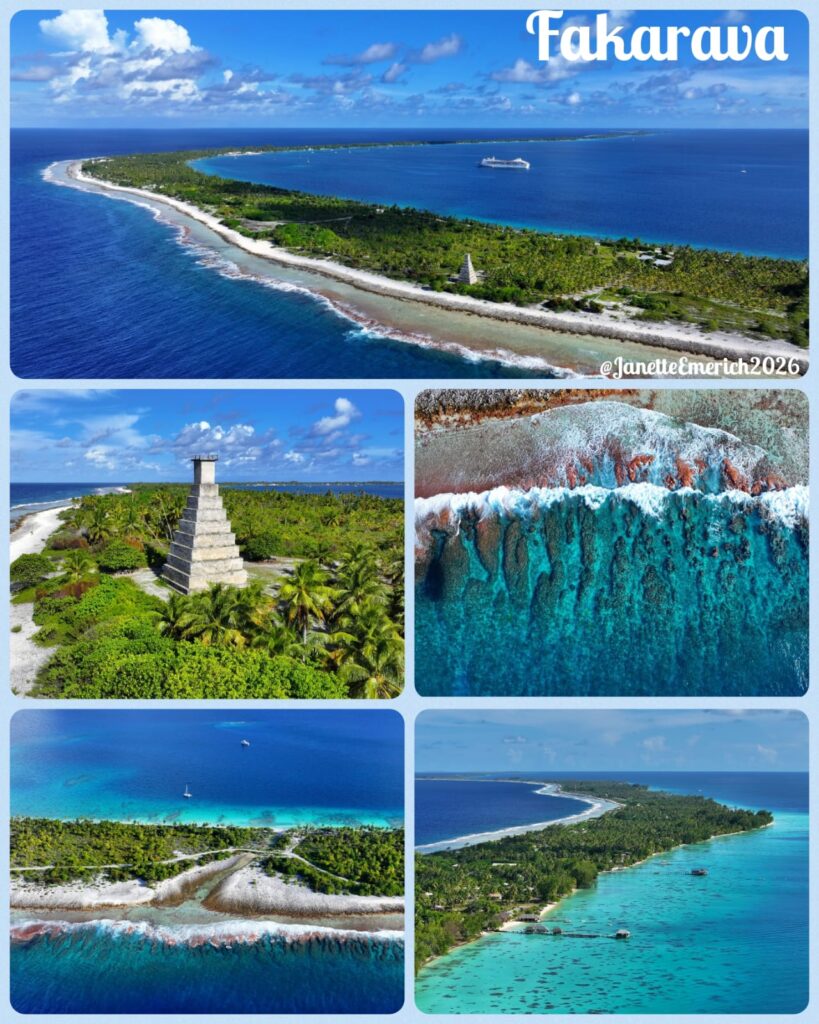
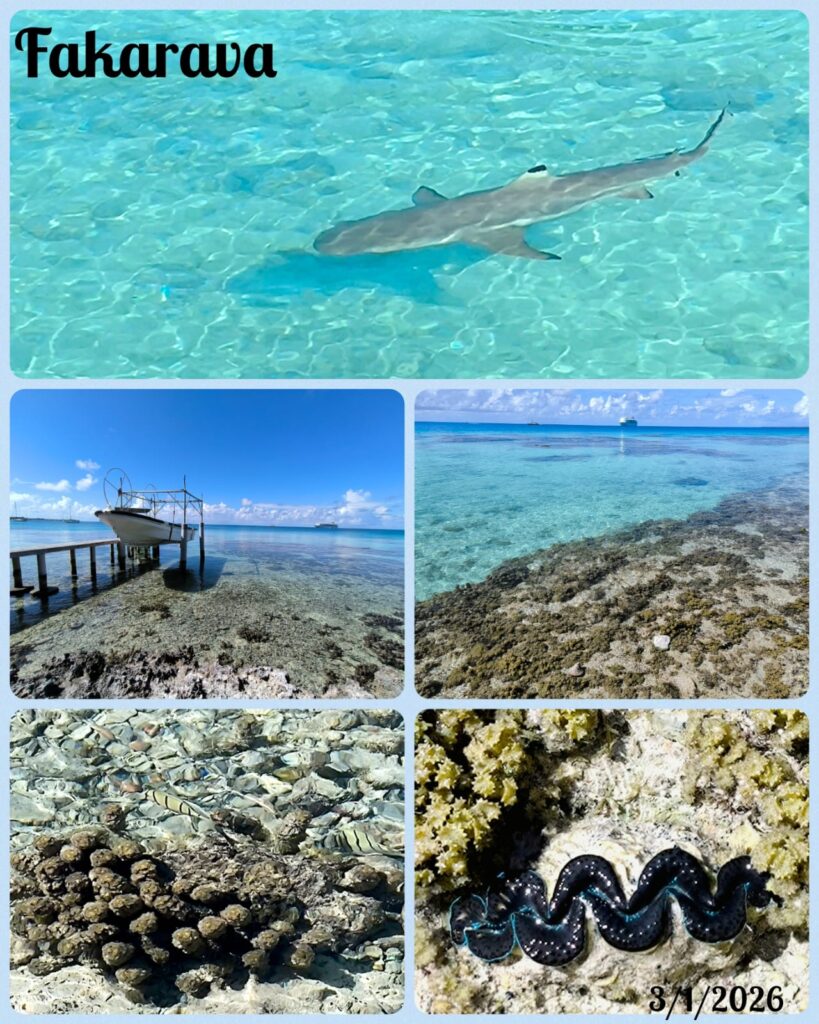
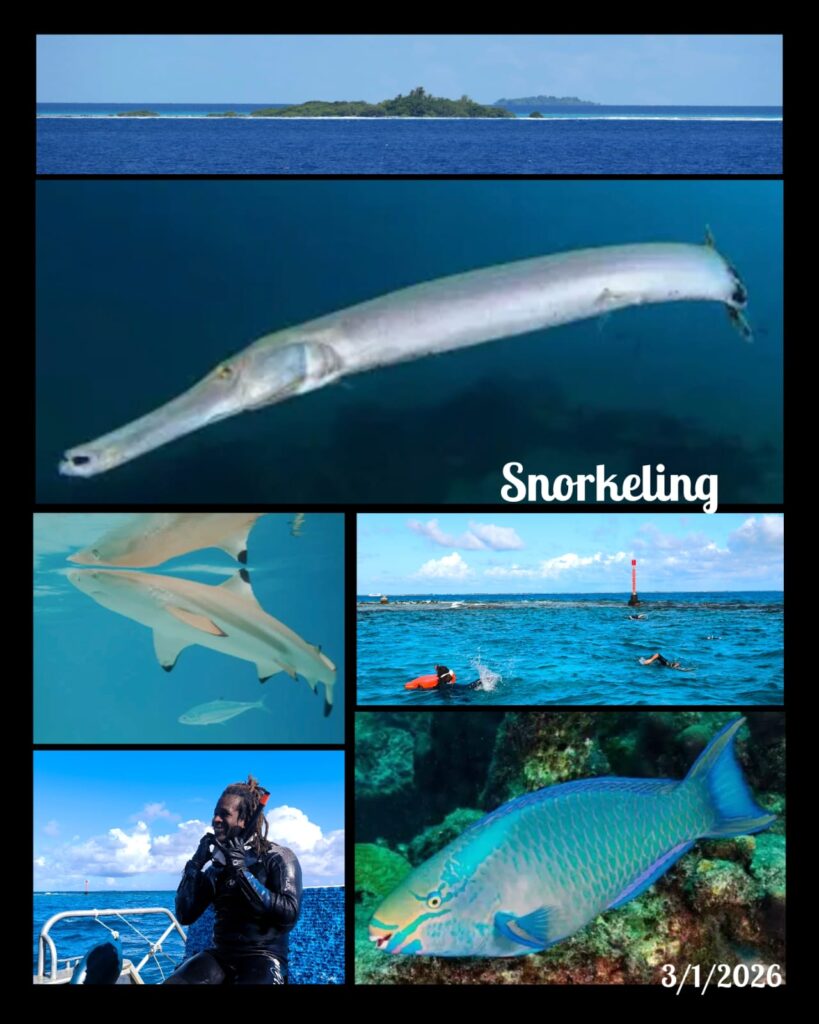
Jan 3 I went ashore at 8 am planning to visit the Topak Lighthouse which is about 9 km west of Rotoava. I tried to pay for a ride. But the lady who was waiting for a group of four for a 1.5 hour tour at 10:30am was not interested in my offer. As a result, I walked along the main road to an abandoned pearl farm and enjoyed watching black tip sharks swimming around the bay. I found a lovely clam next the shore too. I returned to the ship shortly after 10am. Then I joined a snorkeling tour in the lagoon (90 USD pp) at 2 pm. I saw some colorful coral, lots of fish including colorful parrot fish, a baby Napoleon fish, three black tip sharks, and an octopus. We were back on the ship before 5pm and we set sail for the Marquesas Islands before 6pm.