
D13 & 14 (Dec 11 &12) At Sea
D15-17 3 Days in Samoa
Samoa is an island country in the South Pacific Ocean with a total land area of 2,831 sq km and a population of about 200,000. Located 64km west of American Samoa and 1,152 km northeast of Fiji, Samoa consists of two main islands (Savai’I and Upolu), two smaller inhabited island (Manono and Apolima) and several smaller uninhabited islands. The GDP(PPP) 2024 estimate is about 1.225 billion USD i.e. 5,962USD per capita.
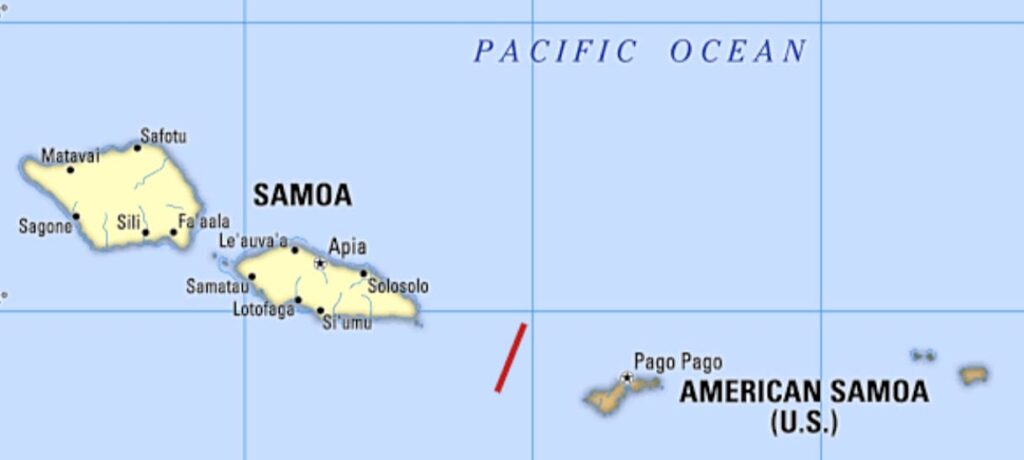
The Lapita people discovered and settled in these islands some 3,500 years ago. Because of the Samoans’ seafaring skills, pre-20th-century European explorers referred the entire island group (including American Samoa) as the “Navigator Islands”. Christian missionary work in Samoa began in 1830. Germany, the UK and US all took interest in controlling this island group. When the islands became a colony of the German Empire in 1899, British and American warships descended in Apia. The three powers quickly resolved to end the hostilities and divided the island chain at the Tripartite Convention of 1899, signed at Washington on 2 December 1899 with ratification in February 1900. The western islands became German Samoa while the eastern island-group became a territory of the US. The UK vacated all claims in Samoa and in return received termination of German rights in Tonga, all of the Solomon Islands south of Bougainville and territorial alignments in West Africa. The First World War bought an end of the German administration in Samoa in 1914. New Zealand gained control of German Samoa in 1920 under a League of Nations mandate. Western Samoa gained independence on 1 January 1962 and returned to its original pre-occupation name as Samoa in July 1997.
Dec 13. Apia, Upolu
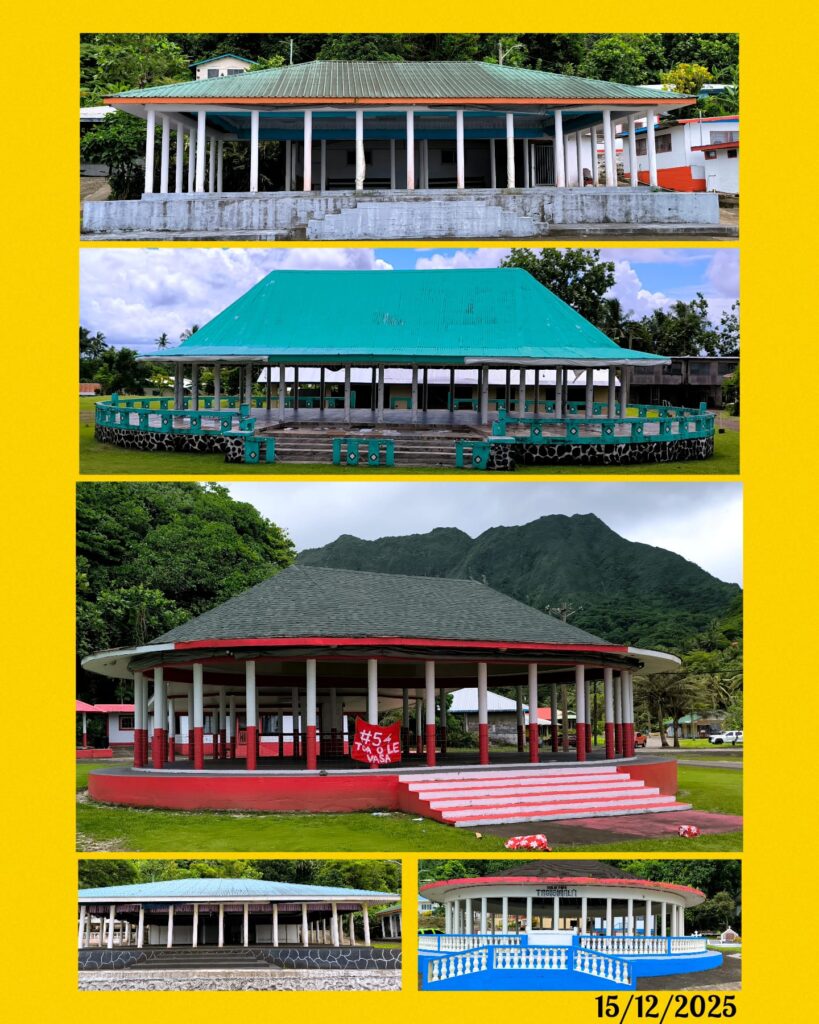
Odyssey was at the port by 7am for clearance. I joined a full-day trip organised by Nancy (80 USD pp). It was my first visit to Samoa and I am impressed by its mountainous topography, lust green vegetation, well-paved roads, beautiful and neat countryside. Life on the island seems tranquil and simple. The locals are well-dressed mostly in their local costume.
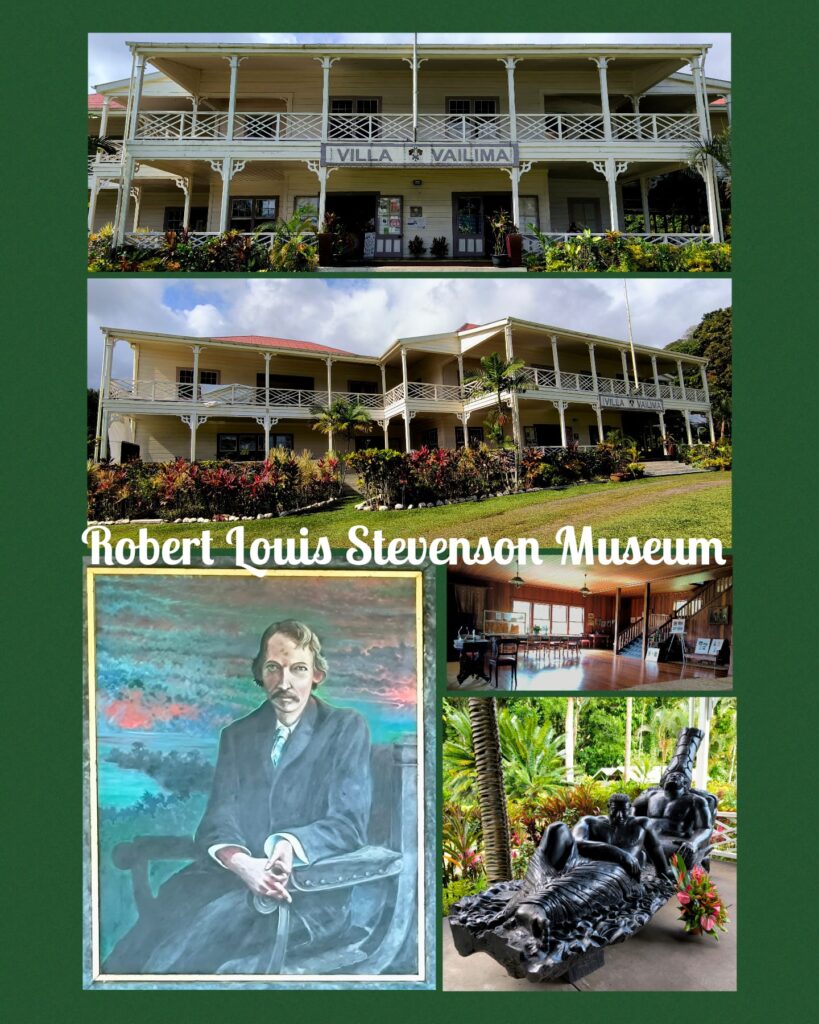
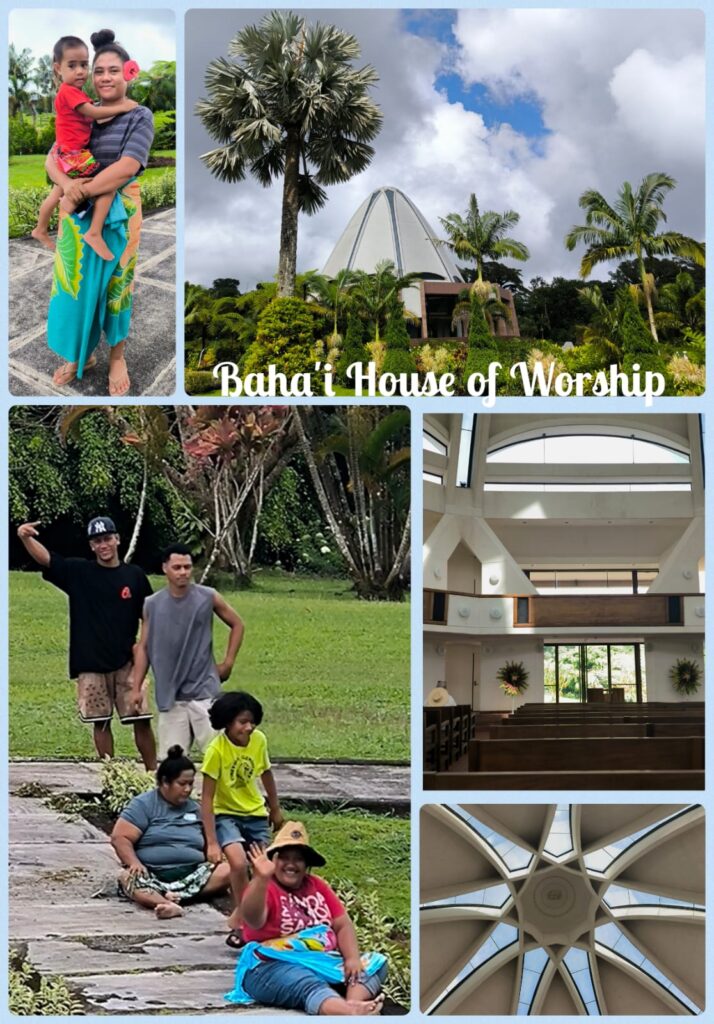
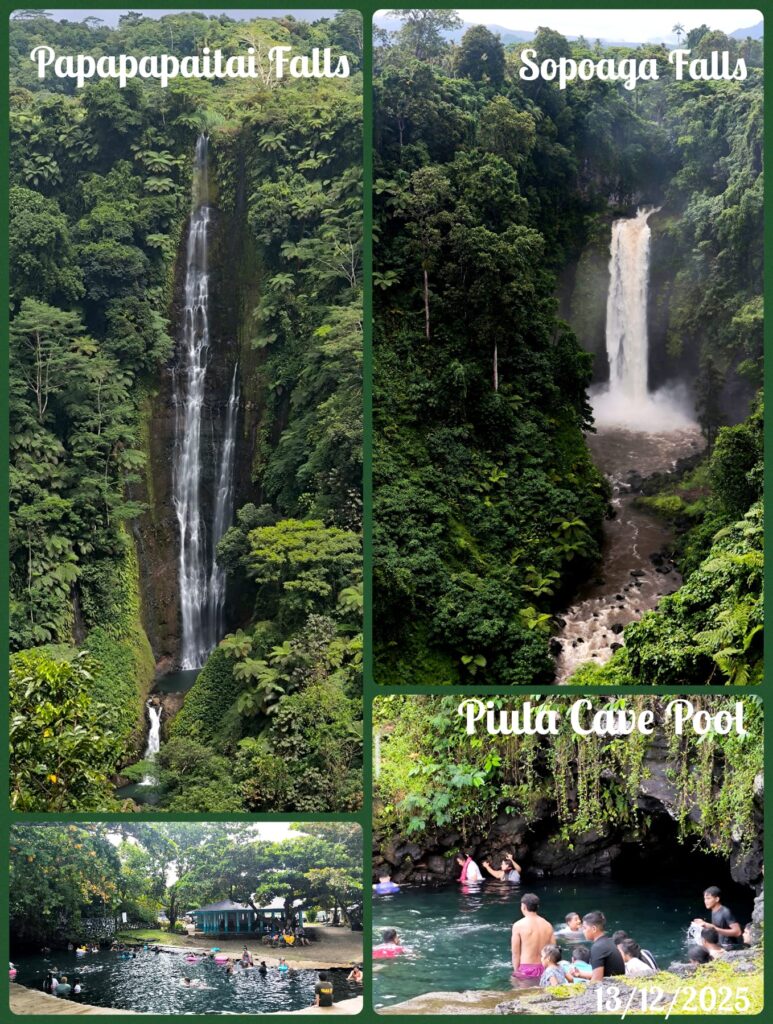
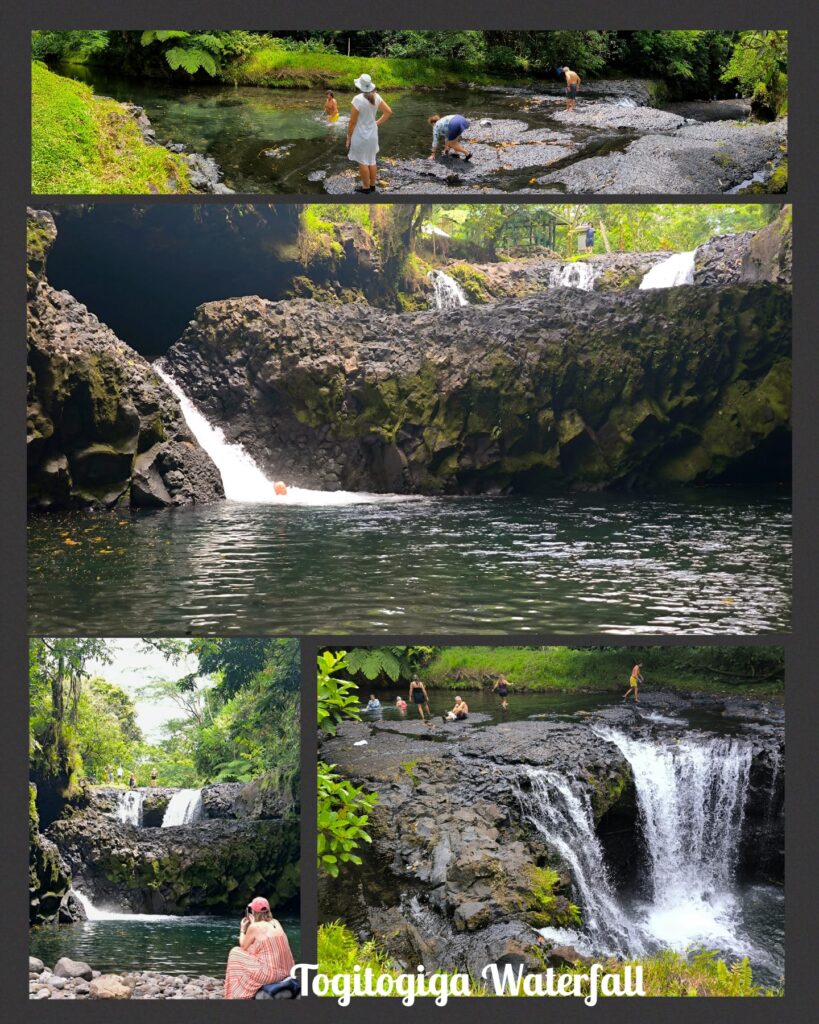
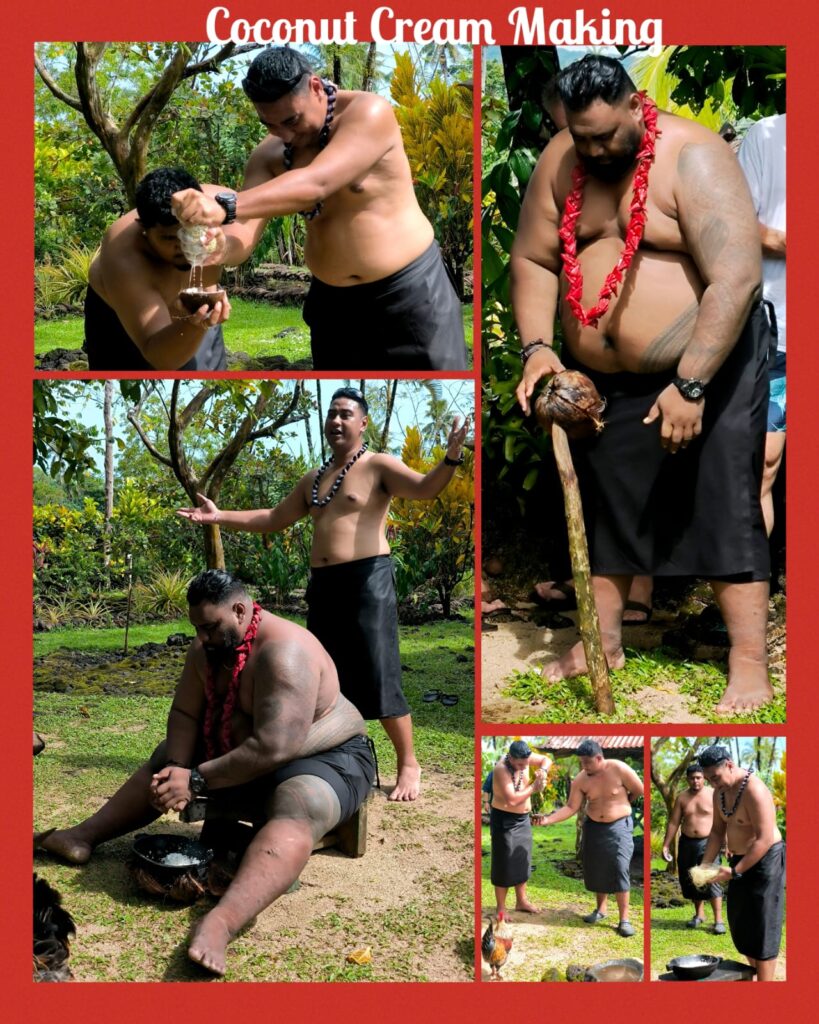
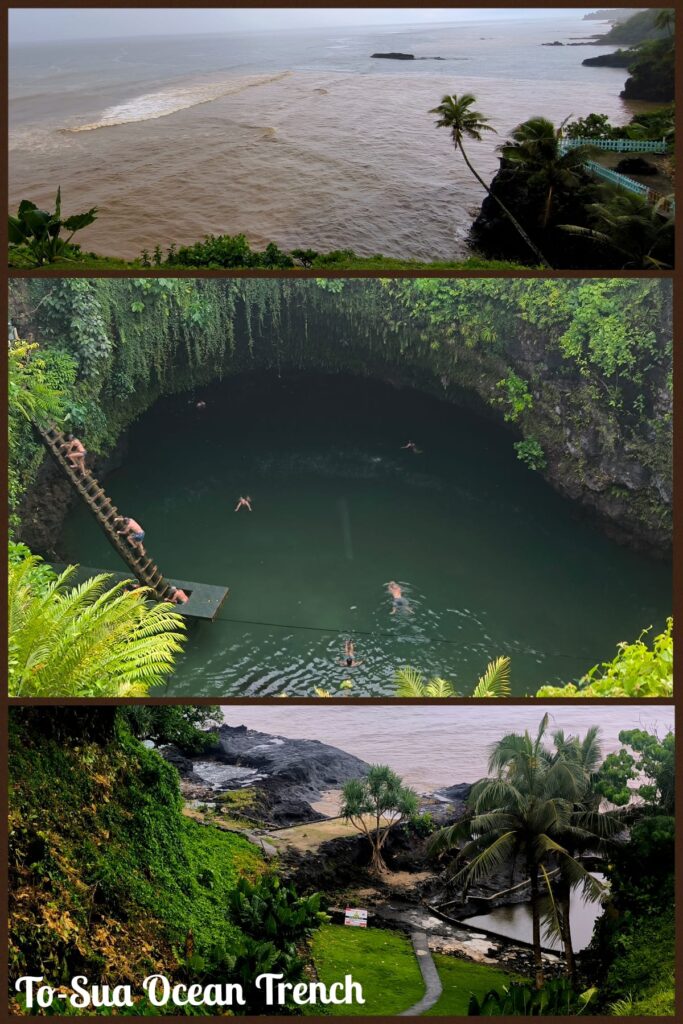
We travelled in three minibuses and stopped at the Robert Louis Stevenson Musuem, Baha’i House of Worship, two waterfalls namely Papapapaitai Falls and Togitogiga Waterfalls, Sinalei Reef Resort & Spa for lunch, To-Sua Ocean Trench, Sopo’aga Falls Viewpoint to look at Fuipisia Waterfall and to watch a coconut demonstration. Our last stop was the Piula Cave Pool. There were four opportunities to swim. I only took a dip at Reef Resort looking for coral and fish off the beach and at the Piula Cave Pool.
On this trip, I learn more about RL Stevenson whose famous works include Treasure Island and Strange Case of Dr Jekyll and Mr Hyde. Born in Edinburgh, Scotland in 1850, Stevenson and his family wandered the eastern and central Pacific for three years before arriving in Apia in December 1889. Stevenson decided to settle in Samoa in 1890 and bought 127.2 ha of land at Vailima to build a house. He suddenly died on 3 December 1894 at the age of 44 and was buried at Mount Vaea behind his residency which has become a museum since 1994.
Our guide spoke most passionately about Stevenson who had totally immersed himself in the island’s culture and sparked off a “politically awakening”. Stevenson already foresaw the ascent of colonial powers upon Samoa and openly expressed his concern for Polynesians in the South Sea Letters published in magazines in 1891. Just a few months before his sudden death, he addressed the island chiefs: “There is but one way to defend Samoa. Hear it before it is too late. It is to make roads, and gardens, and care for your trees, and sell their produce wisely, and , in one word, to occupy and use your country…if you do not occupy and use your country, others will…. You and your children will, in that case, be cast out into outer darkness”. I admire his insight and wisdom: in 1899, the Samoan islands were partitioned between Germany and the US. Today, Samoa is independent while part of the island group is still part of the US.
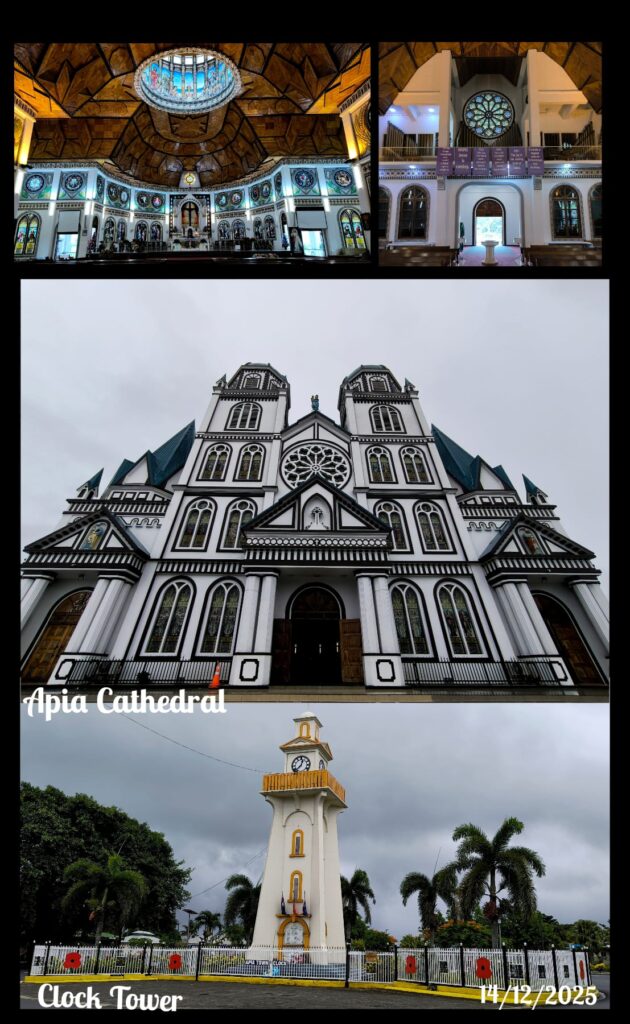
Dec 14 People in Samoa are very religious: Sunday is for the church and family and most of the places are closed. The weather in the morning was fine but I was lazy to get up and go out. When I was ready to get off the boat to explore the town, I met Laurie who was interested in sharing a taxi. Unfortunately as she was planning to see some of the spots I visited the day before, I decided to do something on my own. I met two staff from the ship and we shared a taxi to town (5 USD). When we got off the taxi, it started to rain. I took refuge at McDonald hoping the rain would stop in an hour or so. I had a fish burger set meal for 21FJD. It kept raining non-stop and heavily at times. I spent two hours trying to read the Surangama Sutra which is most difficult to comprehend. Finally I decided to leave at 4pm. I took a taxi and paid the driver 10 USD for a short tour along the Beach Road with a stop at the Immaculate Conception Cathedral rebuilt in 2014 (the original one was built in 1884). The architecture and interior are both impressive. The carved wooden ceiling, stained glass windows and the ceiling piece at the centre depicting Samoan representation are beautiful.
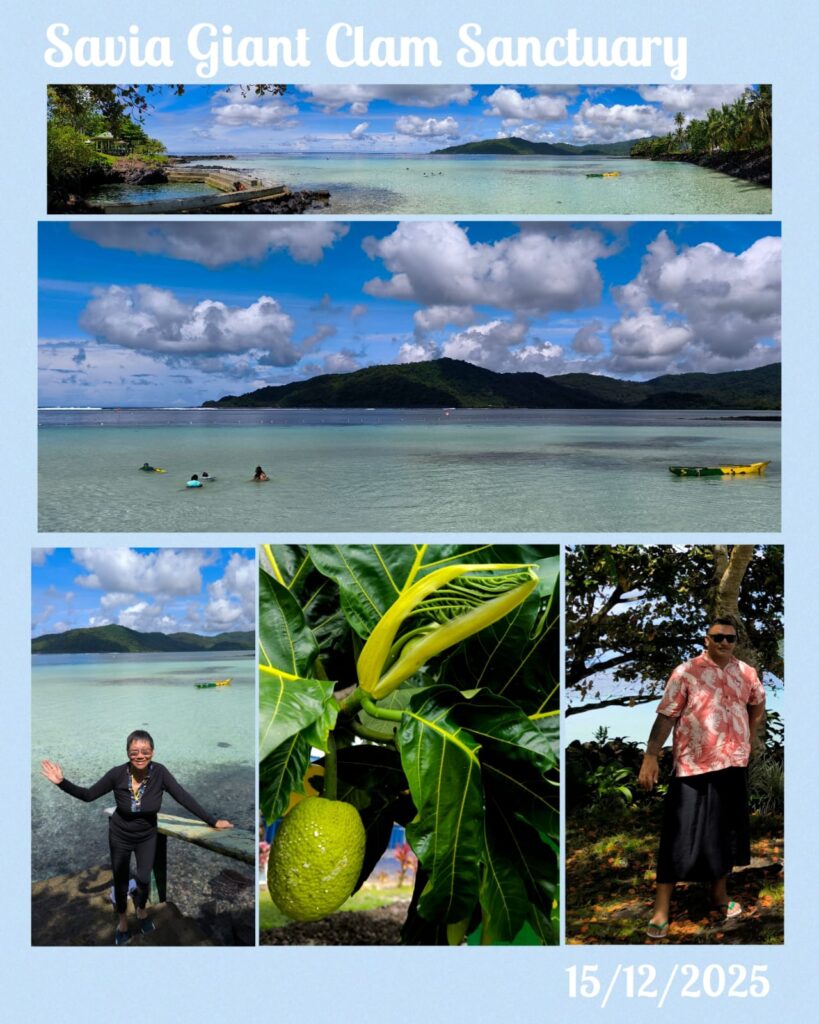
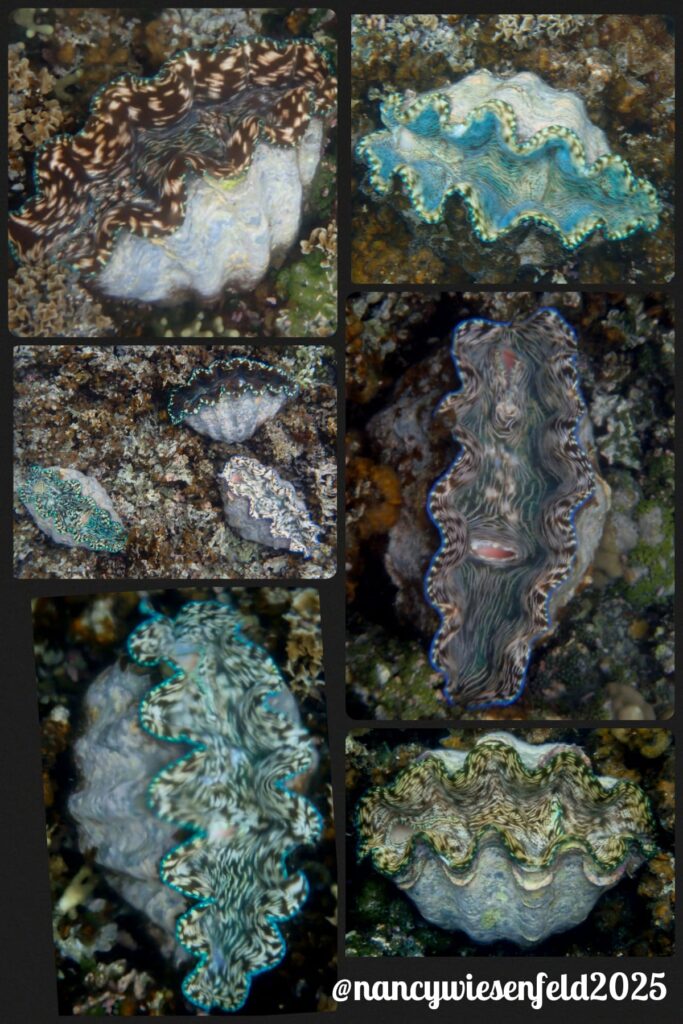
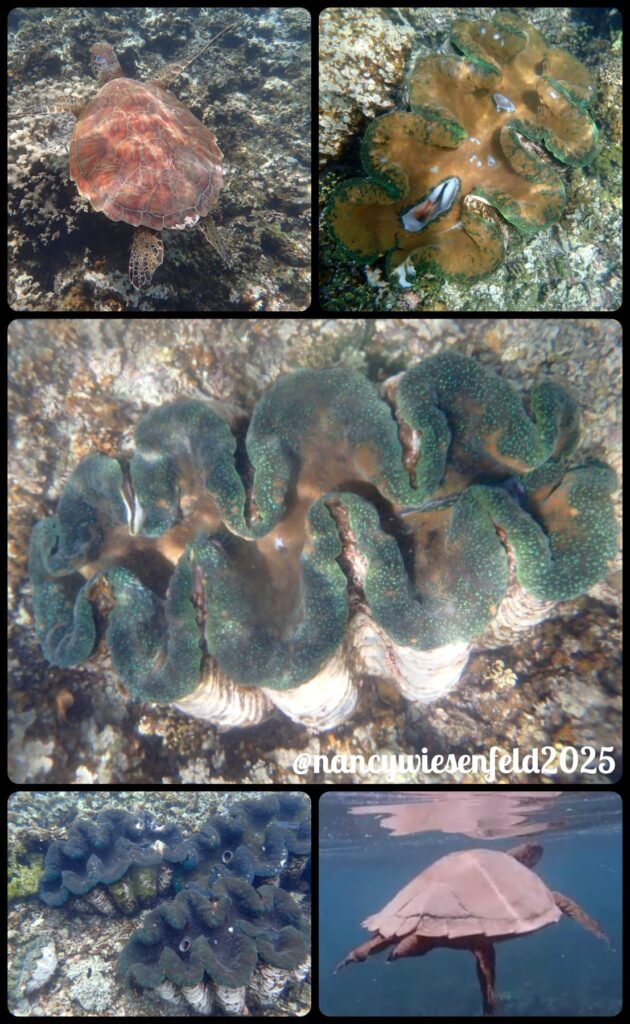
Dec 15 Today I went to Giant Clam Sanctury, a nature reserve in Savaia, with Ilana. We found a taxi to take us there for 45 USD pp including an hour and a half waiting time. Our driver took an inland shortcut to Savaia which is located on the southern side of the island. I was delighted to see well-kept farms, plantations and homes all the way to Savaia. Entry fee to the sanctuary is 20 FJD. It was low tide and I had a great time gazing at a dozen of giant clams and countless small clams in an area marked with buoys and a flag. These wonderful creatures have incredible colours in blue, green, pinkish, purple, brown etc. The biggest ones, which were settled here over 15 years ago when they were already 14 years old, are now more than a metre wide. It is my first time to see such a great number of giant clams in one location. However we did not find turtles. Nancy’s group arrived around 1 pm saw two turtles during high tide. We were back to the boat before 1 pm. The boat set sail at 6pm and we crossed the International Date Line.
D18-20 3 Days in American Samoa (GMT-11)
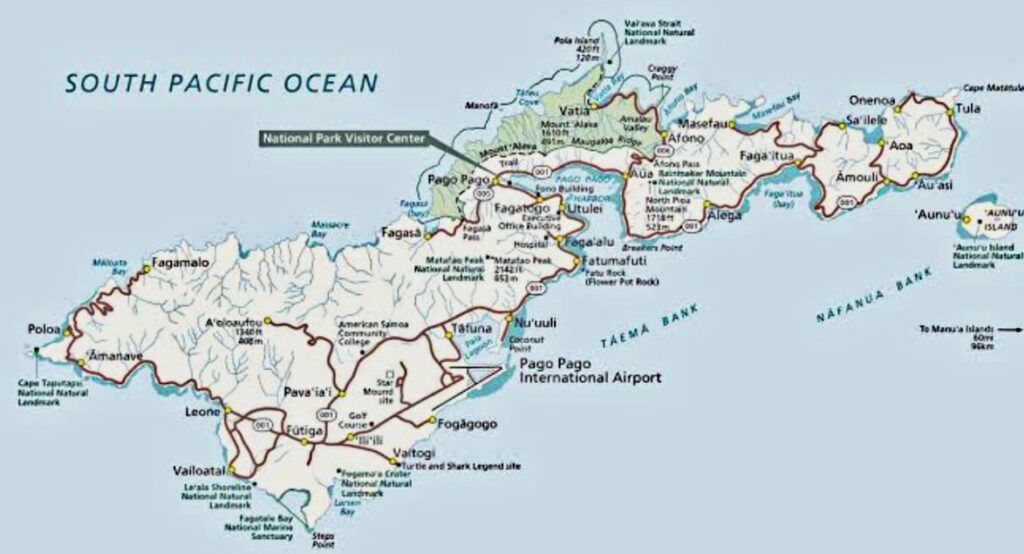
Made up of five volcanic islands (Tutuila, Aunu’u, Ofu, Olosega and Ta’u) and two atolls (Rosa and Swains), American Samoa is an unincorporated territory of the US. It has its constitution since 1967 with an elected governor and a bicameral legislature. Located about 3,500 km southwest of Hawaii, American Samoa has a land area of 200 sq km and a population of about 50,000. The great majority of the population (83%) is ethnically Samoan closely related to the native people of New Zealand, French Polynesia, Hawaii and Tonga. Pago Pago on Tutuila is the capital.
The economy is based on services and manufacturing with a large part of the income coming in the form of grants from the US federal government. Tuna canning (Starkist Canning Processors Inc.) and tourism are major industries. American Samoa boosts extraordinary nature beauty and biodiversity with marine ecosystems and tropical rainforest under the protection of the National Park of Samoa. Agriculture is organised on a semi-commerical basis for the production of taro, bananas, tropical fruits, and vegetables. It has a GDP (PPP) 2021 estimate at $709 million and per capita at $15,743.
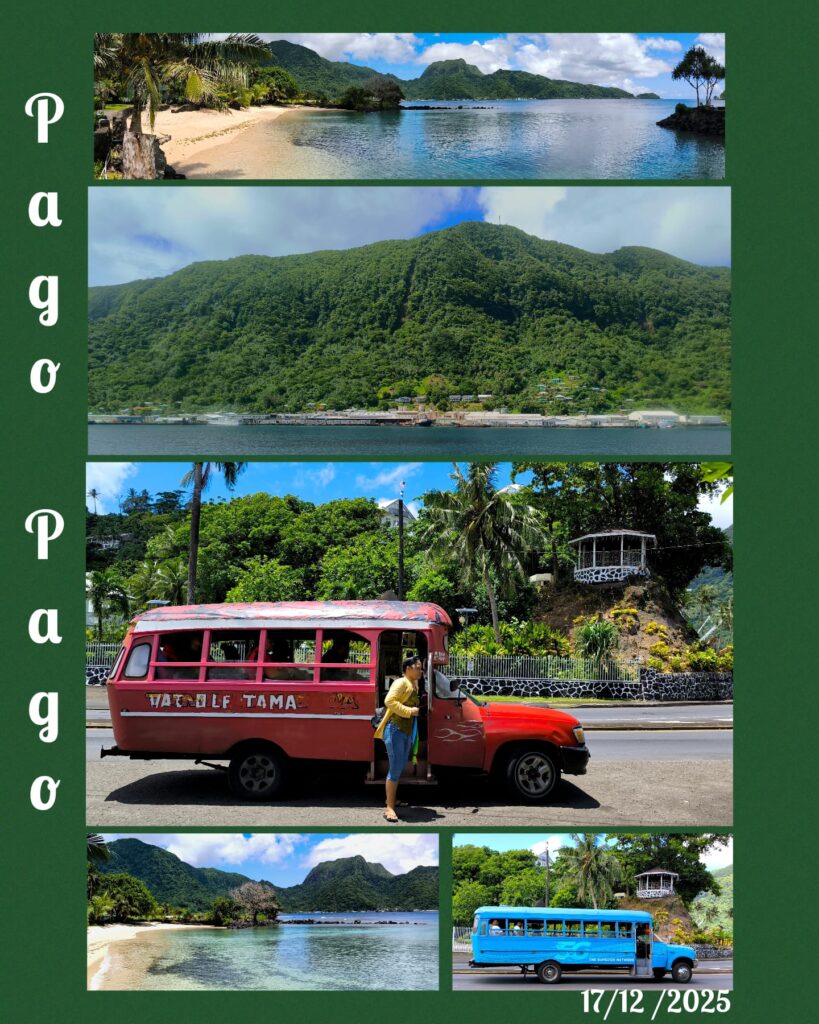
Dec 15 It was Dec 15 again – I gained one day by crossing the International Date Line last night. I was awaken by loud noises when Odyssey dropped anchor at the port of Pago Pago, Tutuila well before 7am. We were allowed to go ashore after customs and immigration clearance by the US authority.
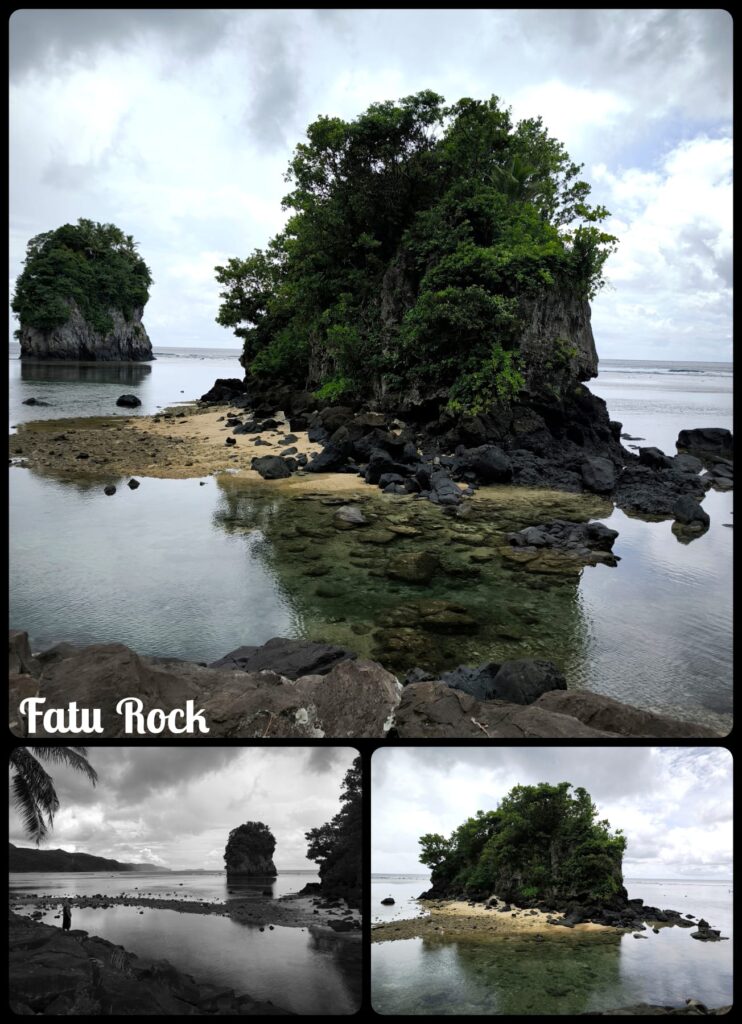
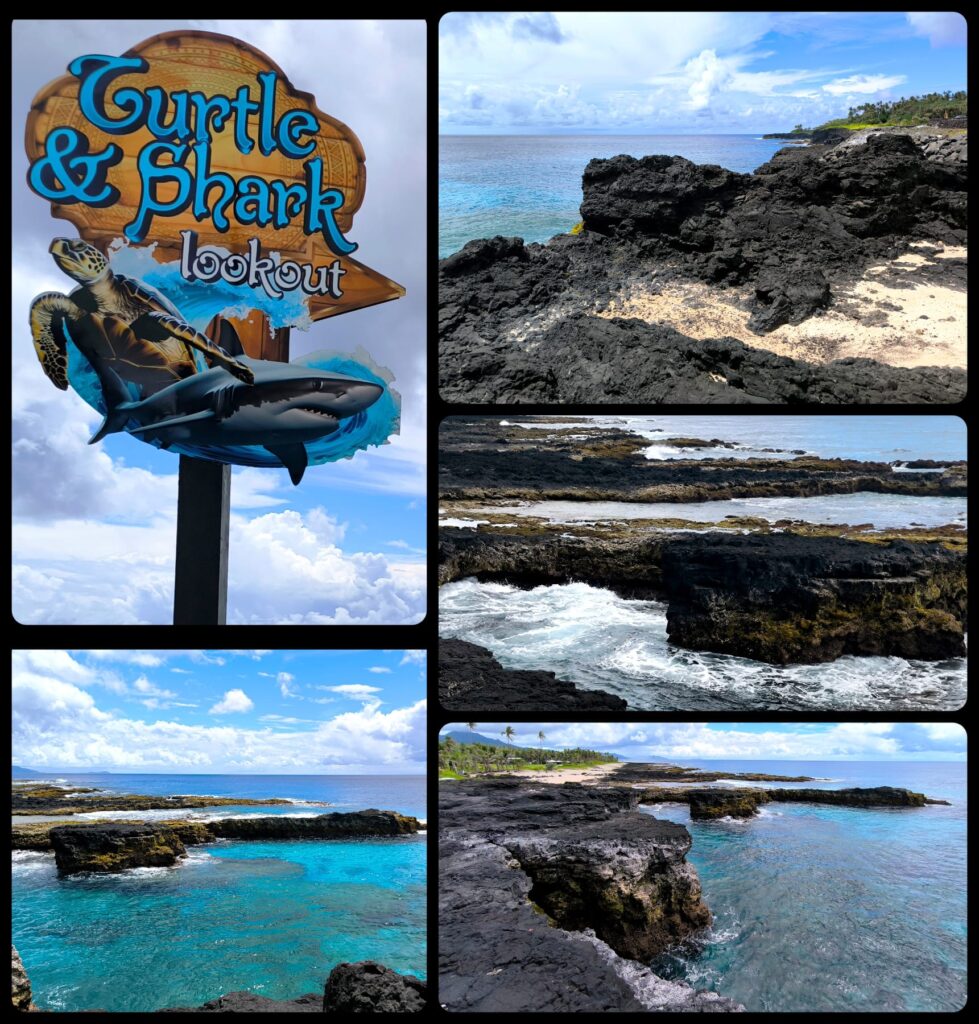
I took a $20 bus tour with eight other residents of Odyssey. We spent over 3 hours travelling along the main road (Route 001) travelling up to the Turtle and Shark Lookout at Vaitogi before turning around heading to Lu Tala Beach (a private beach before the Two Dollar Beach) with several photo stops including a long stop at the Aerial Tramway (built in 1967 and discontinued in 1992 after damaged by hurricane Val) next to a Plane Crash 1980 Memorial and a Lookout offering excellent views over the natural Pago Pago Harbour. We also stopped at the Fatu Rock, Lafiga Point, and Camel Back.
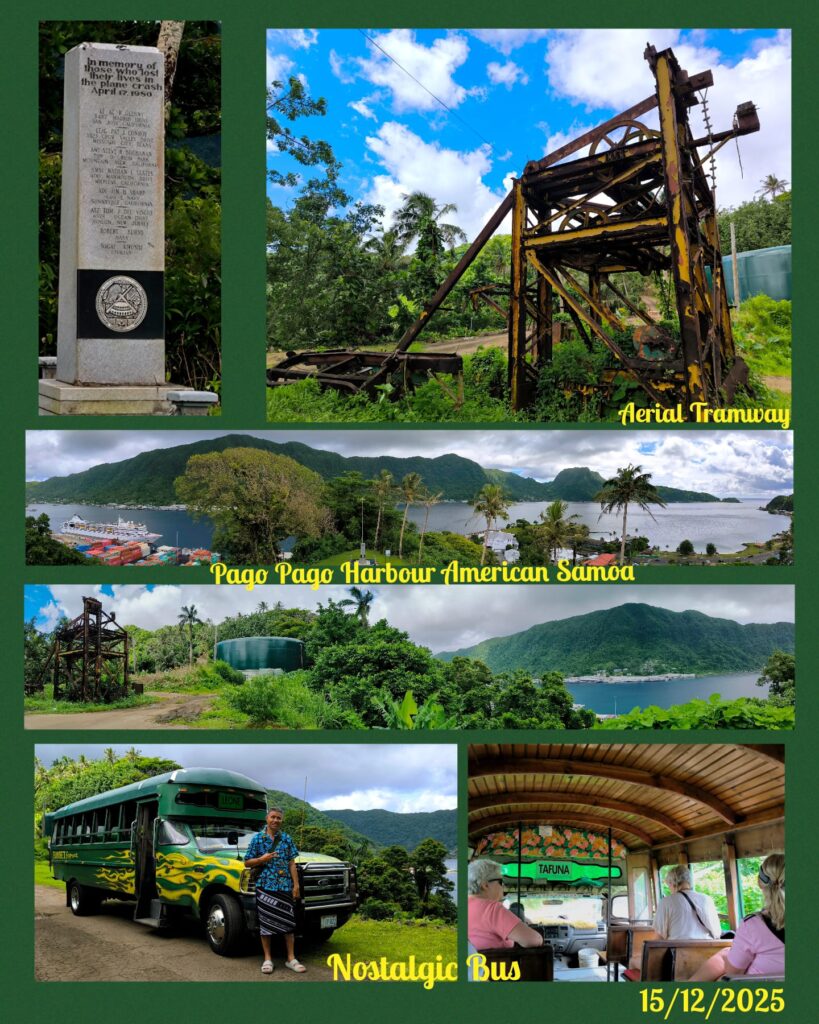
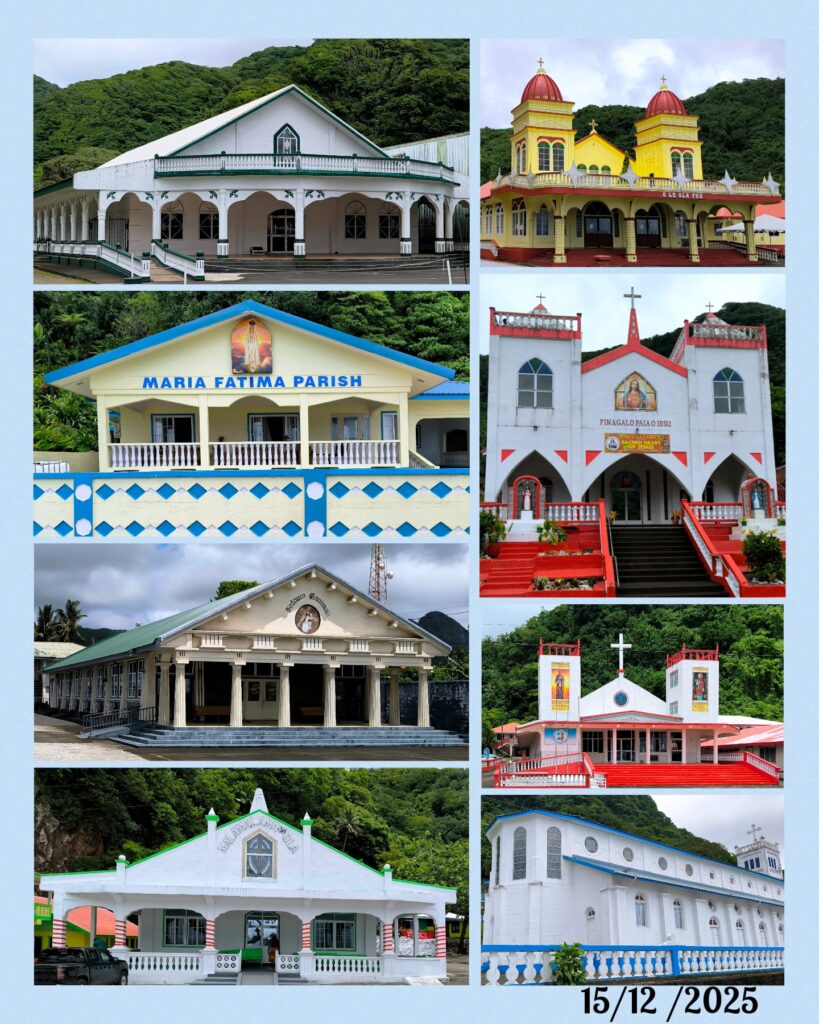
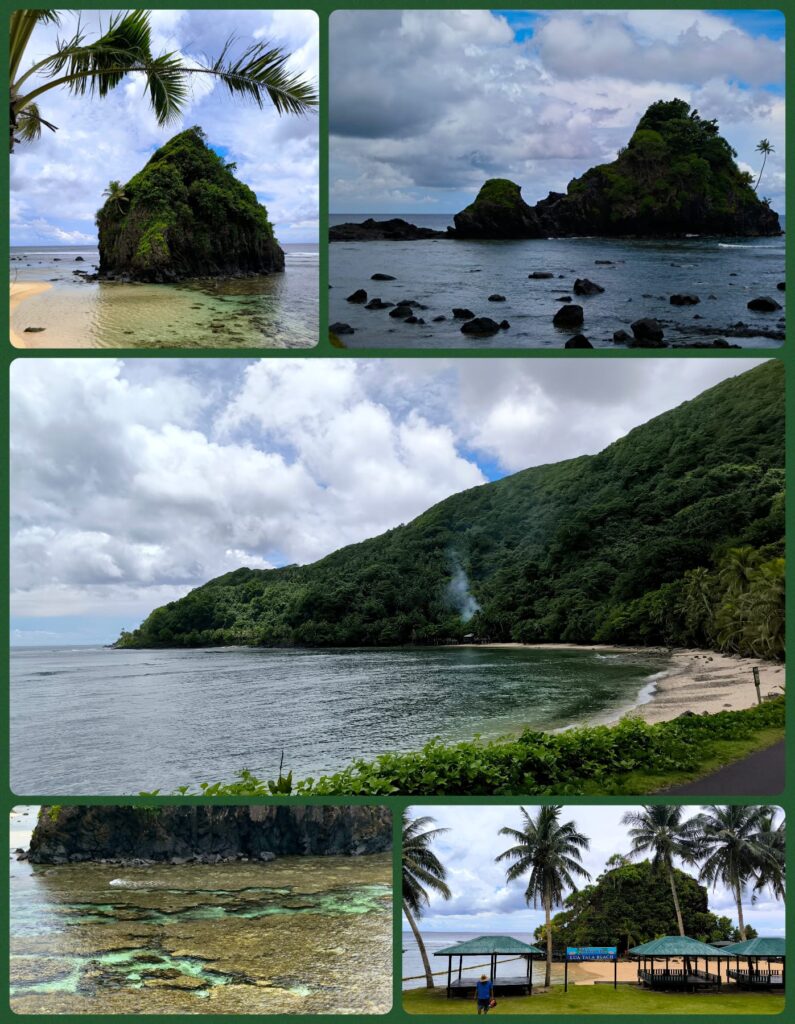
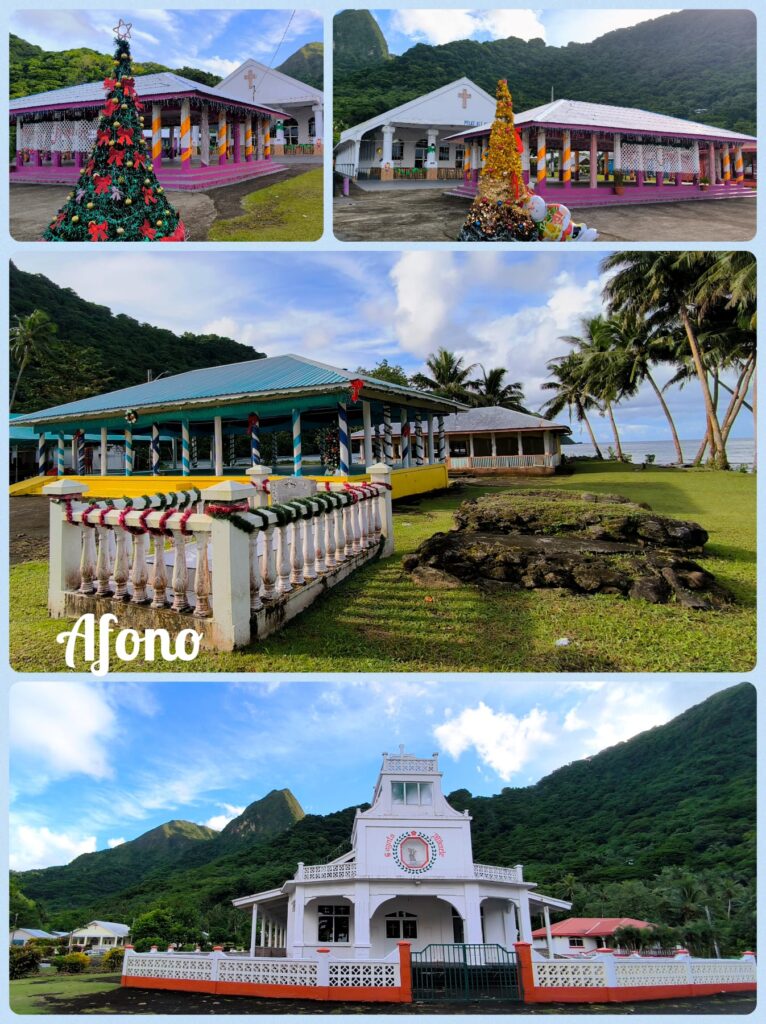
In the afternoon, Dianne, Inana shared a taxi ($20pp) to visit Vatia located inside the National Park of Samoa for over two hours. It was a wonderful scenic ride over the Afono Pass with fabulous views of the highest peak of the island of Tutuila – Mt. Matafao (653m) and the harbour. We also saw the iconic Vai’av Strait National Natural Monument and Pola Island. We had a leisure stroll in the picturesque Vatia and Afono.
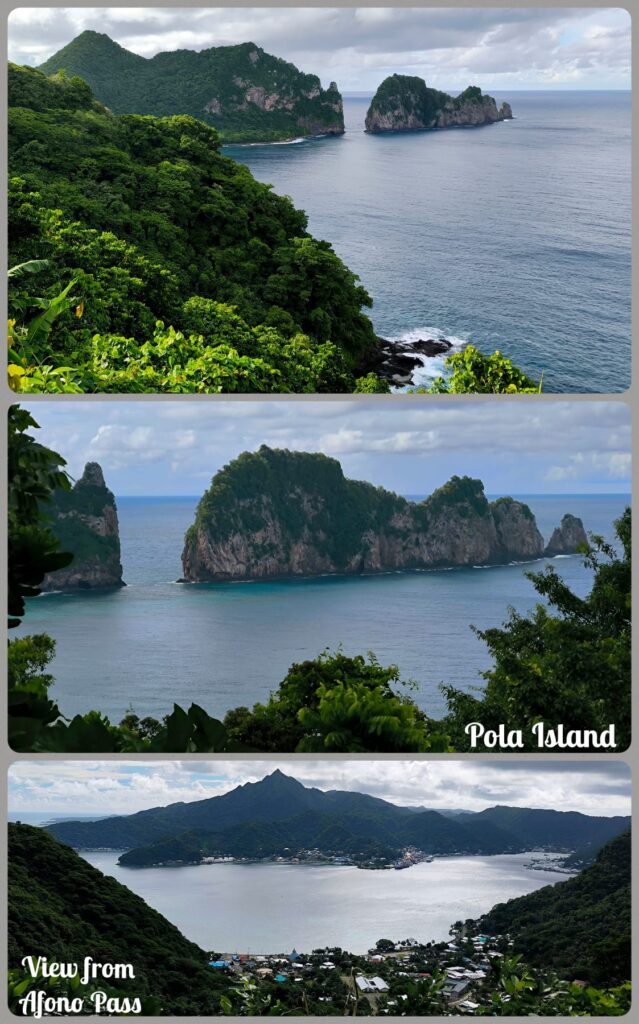
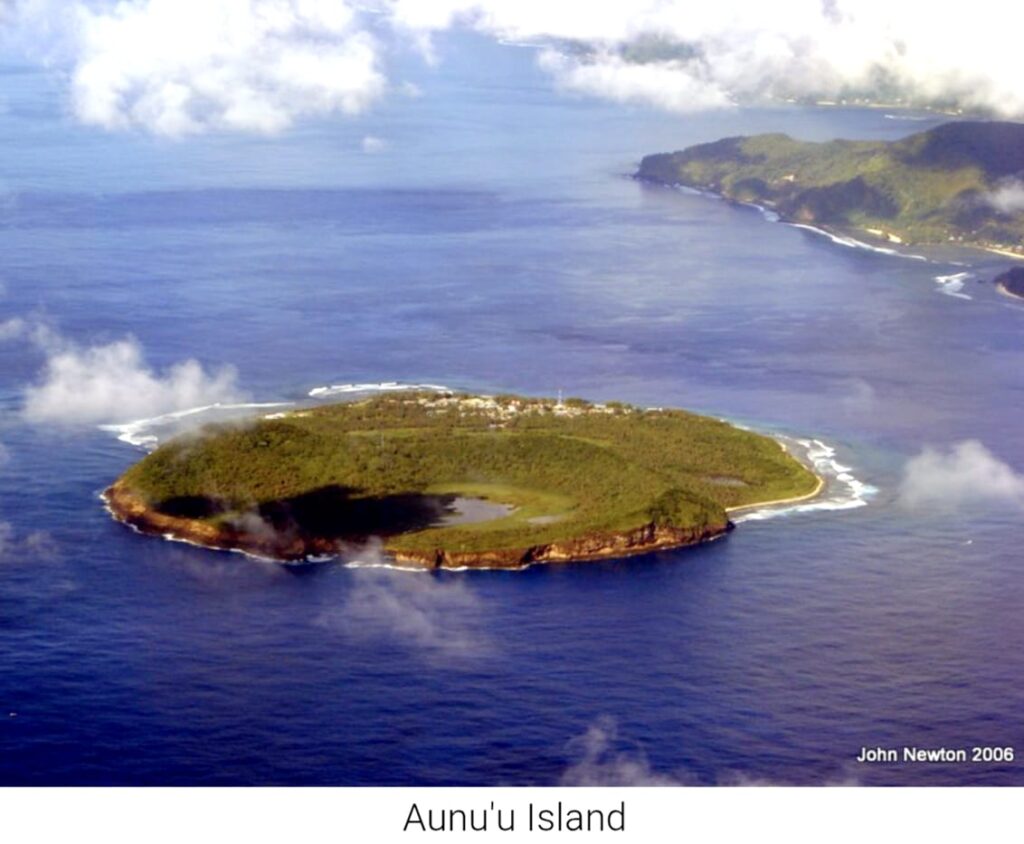
Dec 16 My plan today was to take a ferry to Aunu’u Island, a small island that can be reached on a local ferry for $5 from Au’asi. Ilana was interested and we set off at 9am. We tried to find a bus at the bus terminal without success. Two Samoan ladies at the Fagatogo Square offered to take us to Au’asi. They are missionary of the Jehovah Witnesses believing in helping others in need. I told them that as a Buddhist, I respected all religions and fully appreciated their kindness. I gave them $10 as a token of appreciation.
When we arrived at the small wharf, we saw a boat moving away with three passengers. We tried to call it back without success. Then another boat came in. Phil and Conway (father and son) who just arrived in a private charted bus, joined us on the boat. Unfortunately, we found a cargo boat at the Aunu’u wharf transporting drums and vehicles from the island. We had to wait till 10:45am before we could land. While waiting, we asked the boatman to take us round the island. But we dropped the idea when he asked for $200! Too much! (I later found out that the boat before us took the three passengers round the island for $80. They saw many nests and boobies. I wished we were on that boat.)
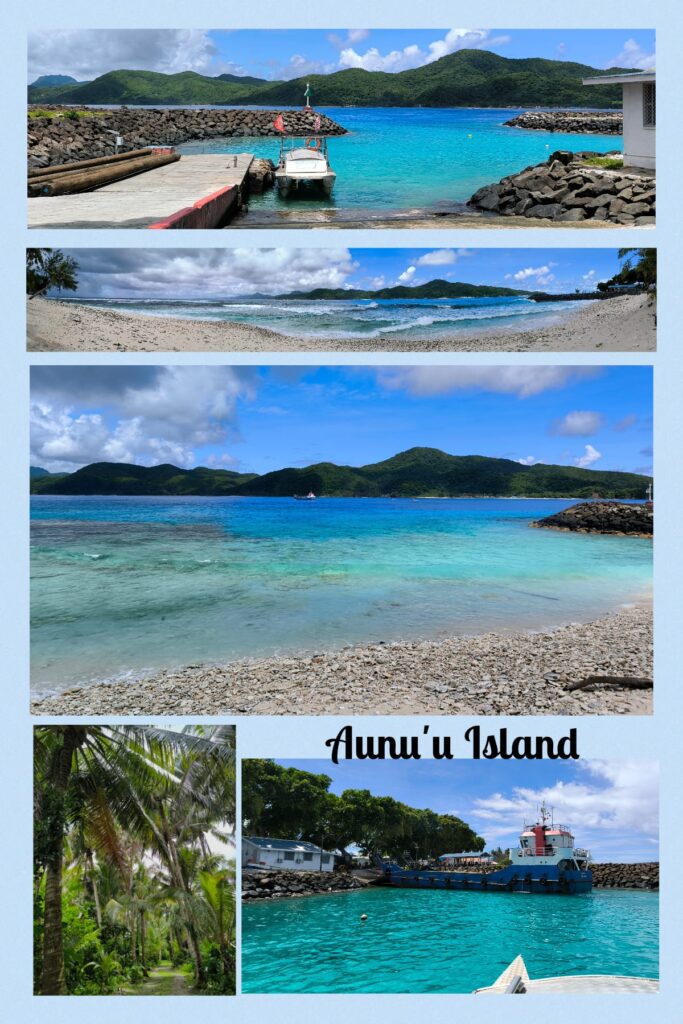
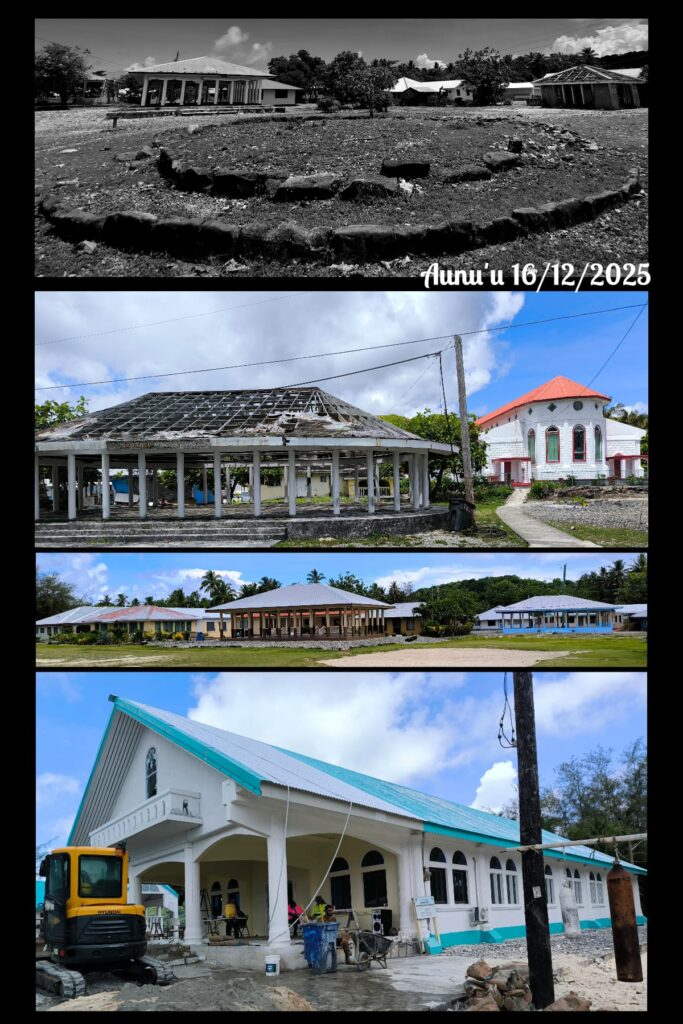
Known for its unique freshwater marsh and volcanic features, Aunu’u is small island with an area of 1.5 sq km and a population of under 500. The Faimulivai Marsh that was formed from drainage into the low-lying Aunu’u Crater, is a designated protected National Natural Landmark. As it was very hot, I only walked along the main road for 300-400m before I turned inland. Ilana who is fit, walked on in search of a path to take her to a vantage point to see the marsh and salt lake. I saw banana plantation and coconut trees along the path and met a farmer. He talked about life on the island with sadness: the island was once prosperous with some 200 families. But many have left and their houses are dilapidated. As I walked through the village, I understood what he meant.
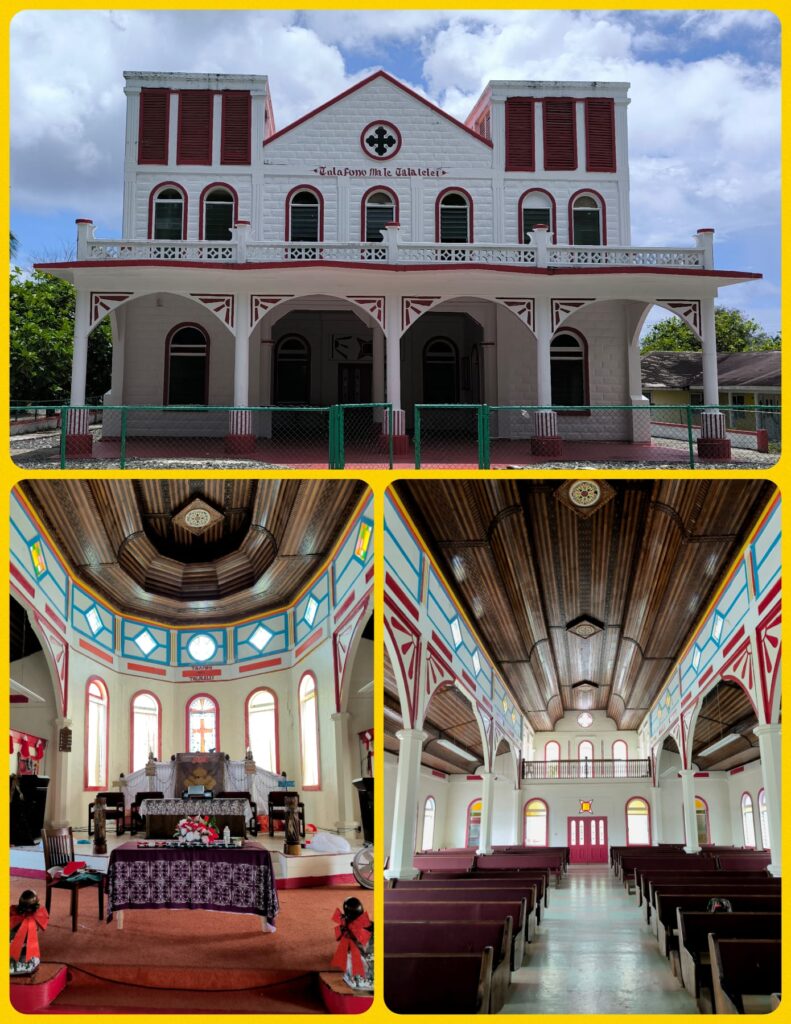
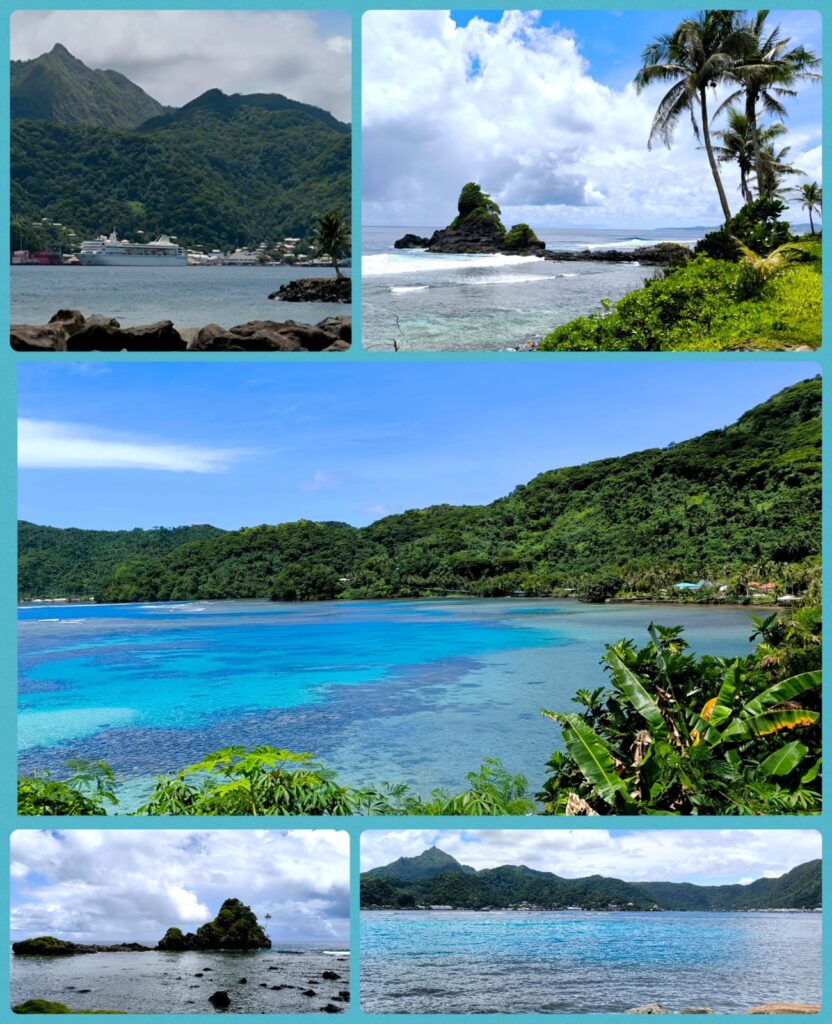
I visited a church before heading to the beach next to the wharf. The waves were too strong for swimming. I therefore walked to the beach on the other side of the wharf: it was covered with broken coral. Around 12 noon, Phil, Conway, I and the boatman were at the wharf. They took the boat back to Au’asi while I waited for Ilana who turned up before 12:30pm. We met five other passengers from Odyssey. Phil and Conway were still at the Au’asi wharf waiting for us. So, Ilana and I together with a couple took a ride in their chartered bus back to Pago Pago. Things worked out well saving us time and efforts to find a bus or a taxi back to the harbour. We were back on the boat in time for lunch.
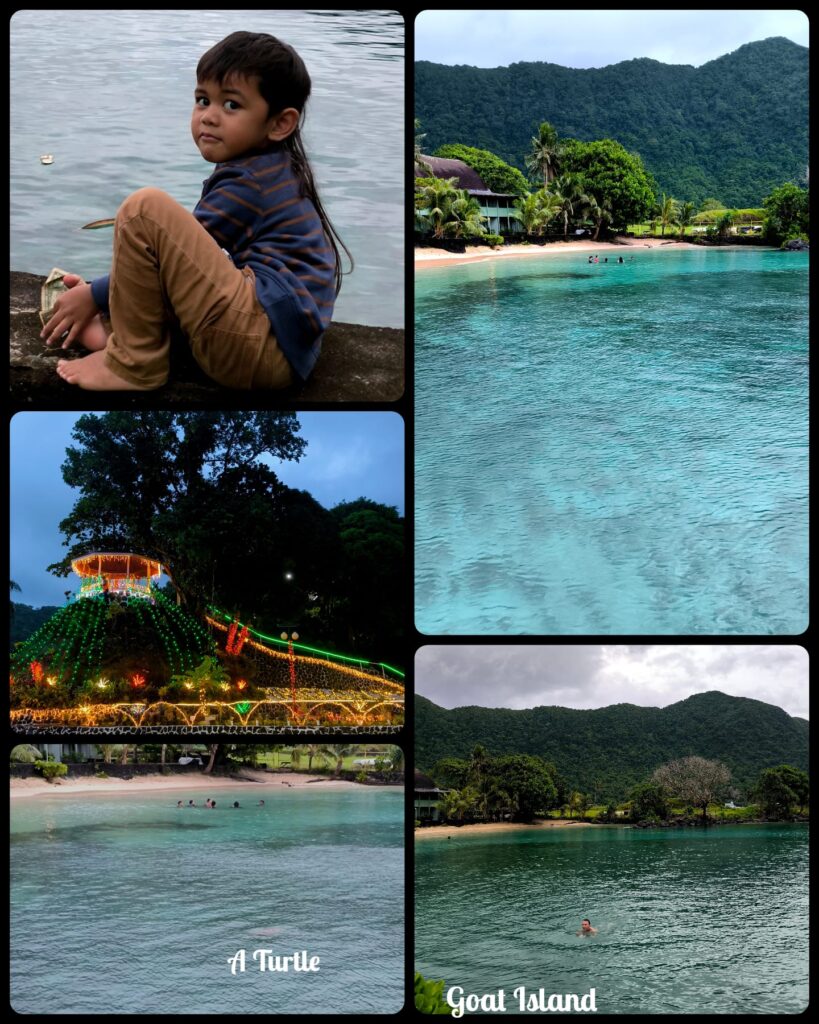
After 4pm, I decided to walk to Goat’s Island Cafe for snorkelling and tasting Oka (Samoan fresh, ceviche-style dish where raw fish is “cooked” in lime juice and mixed with coconut cream, tomatoes, cucumber, onions, and sometimes chili). The mask that I bought in Denarau, Fiji did not work as expected. Hence, I only stayed in the water for a while before heading to the cafe. I met Harlee who was on the boat this morning with her two friends. When they learnt that I was about to order Oka, Harlee invited me to take the dish they had ordered but could not finish. I gladly accepted and her kind offer and enjoyed Oka (with fresh marlin) with a cold beer. I confess that I prefer the Japanese sashimi to ceviche. I met Conway again who spotted a turtle in the water. I watched it swimming close to the beach for some ten minutes.
Harlee had hired a car and offered to take me bird-watching the following morning at 7am. I am lucky: many people have helped me in my life. They are Bodhisattvas!
Dec 17 Harlee and I set off at 7:15 am. We stopped several times on our way to Vatia. I am not a good spotter: I can only identify a few common species including Island thrush, starling, common myna, swift, bulbul, tern, frigate-bird, kingfisher etc. I love to see the unique and rare endemic birds such as Tooth-billed pigeon and Many-coloured fruit-dove. We also drove to Fagasa Bay which is a Marine Life Sanctuary. I saw many crabs and found the village picturesque. The only nice bird photo I got for the morning was a kingfisher on a tree.
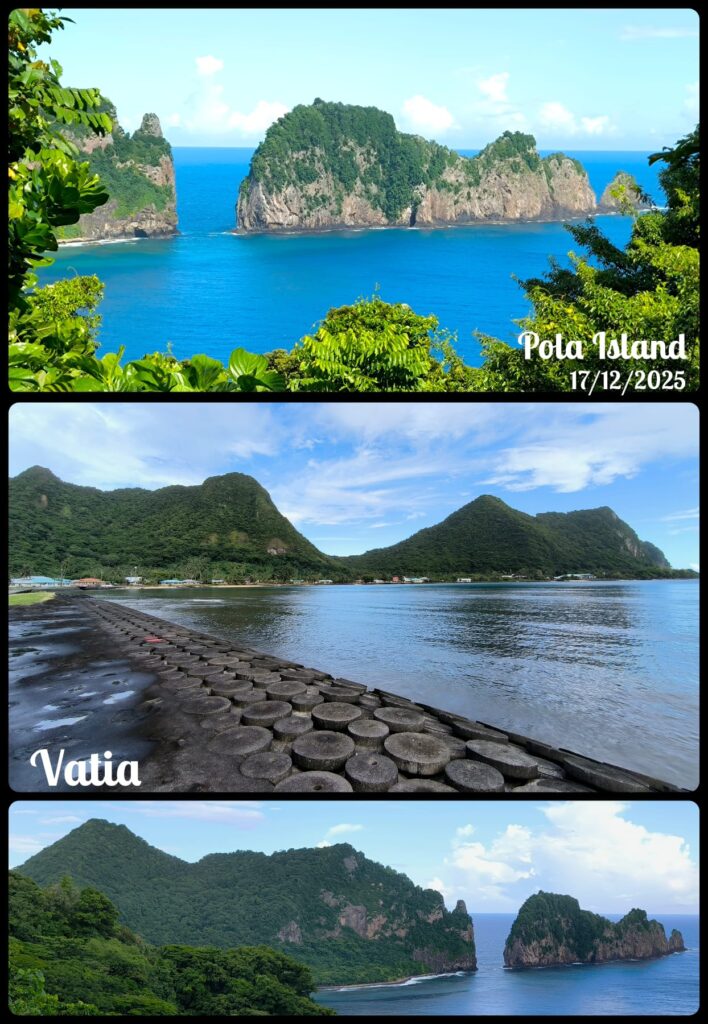
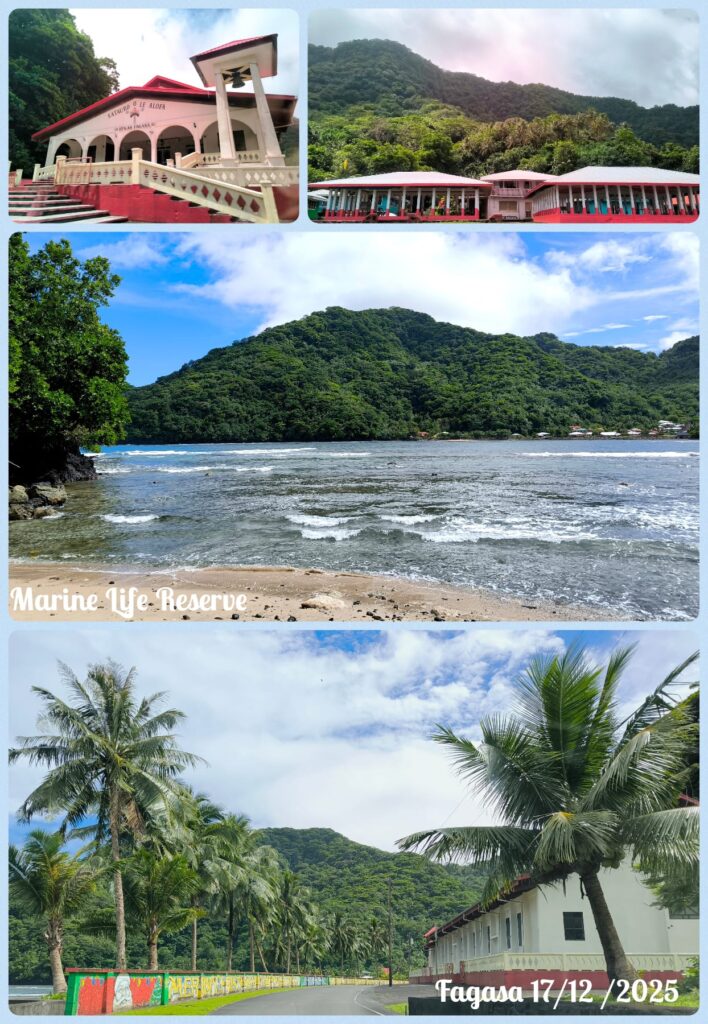
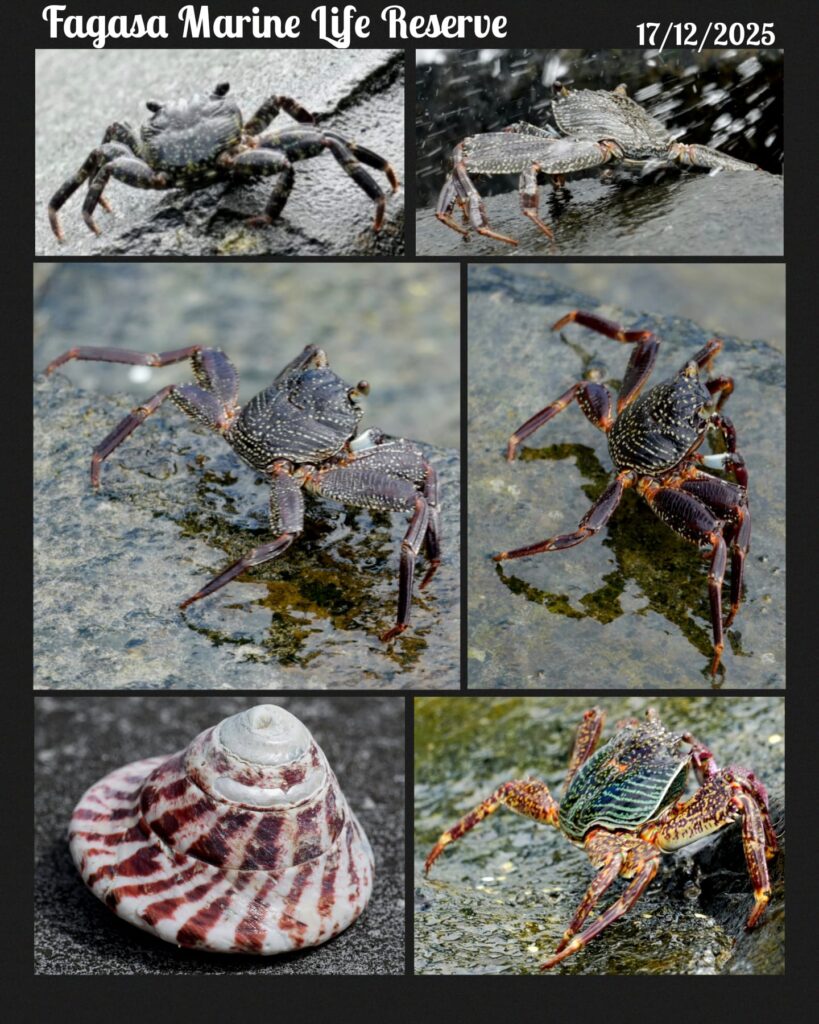
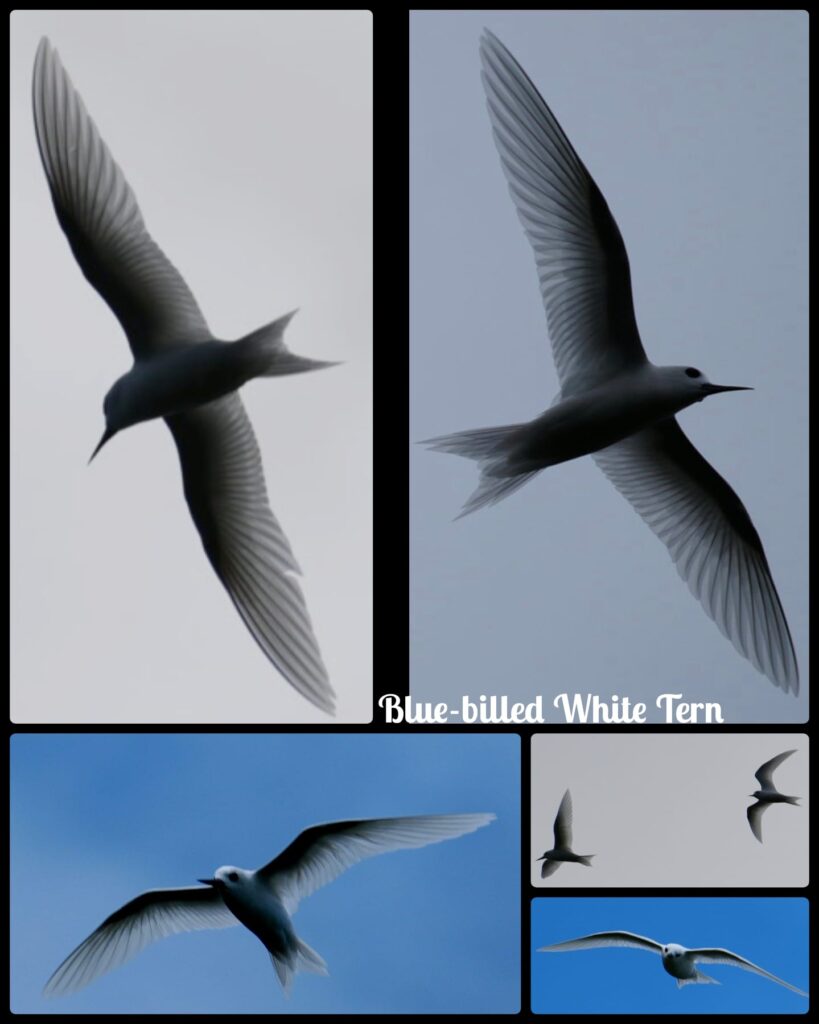
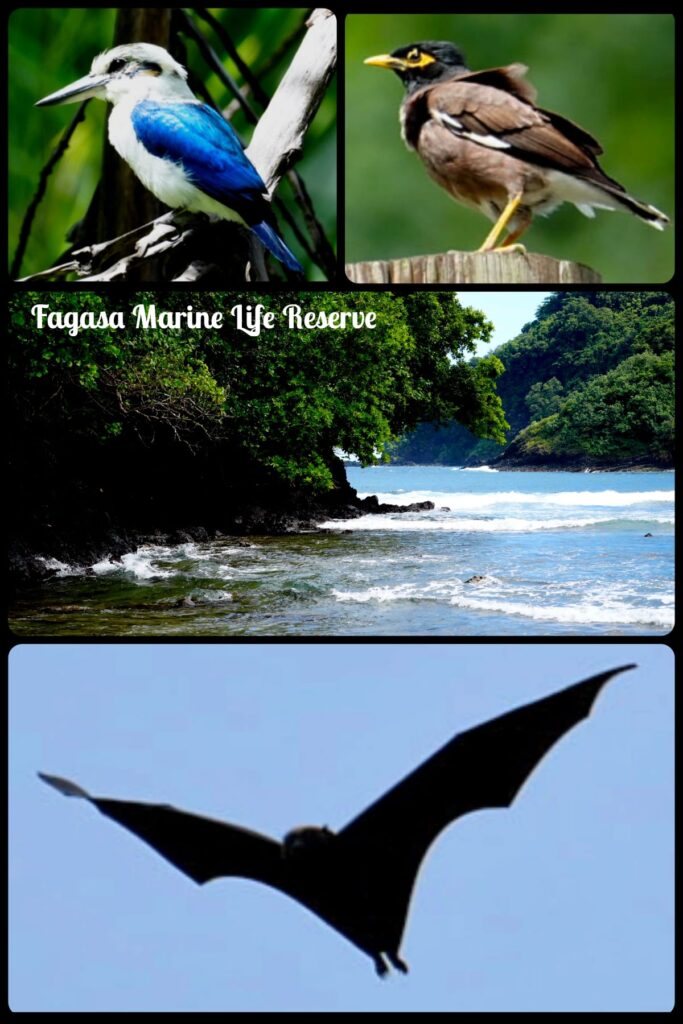
On return to the harbour, we saw frigate-birds and other birds (booby and tern) flying close to the ship. We were back on the ship before 11 am and I had time for snorkelling. Harlee dropped me off at the Goat’s Island before returning the car. With another mask and a noodle for floating, I swam further out with confidence and floated above the coral. I had better snorkelling experience than the day before. But I failed to spot the turtle which was loitering around and seen by others. I returned to the ship around 1:30pm for lunch. All passengers were on board before 3 pm. The Samoan gave us a farewell at the pier with traditional dance and music and the ship set sail around 4pm.
Remarks (to add)