
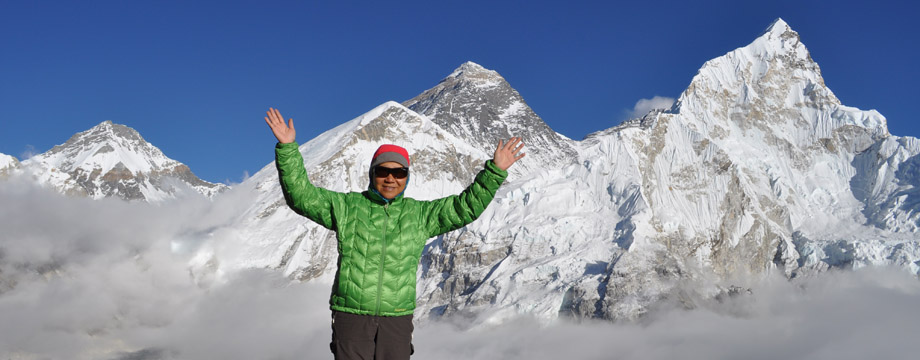
Day 8 April 14 Temple 37
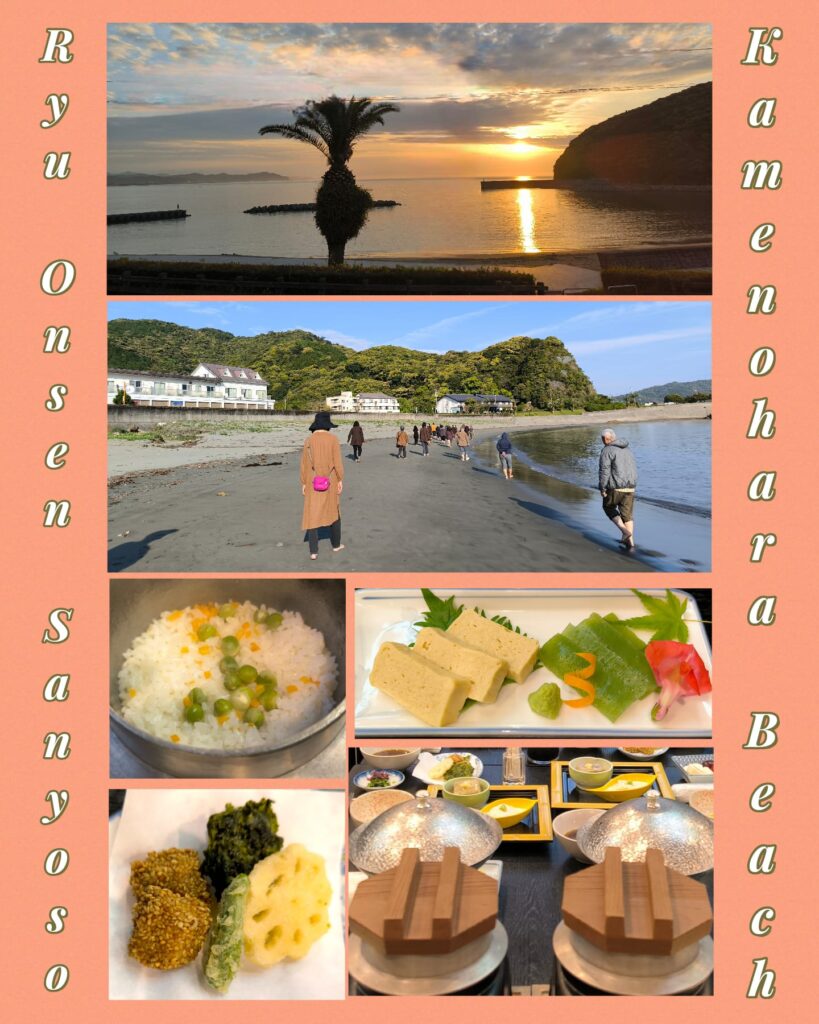
At 6 am, we had sitting meditation in a hall facing east. It was a beautiful morning: I could see the sun rising above the horizon in the far distance. After 10-20 minutes, the warm sunray fell on my head with waves of heat permeating my whole body. What amazing warm feeling! Afterwards, we had walking meditation at the beach barefooted. My feet were massaged by fine black sand and the sea water was refreshing. A most beautiful experience!
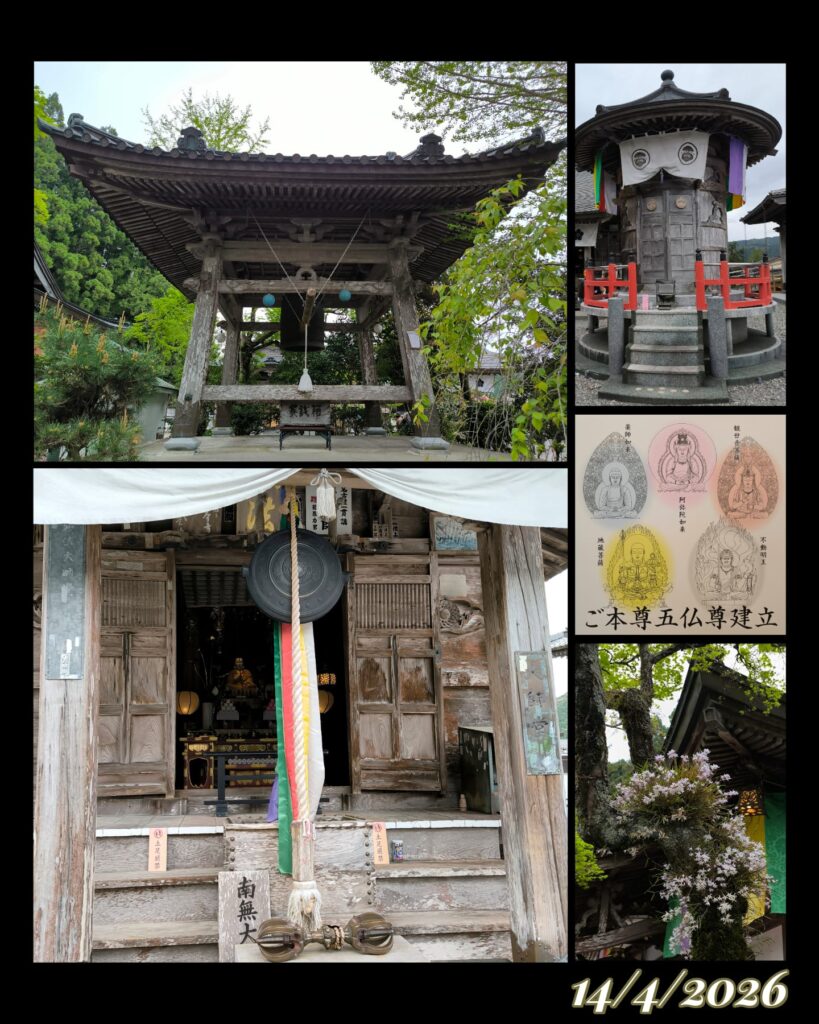
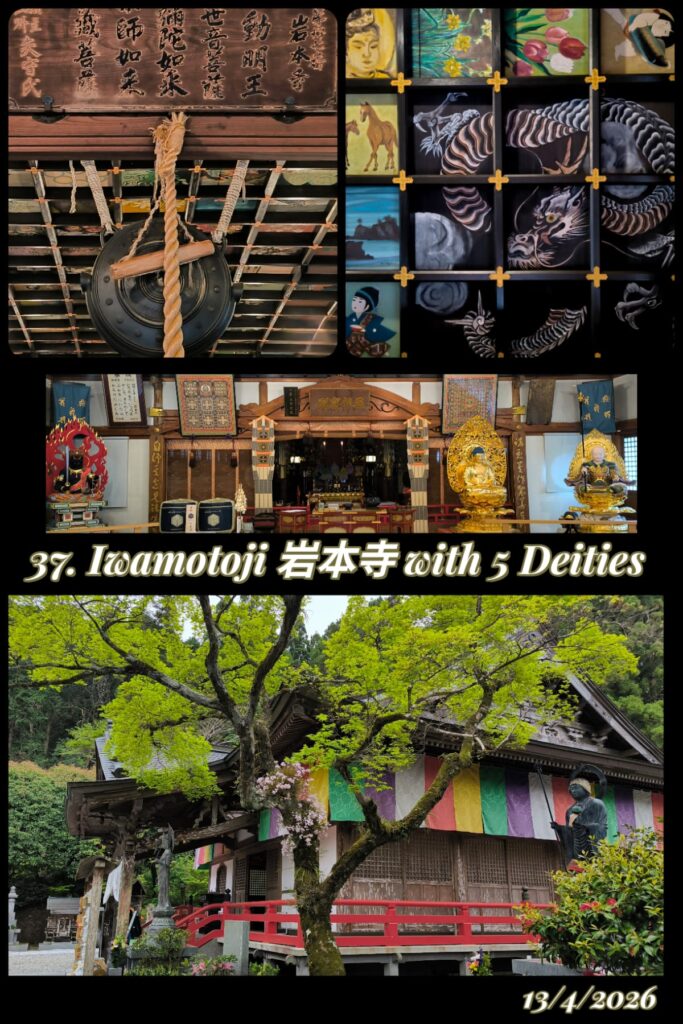
We had sharing by Sis Tu who was raised in a Catholic family about her path to become a monastic 17 years ago. Very moving! We had a great time in Temple 37 -Iwamotoji(729-749) where we had lunch as well. The Pilgrim’s Song is as follows-
Six of earth and five gods
Incubating Niita, the pleasure of deities
I remember this temple, which I called the “Arty Temple” during my visit in 2023. This temple venerating five principal deities namely the Immovable Wisdom King, Bodhisattva Avalokitesvara, Amitabha Buddha, Medicine Buddha, and Jizo Bodhisattva, has a ceiling with paintings.
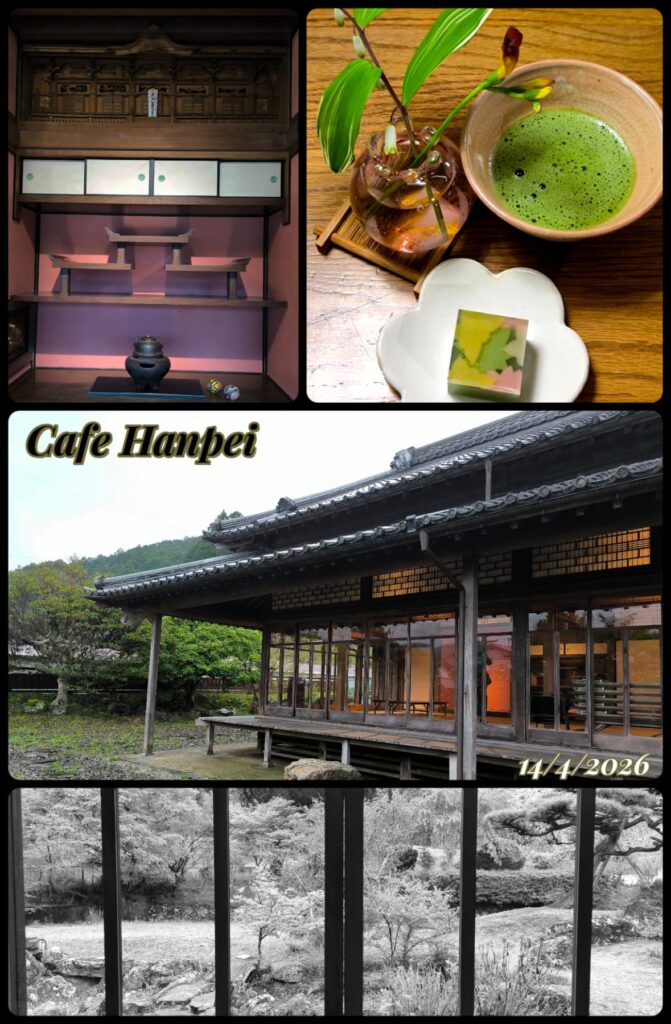
The original plan was to stay in this temple. But as a group had already booked, we had to find alternate lodging. We had a nice lunch in the temple and afternoon tea and sharing at Cafe Hanpei near the temple. The cafe is housed in an old, stylish and elegant house built in 1901 by a successful businessman, Tsuzuki Hanpei. It has been restored with its original architectural details, including sliding doors, ornate transom panels, wooden flooring, and tatami rooms displaying a combination of elegant Japanese-style and semi-Western style spaces. I was in the sharing group with the two brothers and appreciated the deep sharing with my Plum Village friends.
Rain almost stopped on our way to the Ryu Onsen Sanyoso. We had a lazy evening after a big dinner.
Day 9 April 15 Lazy Day
I was planning to get up early to watch sun rise from the beach. But it was cloudy. At 6 am, we had sitting meditation followed by sharing by Br Phap Khoi who used his personal experience to illustrate how one thought could powerfully change one’s behaviour and path. He had watched how his grandmother had suffered from breathing problem and gasp for air. After her death and when he saw a fish struggling and gasping for air, he felt the pain and suffering of the fish, and could not eat fish any more. He became a vegetarian. Very moving!
As the weather improved slightly and we still had time, we had a short walking meditation on the beach before breakfast. After breakfast, we took a bus ride of 150 minutes to take a river cruise on the Shimanto River, which is 196-km long and known as “Japan’s Last Clear Stream”, and for its submerging bridges designed without railings to sink below the water surface during floods.
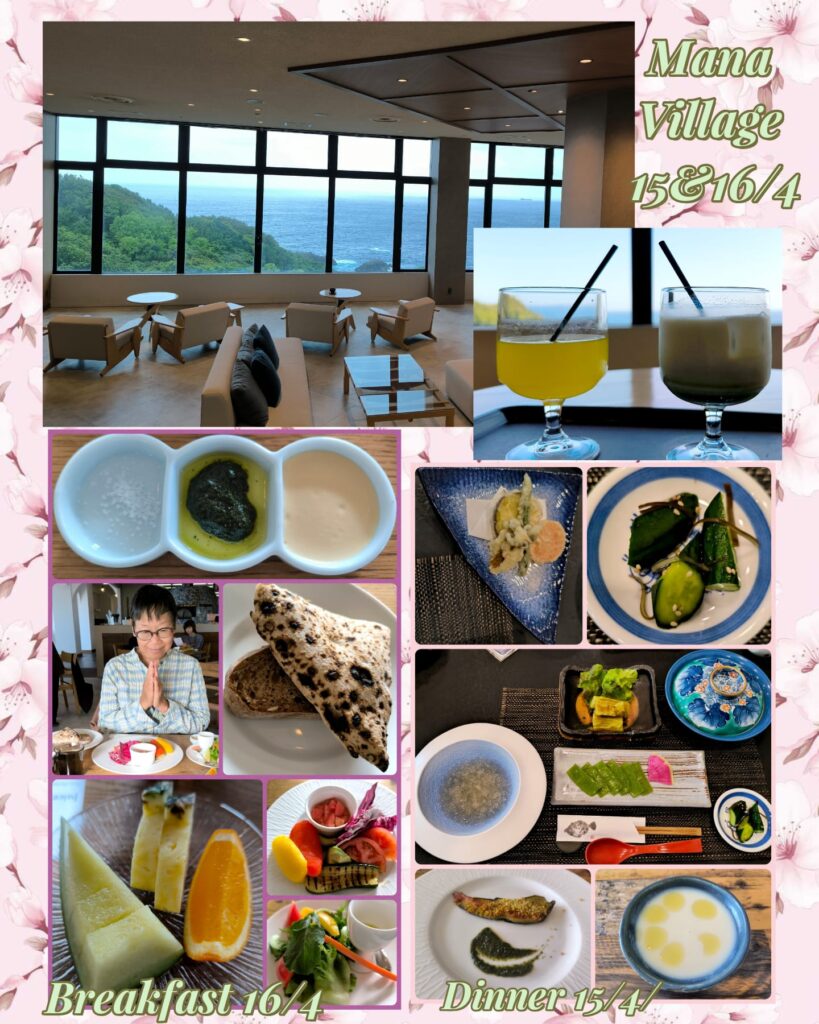
We had bus meditation and sharing by monastics. I was not particularly impressed by the 50-minute river cruise on a houseboat. We could not move around nor go outside. Afterwards, we had lunch in the same restaurant in Shimanto City that I had lunch in 2023. As the weather was not good, we did not have another beach walking meditation and drove to the Mana Village direct. This beautiful resort is perching on a cliff on a rugged coast. I went to the onsen after dinner and had a wonderful time watching the starry night and Milky Way while listening to the bashing waves. Then I joined a 30-minute free star-gazing trip organised by the hotel at 9 pm. As the talk was conducted in Japanese, I could not understand. But I did see the Milky Way, Polaris, Orion, Jupiter, Mars, Venus etc. I could not remember when I had last seen such an amazing starry sky!
Day 10 April 16 Temple 38
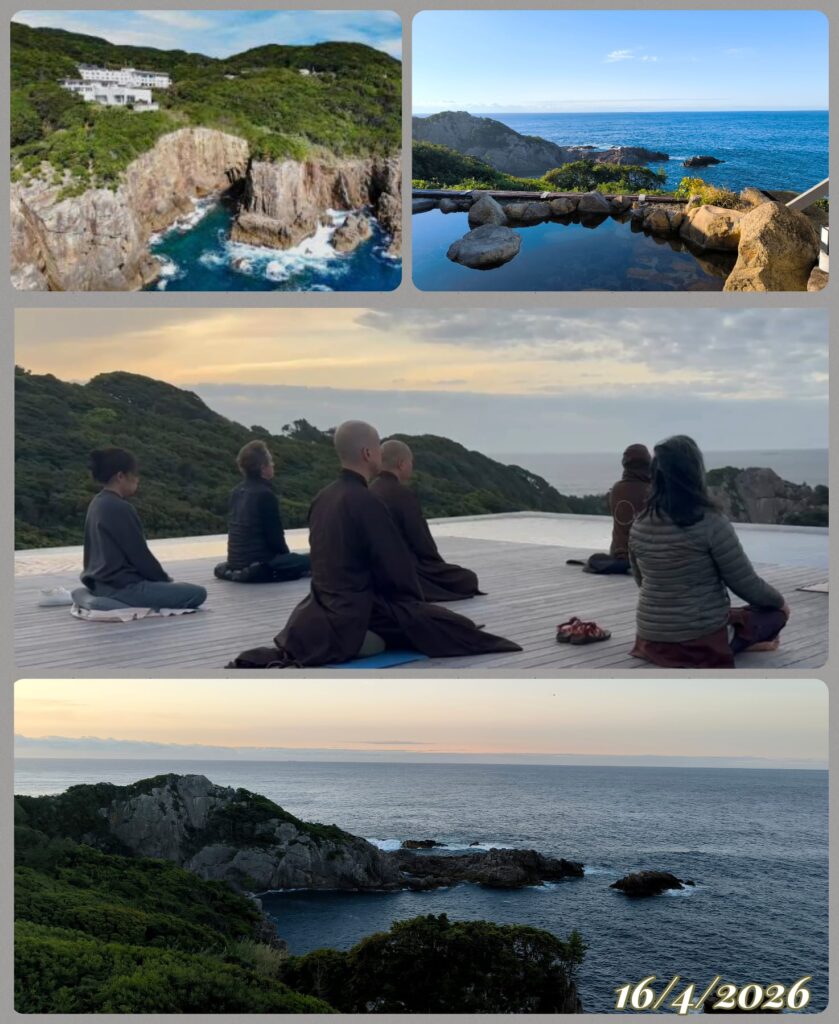
At sunrise, we began our sitting and walking meditation on the rooftop of the lower block overlooking the sea. The setting was unearthly serene and beautiful. We had a leisure morning and did not set off after an Italian lunch in the hotel with beautiful presentations and fresh ingredients. Temple 38 is under 2 km away: we could walk or take the bus. I decided to walk and started 15 minutes before the group departure at 1:30pm. Vicki joined me, and we had a mindful walk. We arrived at the temple before 2 pm and watched others arrive by bus and on foot.
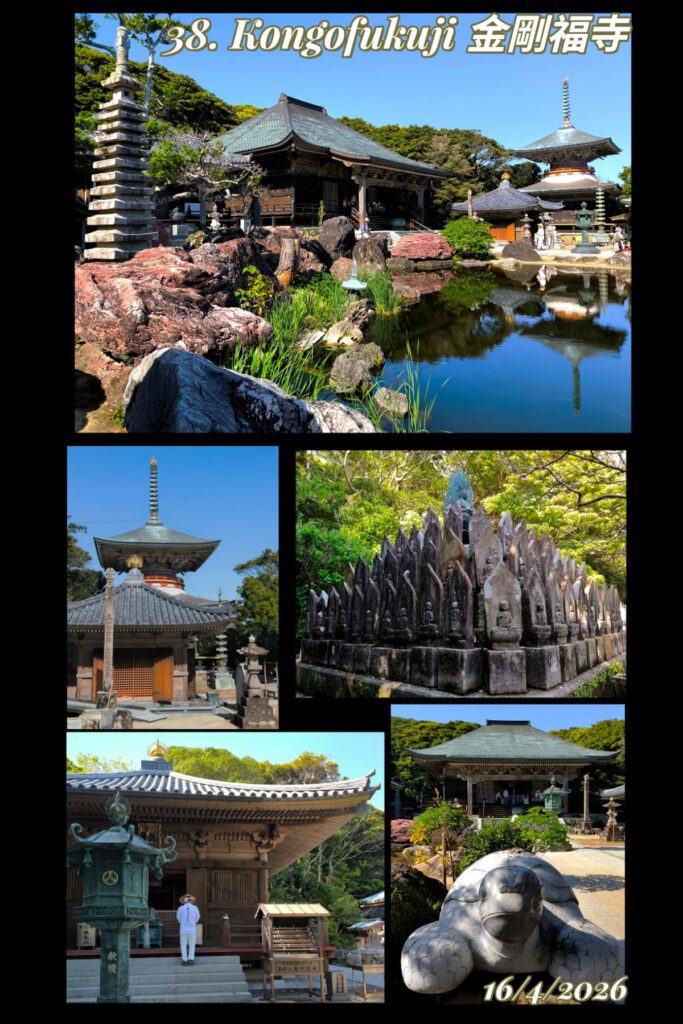
This was my third visit to Temple 38-Kongofukuji (822) which Pilgrim’s Song is as follow-
Fudakuya here is the cape ship
Mountain of stumbles for a smoother law
This is a beautiful grand temple with a large pond and numerous colourful stones. Sis Trai met the English speaking abbot and his wife, who invited our group to return the following morning at 8 am to watch a Goma Fire Ceremony to be performed for a practitioner in Hong Kong who has been on Henro 17 times! She had some afflictions recently and sought the blessings.
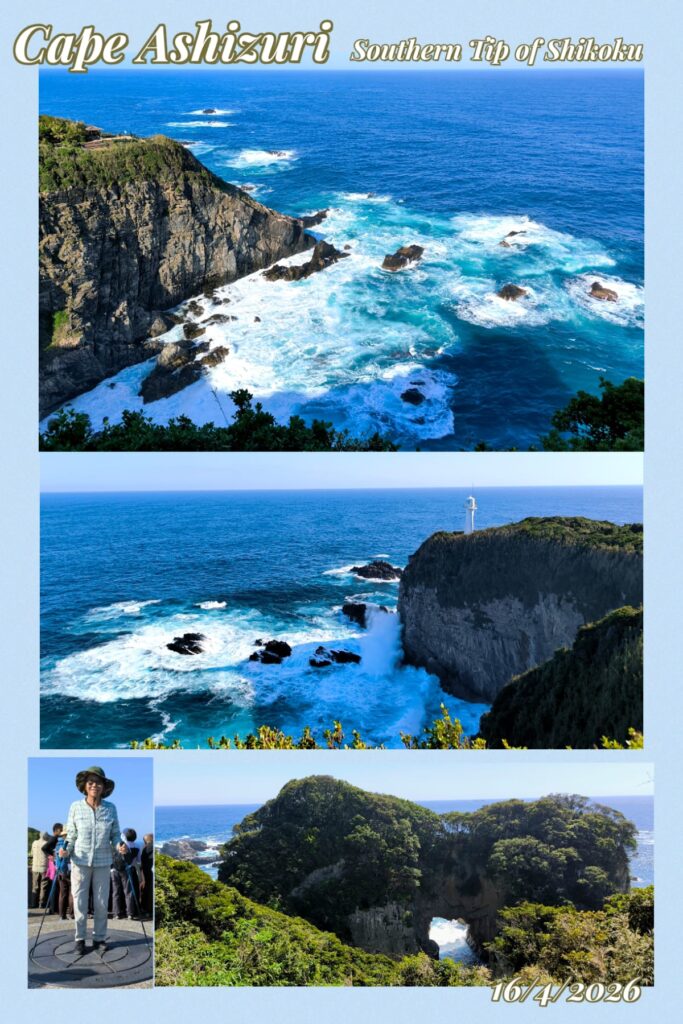
After the temple visit, we visited Cape Ashizuri, the southernmost point of Shikoku with dramatic panoramic views of the Pacific Ocean. This was my third visit to the Cape. On our way to the viewing platform, Hairo took us on a trail covering the “Seven Wonders of Ashizuri” sacred sites created by Kukai. They include Taishi’s Nail-writing Stone, Yurugi Stone, Turtle Stone, Hell Hole, Tide Hand-wash Basin, Constant Water Basin, and Torii Gate not Finished in a Night. We walked by most of these sites and the lighthouse. Tonight, the sky was cloudy. I felt blessed that I had seen one of the best starry nights in my life the night before.
Day 11 April 17 Temple 40
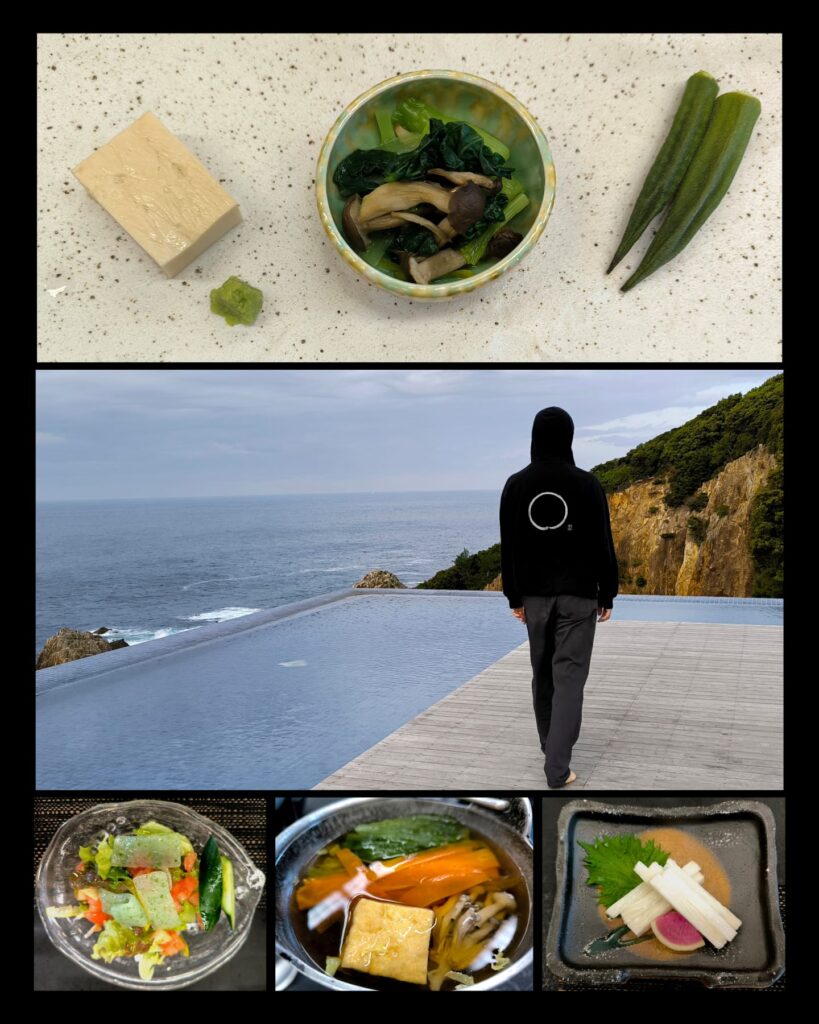
Today was cloudy without a clear sky. We had sitting meditation as usual before a short walking meditation on on a secret path next to the hotel ground. I did not join as I had slippers and not shoes on. I also knew part of the path was steep and might be slippery. I therefore stayed on the rooftop practicing walking meditation on my own. Reo also stayed behind. We practiced till 7 am when it was time for breakfast.
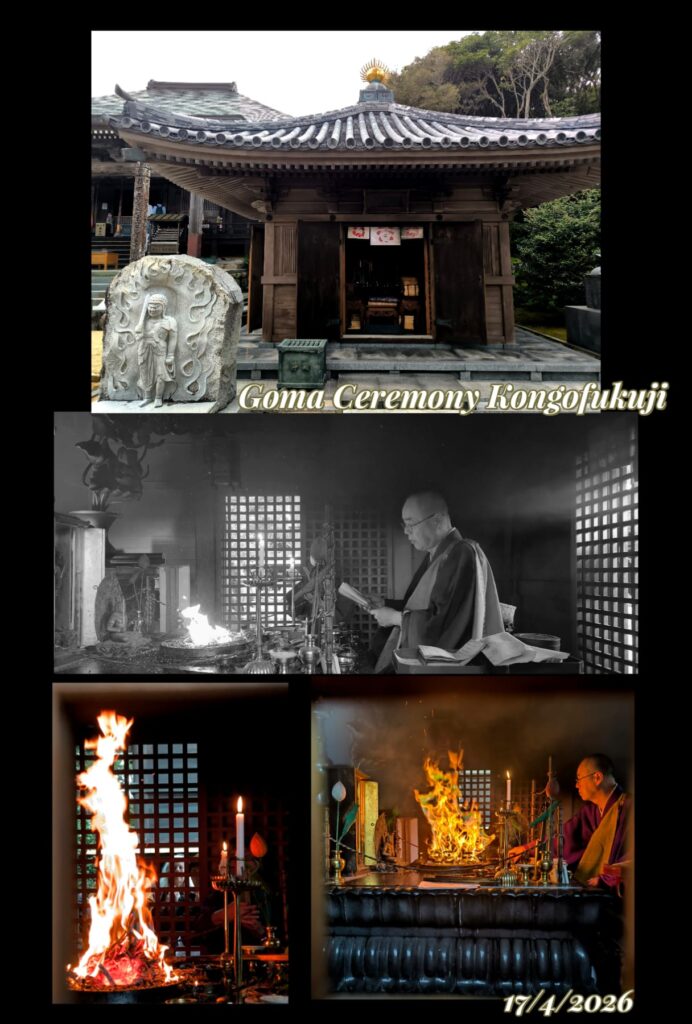
At 7:45am, we took a bus ride to the Kongofukuji to watch the Goma ceremony. This time, the setting was different – the ceremony was held in a small shrine with us standing outside. The assistant and the abbot’s wife were chanting the Heart Sutra while the abbot performed the ceremony, throwing wooden sticks, rice, grains, and herbs into the fire. The ceremony was streamed live to Hong Kong. We returned to Mana Village and had time for coffee before departing at 10:30am.
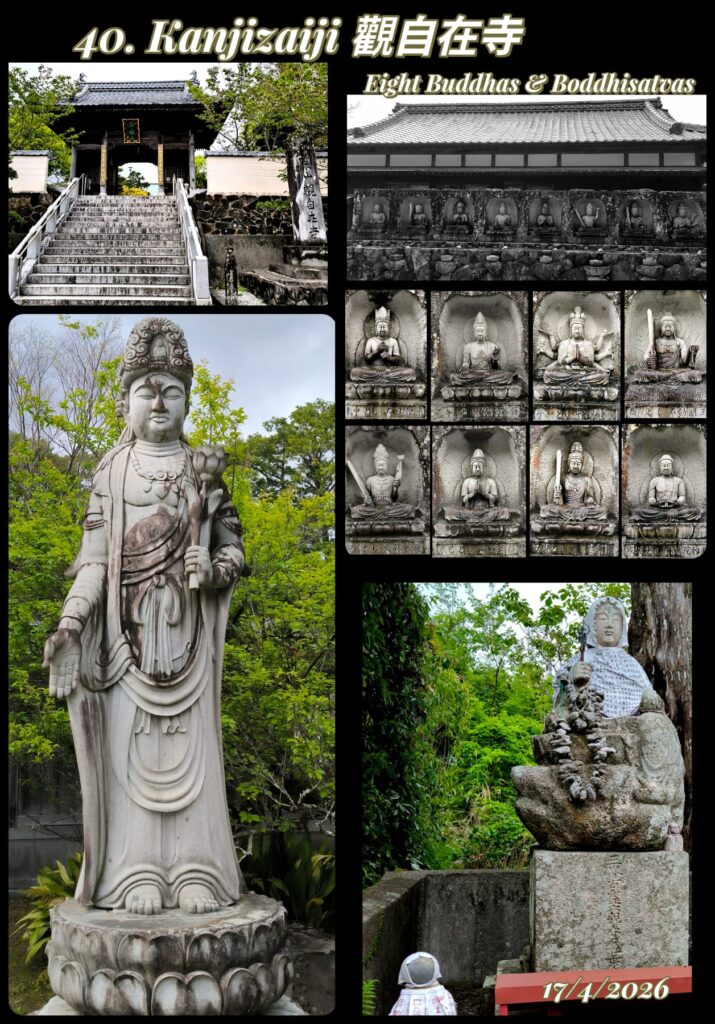
Today, we visited Temple 40-Kanjizaiji (807) which Pilgrim’s Song is as follow-
Flowers freely bloom in the spring of my desire
Yet a burned-out thing lives in the transient world
The main hall was rebuilt in 1964 while the Daishi Hall in 1993. The corridors allow pilgrims to perform the sand-treading ritual of the Shikoku 88 Temple Pilgrimage. There are eight Buddha/Bodhisattva statues covering the twelve in Chinese calendar. I discover Mahasthamaprapta, the protective deity for people born in the Year of Horse, is my protector. As this temple is named after Bodhisattva Avalokitsvara, we chanted “Invocation” on acts we are inspired to follow.
Tonight, we stayed at the JR Hotel Clement Uwajima. Again, all single members had a single room (same arrangements as in November 2024). I guess the rooms are not large enough to put in two single beds. As a result, I had a good sleep especially after a nice dinner in a nearby restaurant. I had a great day!
Day 12 April 18 Temple 41 & Ozu
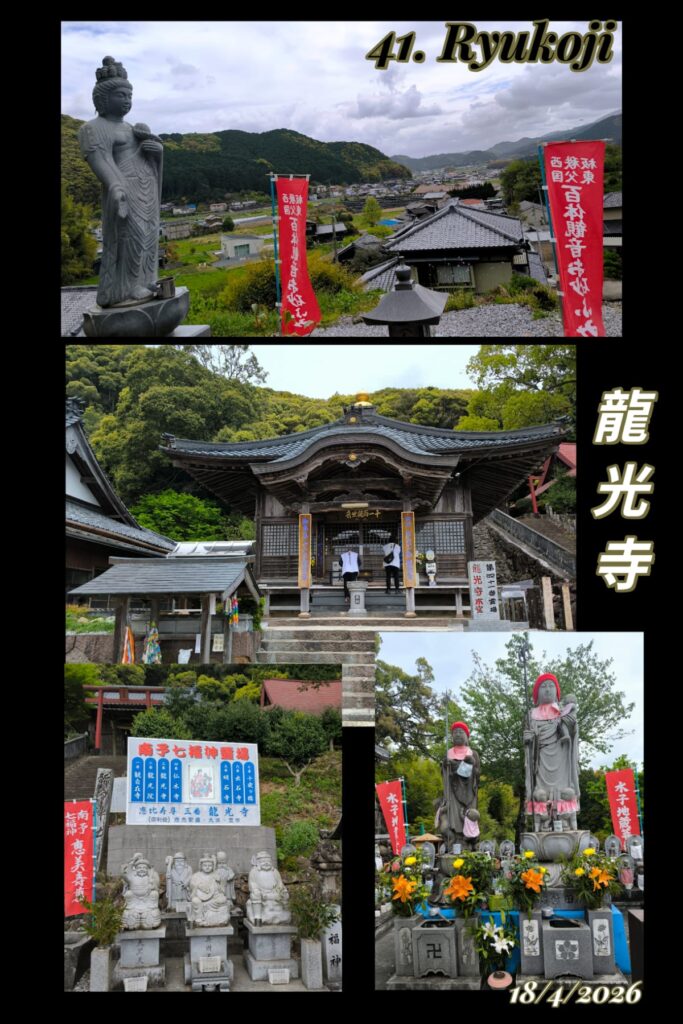
We had dharma talk before leaving for a temple visit. Instead of two temples, we only visited Temple 41-Ryukoji (807) with the following Pilgrim’s Song-
The Mikkyo guarding god of Mikuni
Listens to the vows you keep
This is a fairly small temple. This time I learned more about its history. It has syncretized Shinto and Buddhism since its founding: it was maintained as an Inari temple. Under the Meiji era, the old main hall became an “Inari Shrine”. A new hall was constructed enshrining the statue of the Eleven-faced Kannon Bodhisattva, the original Buddha of Inari, as the principal object of worship. The statue of Inari Myojin, invited by Kobu Daishi, is also enshrined and resides here.
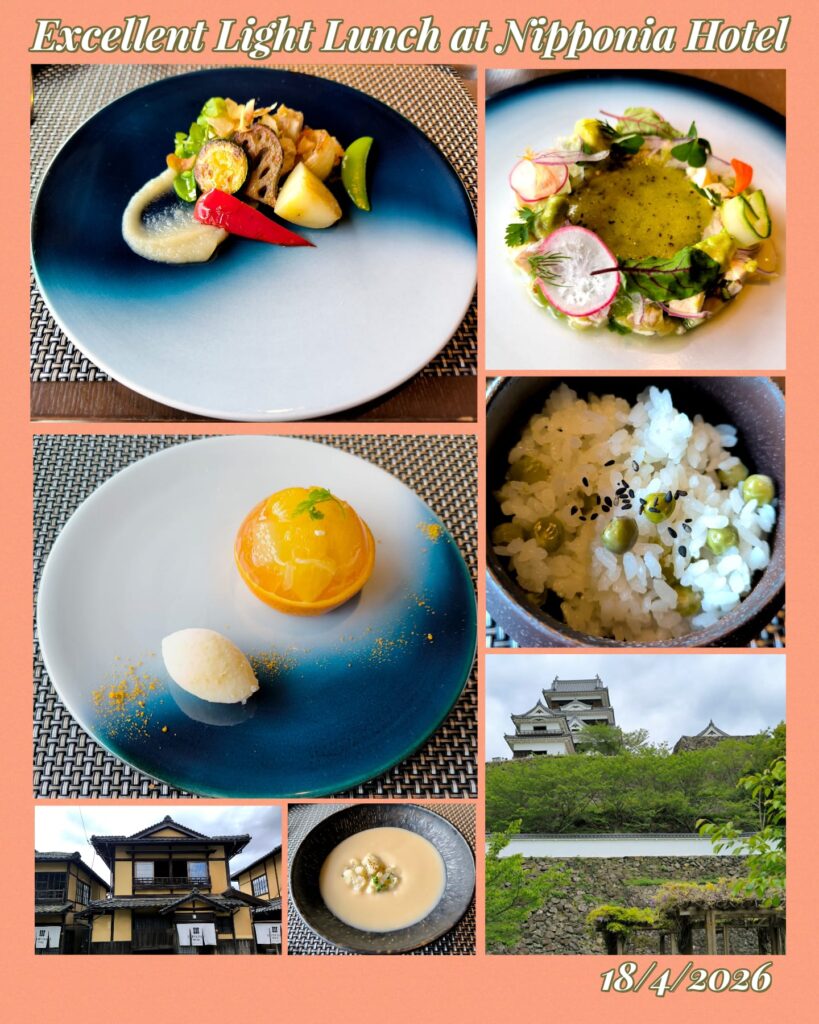
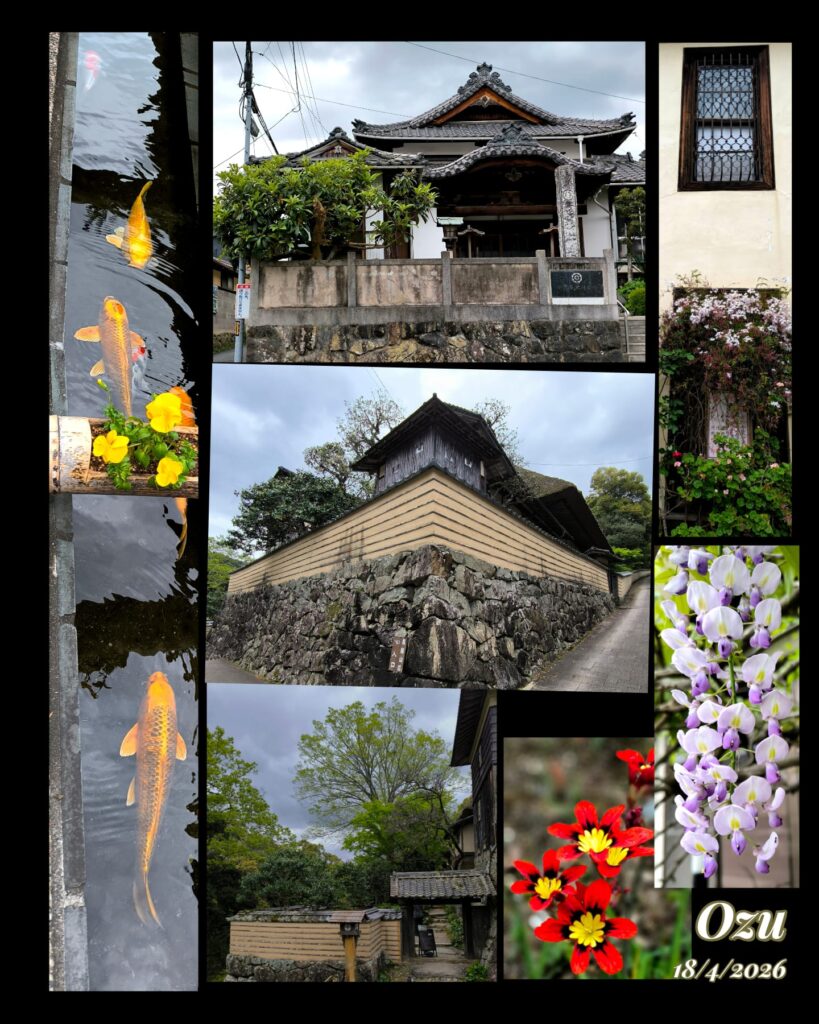
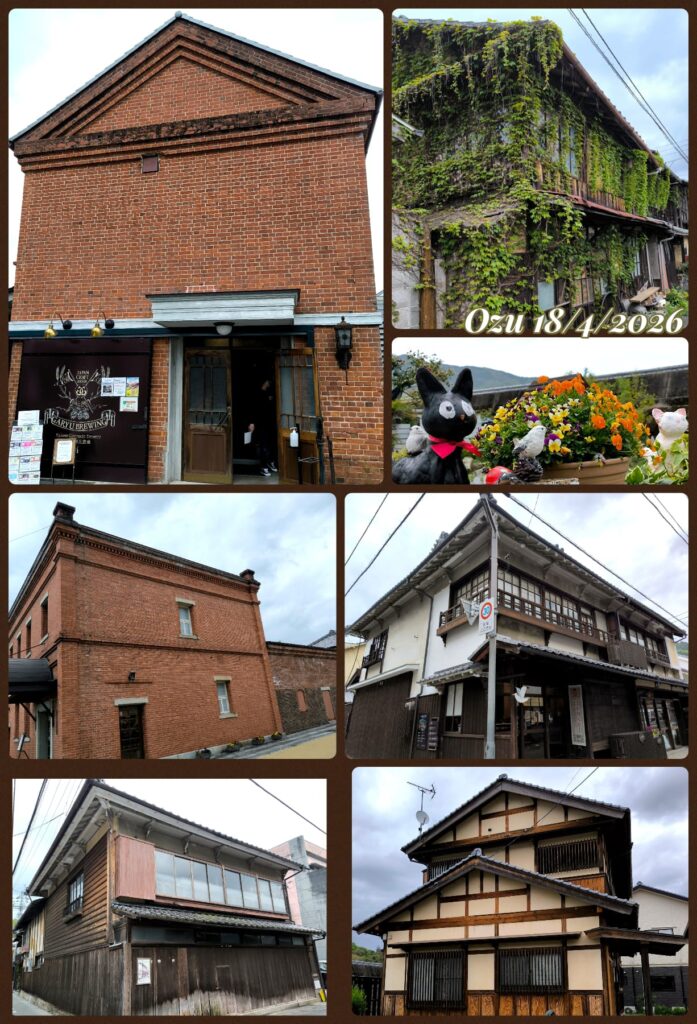
We then went to Nipponia Hotel Ozu Castle Town for lunch. I sat with Lisa by the window with full views of the Ozu Castle. I enjoy chatting with Lisa who is sweet and wonderful. After lunch, we had an hour’s walk in Ozu, a picturesque town called “Little Kyoto”. I followed Ken to the Ohanahan Street lined with old houses before turning to Nakamachi. The guided walk ended at at Garyu Sanso. Then I strolled on my own and reached the Omoide Soko, and Ozu Akarenga-Kan. We then proceeded to a lovely onsen hotel called Okudogo Ichiyu No Mori located in the deep valley of the Ishite River. The spring water that supplies Dogo Onsen rises here. I shared a room with lovely view of the valley with Alexandra. We had dharma sharing about this journey in an old house in the Japanese garden before dinner. The dinner was delicious. After dinner, I went to the onsen with seven different kinds of hot spring bath. I tried five out of the seven pools. Very relaxing!
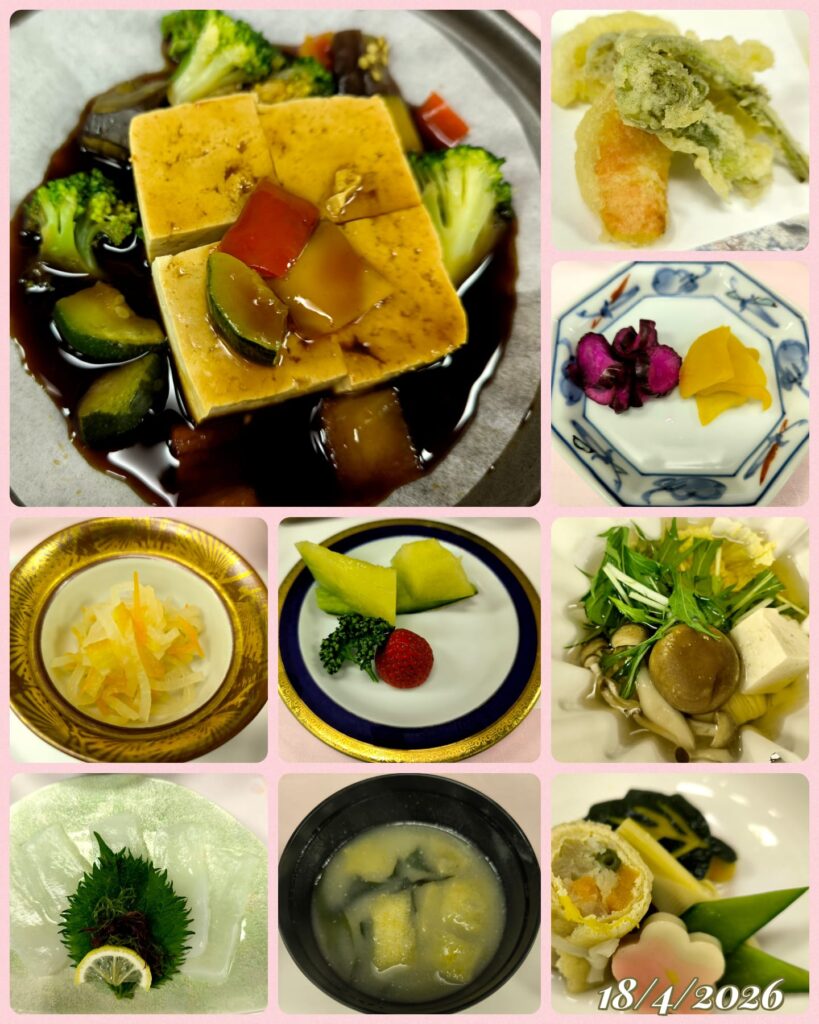
Day 13 April 19 Temple 51 & Dogo Onsen
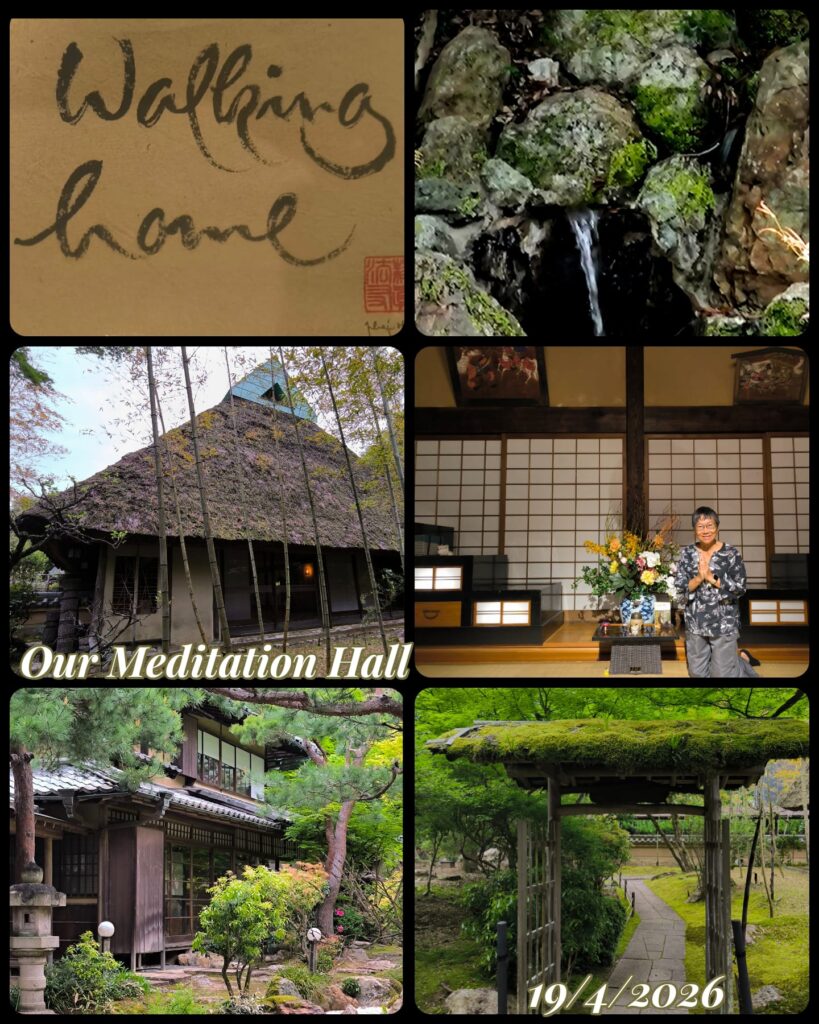
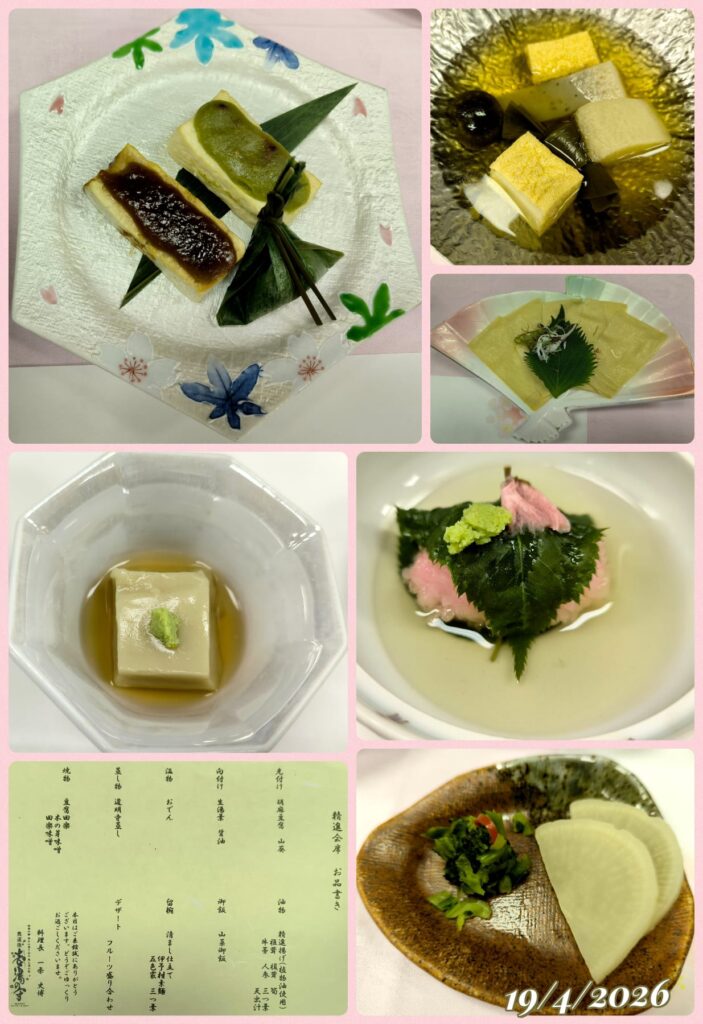
At 6 am, we were all seated in the hall ready for the Transmission of Five Mindfulness Training ceremony. It was the third transmission ceremony for me. The first time was when I received the transmission in India in February 2025. I watched a similar ceremony in Thailand last November. It is a beautiful occasion and I am happy for those who took it for the first time or renewed their faith and practice. Sis Trai also shared her path and how Thay instructed her to help spread the tradition in Japan. Very moving!
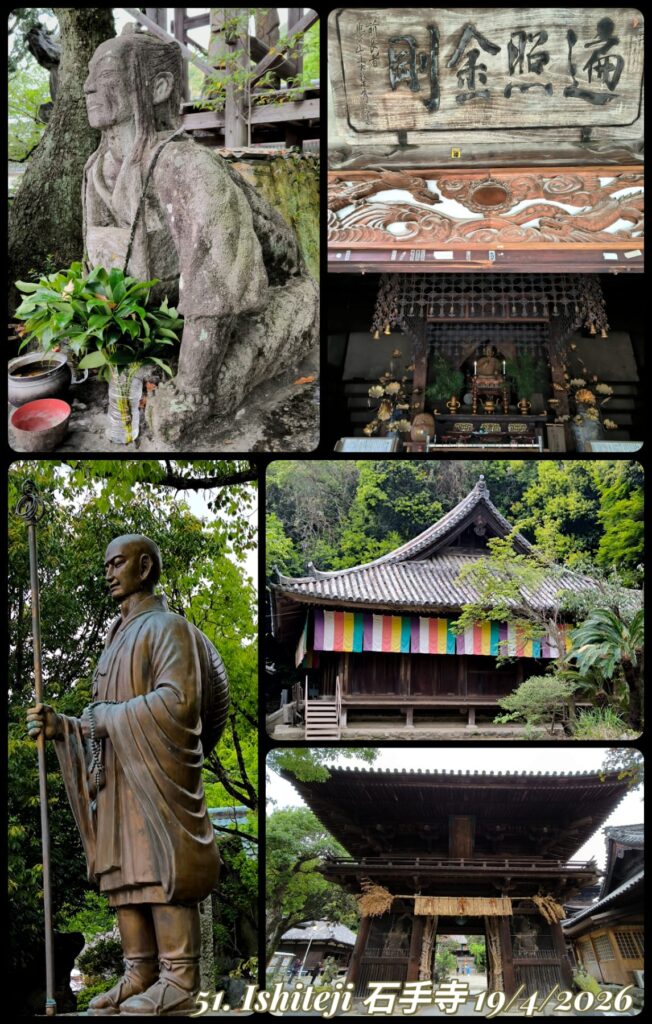
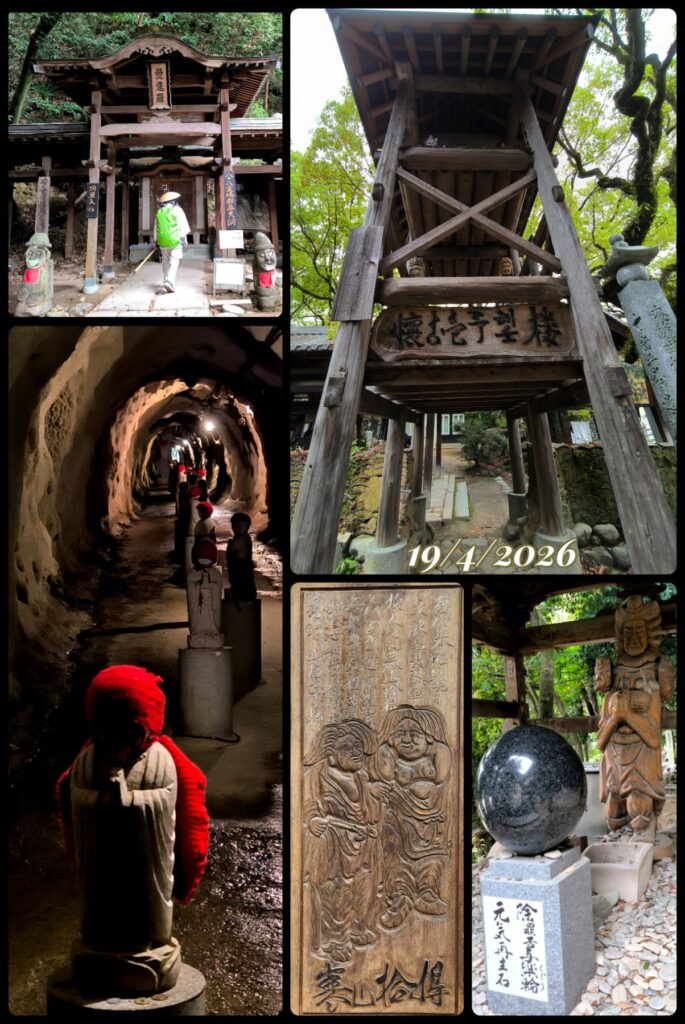
After a light and lovely lunch at the hotel, we set off for the last temple of this pilgrimage – Temple 51-Ishiteji (729) which Pilgrim’s Song is as follows-
Looking for the West, you can see Annyoji
Worship and receive the ten great pleasures
The name Ishite-ji origins from the legend of the reincarnation of Emon Saburo, the originator of the Shikoku Pilgrimage, who began a pilgrimage around Shikoku following Kobo Daishi. During the pilgrimage, he fell ill and clutched a stone inscribed with “Reincarnation of Emon Saburo”.
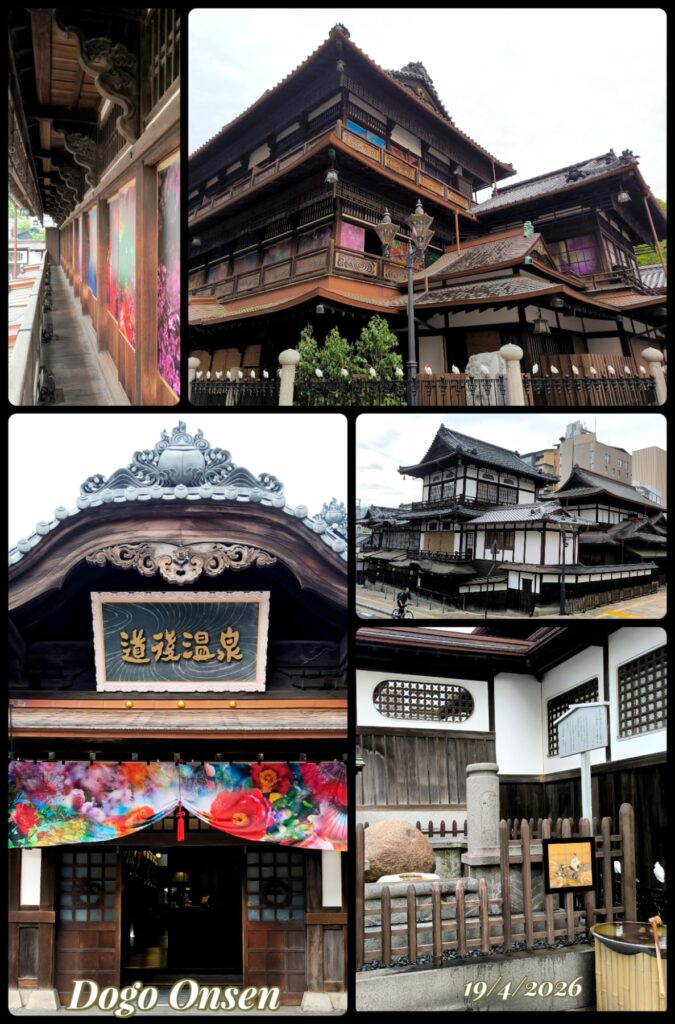
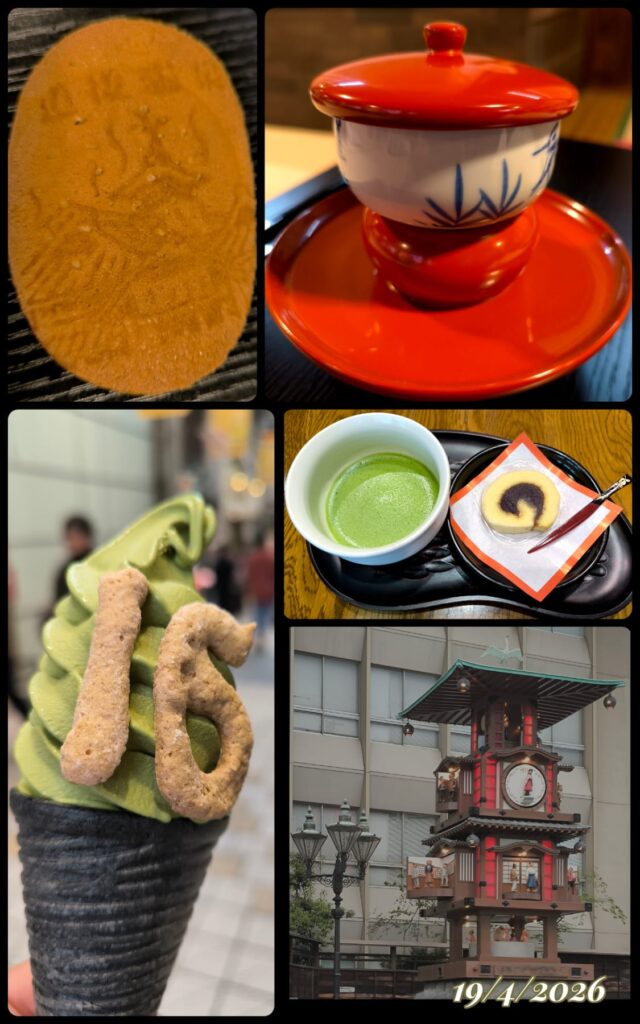
At 3 pm, we visited the Dogo Onsen, one of the oldest hot springs in Japan boosting a history of over 3,000 years. The building has been restored since my last visit. I recalled its small public bath area. Anyway, I joined the group and went in again. It was so crowded that I did not stay more than ten minutes! I however enjoyed resting in the atmospheric 2nd-floor seating area till 4 pm. We did not return to the hotel till 6:20pm. I spent two hours strolling aimlessly in this small town having ice cream, green tea and dessert.
We had a sumptuous farewell dinner. Ken handed pilgrims their prayer book with stamps from the temples visited. Ken also gave us souvenirs including a note written by himself and translated into English by Google. He shared his moving personal life, hard time, struggles and transformation since guiding pilgrims on this pilgrimage. He shared his joy during this journey with us: he felt he was on an overseas journey! I was moved.
Day 14 April 20 End of Pilgrimage
I got up early and visited the onsen for the last time at 6am. After a full breakfast, we were all busy saying goodbye to our friends. At 9 am, I boarded the bus for the last time. We would be dropped off at the airport, the train station and finally the port. As I would depart for Hong Kong from Hiroshima airport on 22 April, I took a normal ferry to Hiroshima at 12 noon. I finally arrived at the port before 3 pm and took Tram No 1 to the Hiroshima Train Station. I would spend two nights in Toyoku Inn close to the station. I was tired and hungry. After an early dinner, I went to bed before 9pm and had a good sleep.
April 21 Miyajima
Today, I planned to visit Miyajima, the Peace Memorial Park, and the National Peace Memorial Hall for the Atomic Bomb Victims in Hiroshima, all World Heritage Site. I took a JR train around 8 am to Miyajimaguchi (420 yen one way) and then a 15-minute ferry. After travelling for almost an hour, I arrived in Miyajima (an island with 30.39 sq km in Hiroshima Bay) known for its forests, ancient temples, and the off-shore giant, orange Great Torii Gate.
I followed the crowd and reached the Itsukushima Shrine and the floating Torii Gate at high tide. I bought a ticket and walked through the complex with some 20 buildings and structures including the large Honsha shrine and the Sessha Marodo-jinia. The iconic Torii Gate was first erected in 569, and the current structure measuring 13.4m tall and 9.9m in circumference, with a crossbeam approximately 23.3m long, dates to 1875.
Next, I visited the Daigan-ji belonging to the Shingon Buddhism on my way to Daishoin, a historic Buddhist temple at the base of Mount Misen founded in 806 by Kukai. Attracted by a tea house with a Japanese garden at the bottom of the staircase to the temple, I went in and had green tea for over half an hour. The temple complex has many buildings, several halls, temple gates, a garden featuring 500 Arhats, and numerous statues of Avalokitsvara, Jizo, Fudo Myo-o, the Seven Lucky Gods and the three monkeys There is an O-sunafumi under the Main Hall. I performed the sand-treading ritual of the Shikoku 88 Temple Pilgrimage for the last time on this journey
There is another big Bodhisattva Avalokitsvara Temple. Underneath the main hall is a Saigoku Kannon Pilgrimage O-sunafumi. It was an experience to grope in a narrow totally dark path finding myself face to face with 33 Avalokitsvara. At that moment, I could feel light and hope in total darkness!
It was time for lunch. I went in a small local eatery and had oyster with rice. Then I strolled along the main shopping street and took the 4 pm boat back to Miyajimaguchi. Instead of taking the train, I took Tram No 2 that took over an hour to reach the Hiroshima Train Station. I passed by the Peace Memorial Park but felt too tired to get off. I hope to return to Hiroshima one day to visit the memorial park and hall. I had tapas in a restaurant before returning to the hotel.
April 22 Hiroshima – Hong Kong
I took the 10:30 am airport bus (1,500 yen) to Hiroshima Airport which is small and modest requiring upgrading. The security check system is dated and inefficient. There is even no proper cafe shop / eatery inside the tiny departure hall. Anyway, my cheap flight with HK Express departed on time and I had a safe journey home.
Remarks (to add)