
Part 3: 14-day Pilgrimage / Retreat in Shikuko (7-20/4/2026)
Kobo Daishi and Shikoku Pilgrimage
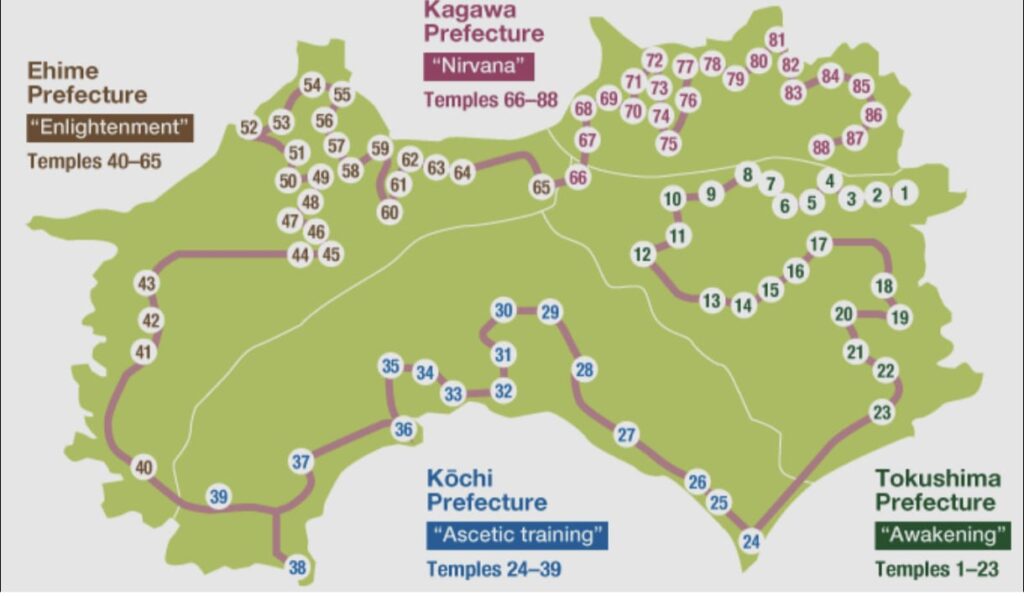
A pilgrimage normally means a long, often challenging journey to a sacred or holy place for spiritual reasons, reflection, or to honour a significant figure or site. It acts as a trans-formative, intentional journey – often on foot- that combines journey physical action with spiritual growth. The Shikoku Temple Pilgrimage (Ohenro or Henro), a 1,200-1,400 km circular journey visiting 88 sacred temples founded by monk Kobo Daishi (Kukai) (774-835) who traveled to China in 804 where he studied Tangmi (Chinese Vajrayana Buddhism) and received the final initiation from Huiguo (746-805) to become a master of the esoteric lineage. On his return to Japan in 806 as the eighth Patriarch of Esoteric Buddhism, he founded the esoteric Shingon School of Buddhism. I commenced the Shikoku Temple Pilgrimage in December 2012 and finally visiting all 88 temples in November 2023. Some Japanese Buddhists would take henro more than once in his/her life. In October 2024 I also completed Shikoku Bekkaku visiting 20 Sacred Sited associated with Kobo Daishi.
My Expectations
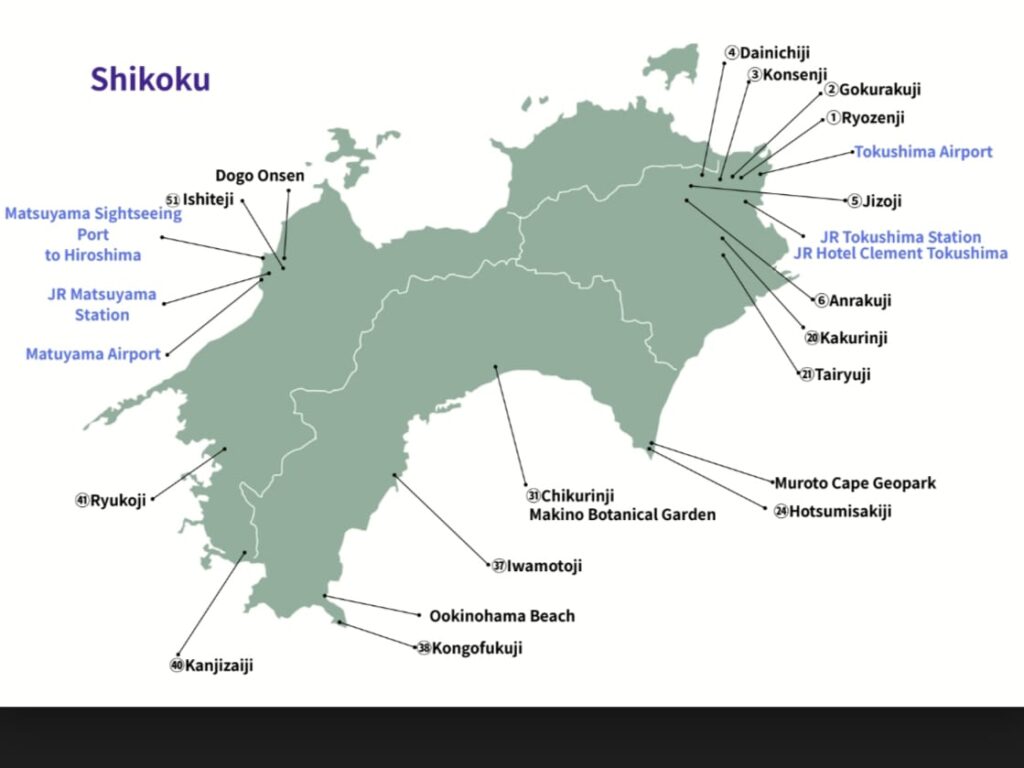
I have not thought of taking another henro till this idea was mooted in the WhatsApp Plum Village 2025 Indian Pilgrimage group at the end of last year. Plum Village with its own tradition has planned this pilgrimage “as an inner journey – a path of love and understanding”. Though I did not have an inner call for embarking on henro again, I decided to join this 14-day Pilgrimage Retreat: Walking Home – A Journey of True Presence with 35 pilgrims including four monastics namely Br Chan Phap Xa, Br Chan Phap Khoi, Sis Chan Tu Nghiem (from Hong Kong) and Sis Chan Trai Nghiem and a dedicated team of Japanese volunteers (Rei, Reo, Lisa, and Hisea). The plan was to visit 17 out of 88 temples that are located in the Tokushima, Kochi and Ehime Prefectures.
This time I did not bother to get stamps on my prayer book (record book with red stamps and Japanese calligraphy) that has already had the stamps of all the 88 temples. I don’t need a new one to show I am on a pilgrimage again, or as mementos. As it was my third visit to some of the sites, I took fewer photos as I had already taken enough photos. For me, it is not about the temples to be visited for the second or third time. Instead, it would be a journey on retreat totally immersed with practices i.e. no speech from 9 pm to after breakfast the following day, mindful eating, sitting, walking and singing meditation, dharma talk, dharma sharing, gatha practice and total relaxation. Temple rituals are of course essential practices to train and purify the speech, body and mind. The presence, talks and mindful postures of the monastics were conduits for deep connection with Buddha’s teachings, ourselves, our spiritual ancestors, and the Mother Earth, facilitating our discovery of the path itself is our true home.
Day 1 April 7 Arrival Day – Tokushima
I arrived at JR Hotel Clement Tokushima and met Sue, Rie, Sis Trai, Janet, Jennifer and Reo who joined the Indian pilgrimage last year. I shared a room with Gesina from Germany. After dinner, we had a short briefing by and introduction of the four monastic members and the volunteer team that helped organising this pilgrimage together with Sis Trai. Lisa (Reo’s wife) was the translator as Hiro, our Sendatsu / certified guide (A Sendatsu must complete at least four henro on foot) and Kai, our guide, spoke little English. The volunteers were very thoughtful and attentive to fine details: they prepared a beautiful furoshiki, a bag filled with things we needed including a practice guide for this retreat (with map of temples, the itinerary, reflection prompts and gathas, the Five Mindfulness Training, Plum Village practice songs, The Five Contemplation, gathas for Mindful Eating, and useful Japanese phrases), a book “Hiking Zen” by Br Phap Xa and Phap Luu), a box of incense and candles, a lighter, a booklet with chanting verses for henro, a scarf, and slips for writing our wish for the temples. Indeed, we received a lot of information before the trip including accommodation, details of each of the temples we would be visiting including the year it was established, its principal deity (deities), the mantra, the Pilgrim’s Song, the history and origin, and highlights.
Day 2 April 8 Temples 1, 2 & 5
After breakfast, we had a full briefing. First, the monastics gave a short talk on “Teachings on the Plum Village Dharma Doors” . Hiro, who completed his first henro at the age of 21 when facing adversities in life, outlined the temple visiting etiquette including bowing when entering and leaving the mountain gate of a temple, washing/cleansing hands and mouth, lighting a candle and three sticks of incense in the Main Hall followed by chanting the Heart Sutra in Japanese. The same steps would be taken at the Daishi Hall with the Heart Sutra chanted in English. Hiro is a compassionate and experienced Sendatsu as he has completed eight henro on foot and over 100 times not on-foot. (Hiro later shared his touching story during a long bus journey illustrating his path to becoming a Sendatsu). As I had been on henro and was familiar with the basic etiquette and rituals, my monkey-mind was in all places during this briefing!
Today’s Pilgrims’ Song was –
The battle of knowledge in the world of Kari
Look for protection from the Land of Ease
We finally set off after 10:30am and began our henro at Temple 1-Ryozenji (729-749). The Pilgrim’s Song is as follows-
Coming before Gautama Buddha at Ryozenji
The myriad sins of my life disappear
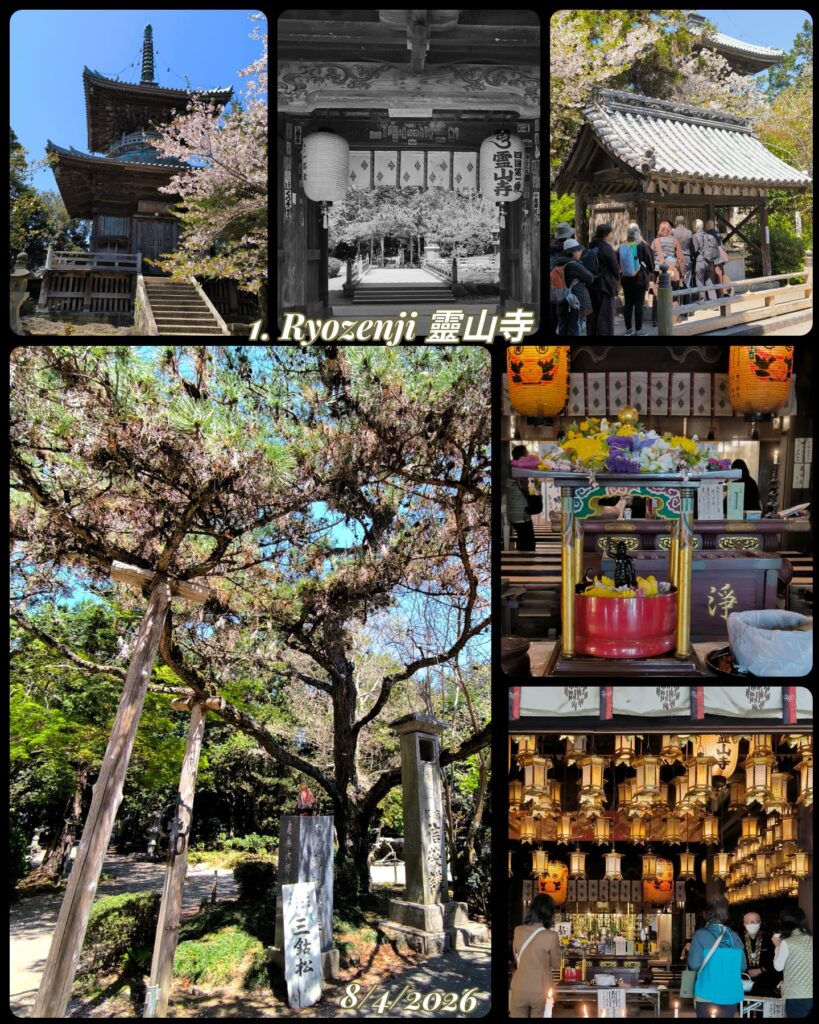
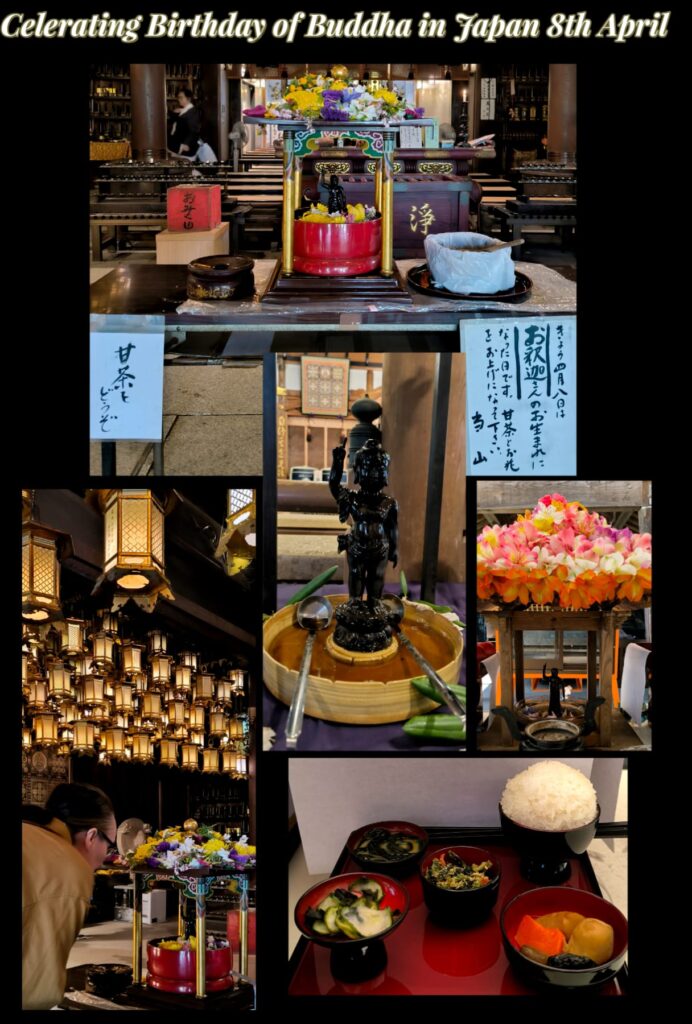
When I first set foot in this temple in 2012, I was not a Buddhist and did not know much about the history of Buddhism. Now I know the name Ryozen means the Vulture Peak in India where the Buddha had delivered his teachings. So the name of the first temple of henro has significance and meaning. In Japan, Buddhists celebrate the birthday of the Buddha on 8 May. Hence, we had a chance to bathe baby Buddha. In Hong Kong, we have a similar tradition, but we follow the lunar calendar. Instead of pouring tea over the statue, we pour water. We were treated with the same tea and were invited to chant the Heart Sutra inside the Main Hall. A special experience at the start of henro!
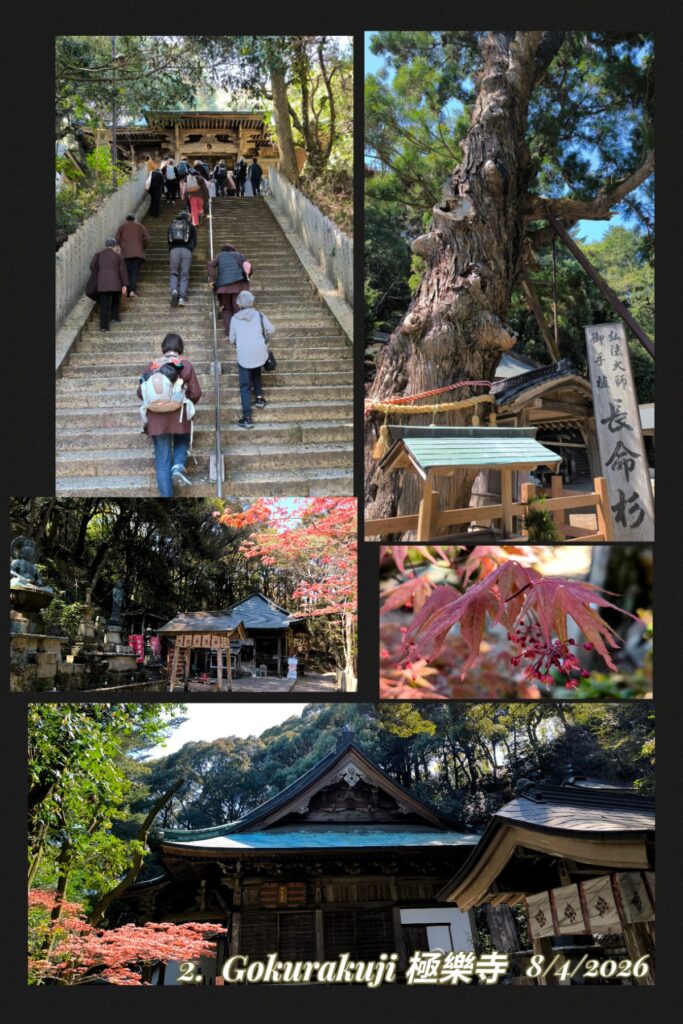
Then, we walked to Temple 2-Gokurakuji (710-793) with a stop midway to see the place where German soldiers in captivity during the WWII had stayed. Some chose to stay here after the war. It was lunch time when we reached the temple ground. We had bento (a typical lunch box in Japan) in a reception room before climbing a flight of staircase to reach the Main Hall and Daishi Hall. The Pilgrim’s Song is as follows-
If you want to go to the pure land of Sukhavati
You must say,”Namu Amida Butsu”
I did not have any memory of this temple. However, I had time to soak in the ambiance in the temple grounds and to embrace the 30m-tall giant cedar tree “Longevity Cedar” planted by Kukai 1200 years ago. This time, I realise how spacious and beautiful the temple is with cherry blossoms in full bloom and maple trees with green and red leaves.
We finished today’s visit at Temple 5-Jizoji (821). The Pilgrim’s Song is as follows –
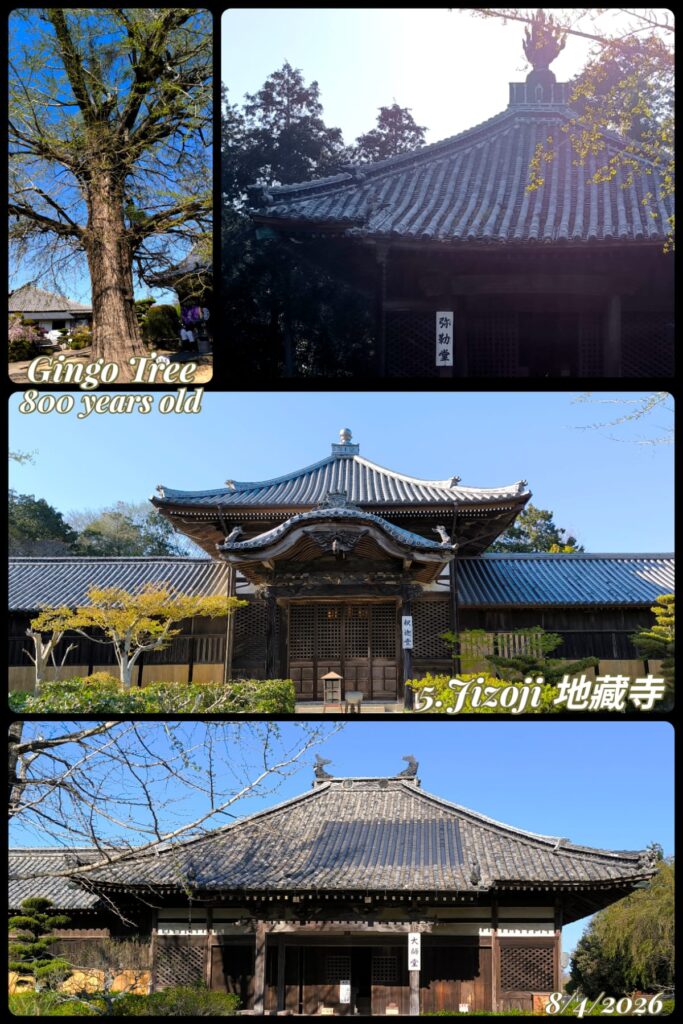
The Great changing Jizo knows the ways of the six realms
Guides to the future world
Jizo (or Ksitigarbha) is one of Japan’s most beloved Bodhisattvas serving as the guardian of children, travelers, and souls in the underworld. As there are six realms, Japanese Buddhists have the tradition to put six Jizo together with one for each realm. I learn about this tradition from Sis Trai for the first time. Memories of this temple popped up when I saw the 800-year-old Gingo Tree in the garden which I had embraced. In the autumn of 2012, I saw this magnificent imposing tree with glorious golden leaves. Today, the tree looks gigantic juvenile full of vitality. I also remember the inner temple, The Arhat Hall built in 1775 decorated with 500 statues of Arhats. Today, about 200 statues with various expressions on their faces remain after a fire in 1915.
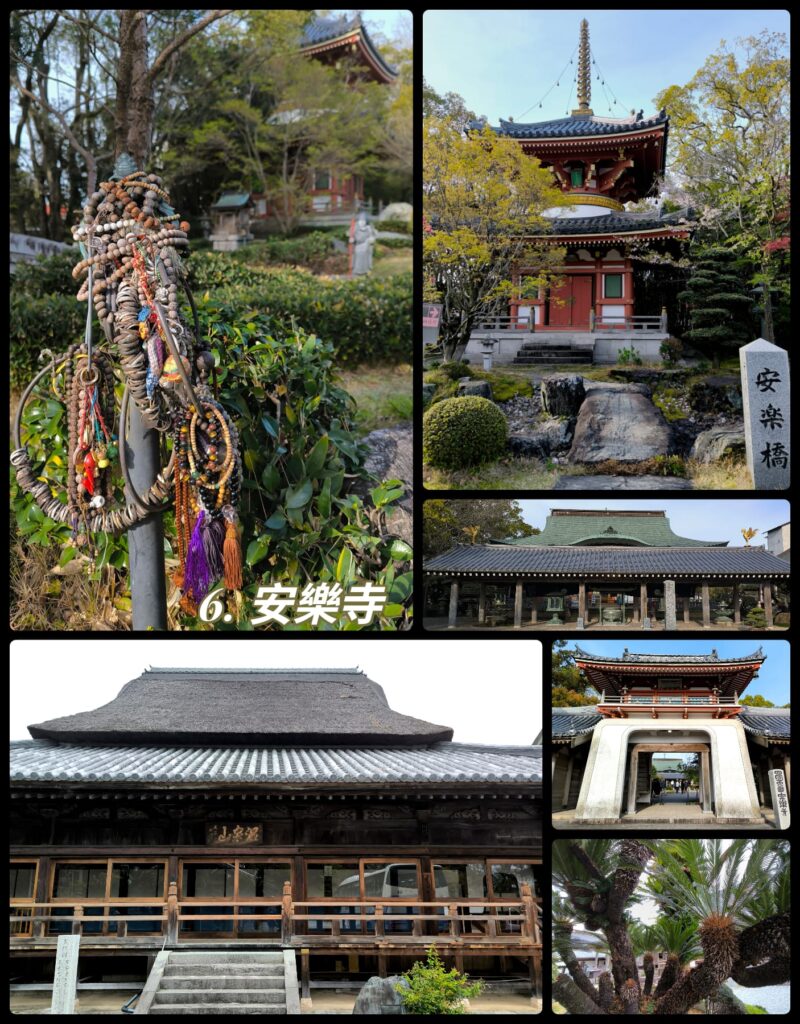
Then we proceeded to Temple 6-Anrakuji famous for its hot spring with therapeutic properties. This was the only temple lodging we had and I shared a room with Gesina. We had a fantastic total relaxation with Sis Trai performing violin.
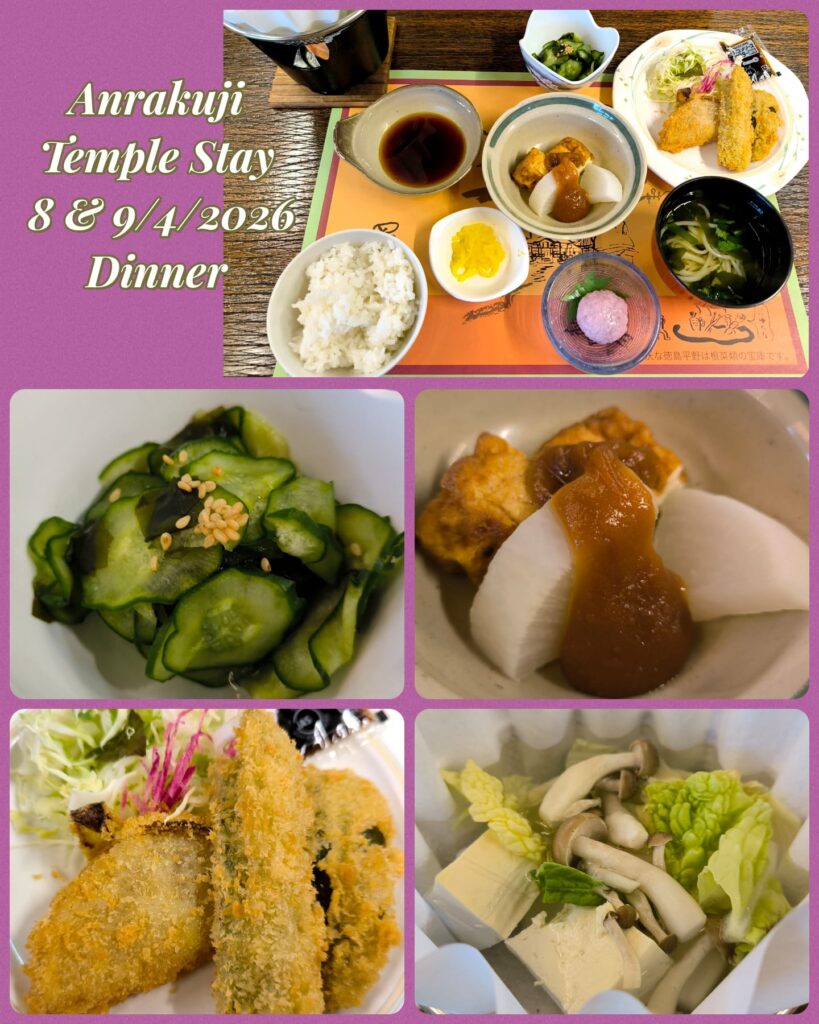
Day 3 April 9 Temples 3, 4 & 6
We began the day with sitting meditation, and followed by walking meditation outside the temple. We had dharma talk and lunch at the temple. In the afternoon, we visited two temples.
Temple3-Konsenji (729-749). The Pilgrims’ Song is as follows-
I thought of treasure pond of paradise
Give praise to the golden fountain
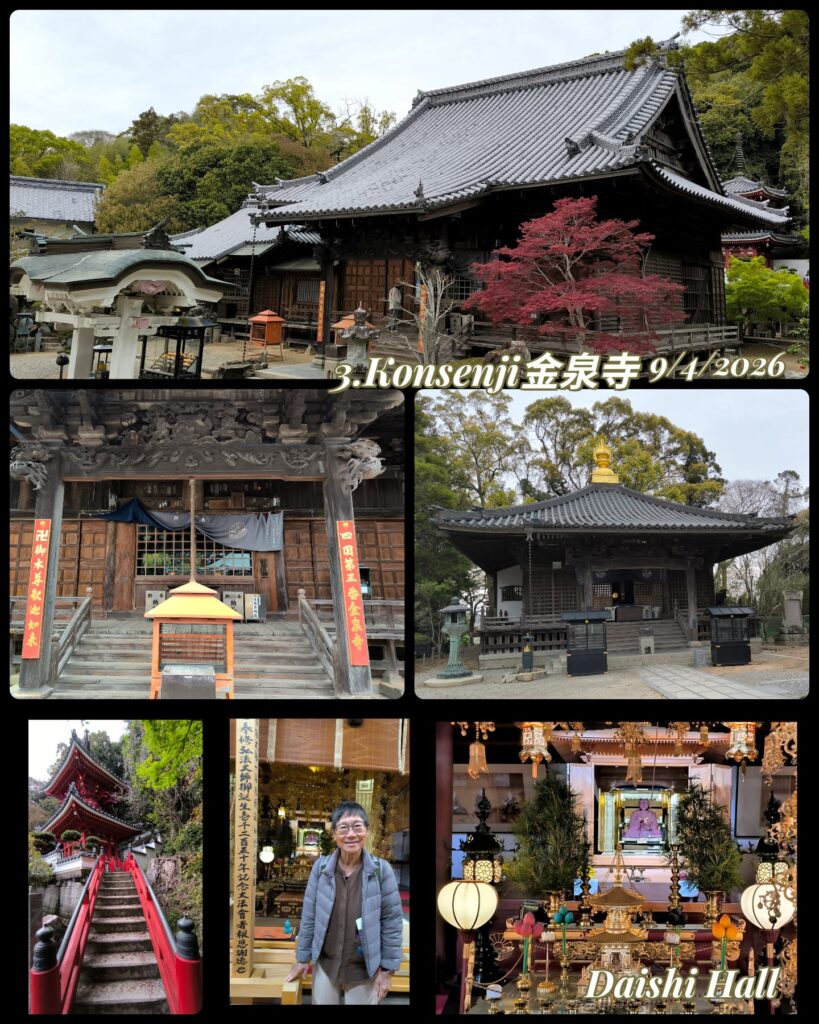
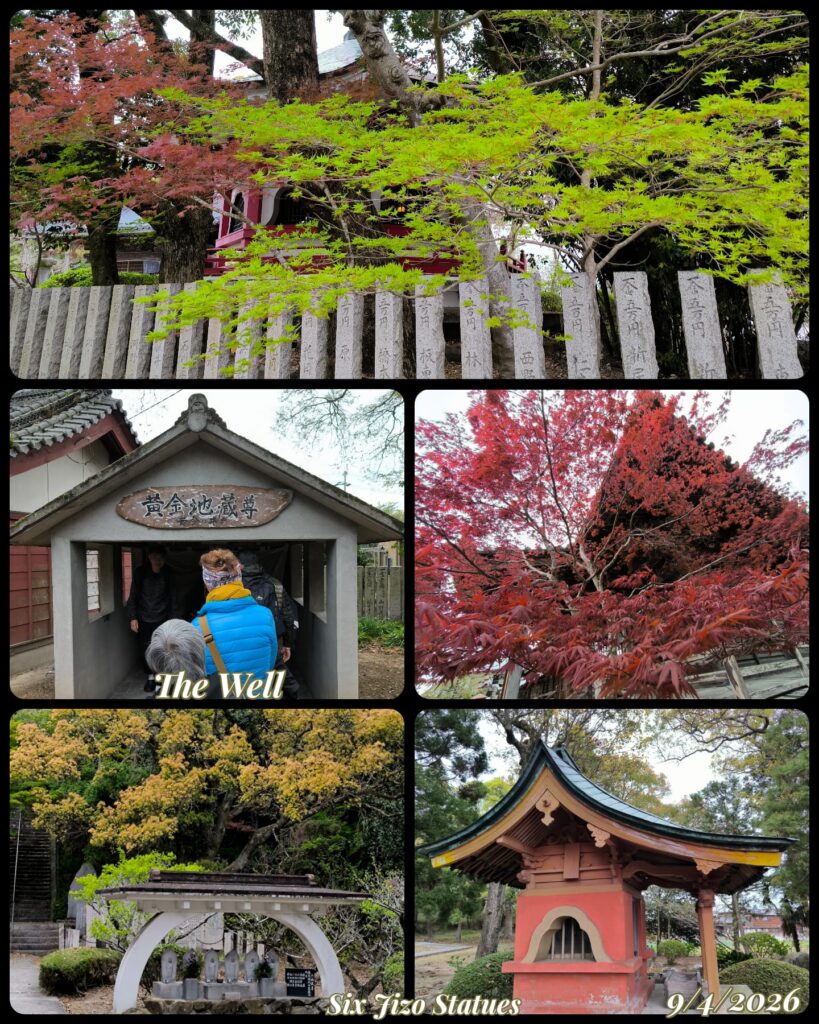
The origin of this temple was related to a well that Kobo Daishi had dug to help villagers suffering from drought. We all tried to look into the deep well to see whether we could see our face which is a sign of good health! Here I saw and noticed for the first time six statues of Jizo in a row in the garden. I had time to explore the temple grounds for half an hour while the fit hikers walked to the next temple.
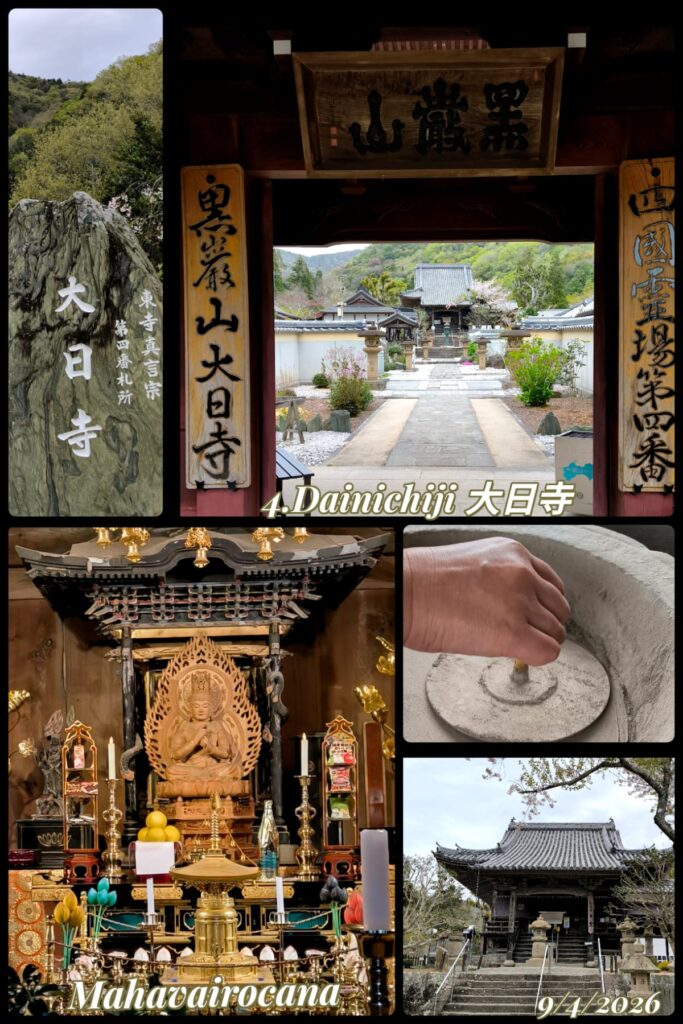
Temple 4-Dainichiji (815) with the following Pilgrim’s Song-
The long night of the mysterious white moon
A short dark sleeve in the black valley
While waiting for the hikers to arrive, I had time to take a close look at the 33 Kannon (Avalokitshvara) statues, which are replica of the statues of the 33 temples under the Saigoku Kannon Pilgrimage. These statues are over 200 years old. The temple closed at 5pm. We were late and by the time we reached the Daishi Hall, we were not allowed to place candle and incense outside the hall.
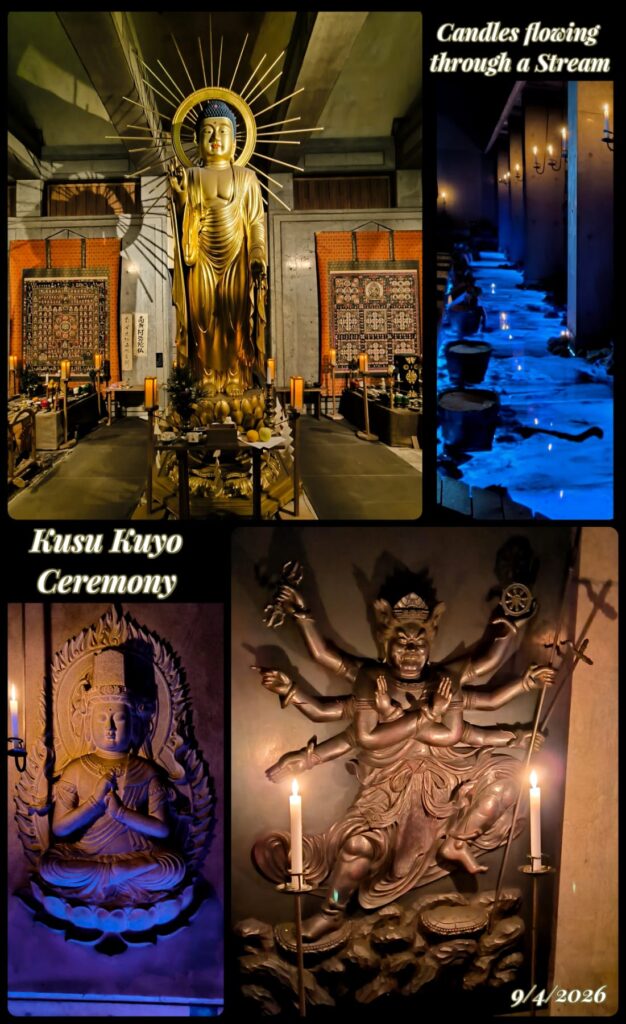
We returned to Anrakuji for dinner and attended a special “Kusu Kuyo”, a ceremony for ancestral remembrance. We first entered the Main Hall where the abbot chanted. Then he led us through a hidden door into a dark cave (the Kanjodo Cave) with majestic statues of Buddha, Bodhisattvas etc on the wall illuminated by candlelight and a dreamlike blue glow of the flowing stream. There is also a large Fudo Myo-o “Immovable Wisdom King” statue. We were told to lit the candle and place it in the flowing stream, Then in the middle of the hall was the place where we put the slip of paper with names of our ancestors/family members who have died. I have heard about this unique Shingon ceremony from friends who had temple stay in Mt. Koya. Afterwards, we passed through the Daishi Hall where we could touch Kobo Daishi and placed our hands on parts of our body that hurt.
Day 4 April 10 Temples 6, 20 & 22
The original plan for today was to visit Temple 20-Kakurinji with light hiking and picnic lunch near the temple. But as it was raining, we changed plan and visited Temple 22-Byodoji which has a drum in the main hall that Hiro could perform drumming and chanting the Heart Sutra.
Before leaving, we first performed rituals at Temple 6- Anrakuji (815). The Pilgrim’s Song is as follows-
The battle of knowledge in the world of Kari
Look for protection from the Land of Ease
As I had attended the ceremony in the Main Hall the night before and walked through the cave to the Daishi Hall, I already felt familiar with the temple grounds. Anyway, it was wonderful to spend two nights in this temple.
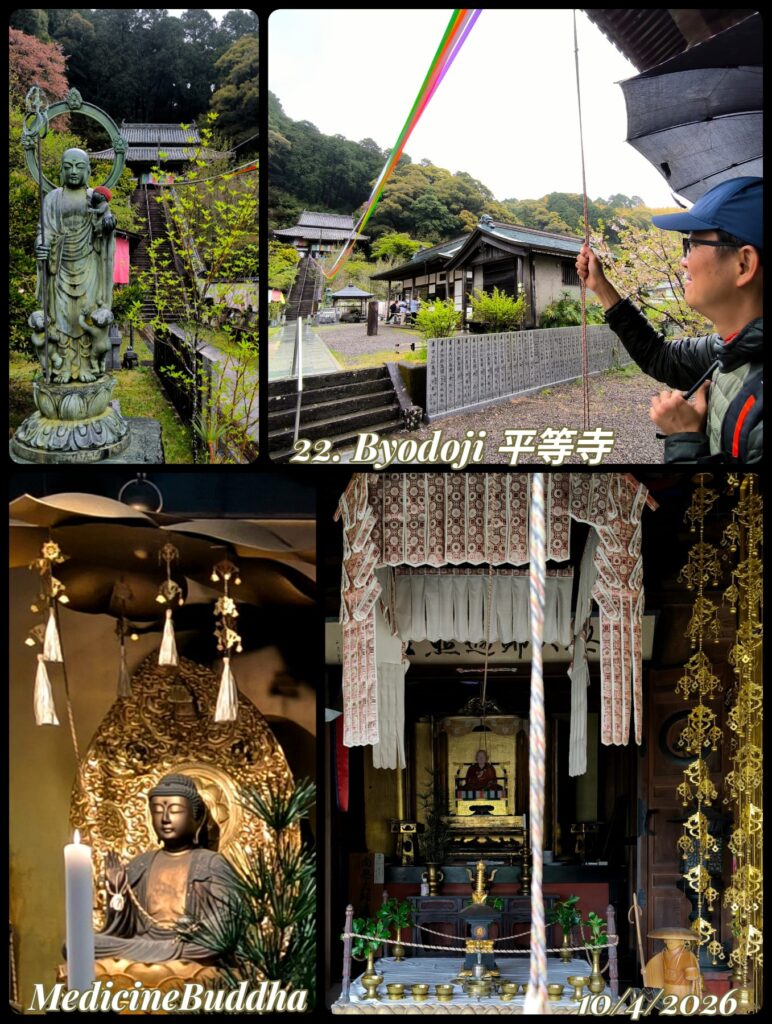
We made our way to Temple 22-Byodoji (814) known for its “holy well” located inside the Main Hall. Its Pilgrim’s Song is-
When I hear ‘equal equality’
I see a new and wonderful Buddha
After chanting the Heart Sutra in Japanese inside the Main Hall, Hiro sat in front of the drum and chant the Sutra again three times, each time faster than the previous one. Impressive and inspiring! I also liked the ceiling of the temple with traditional painting panels.
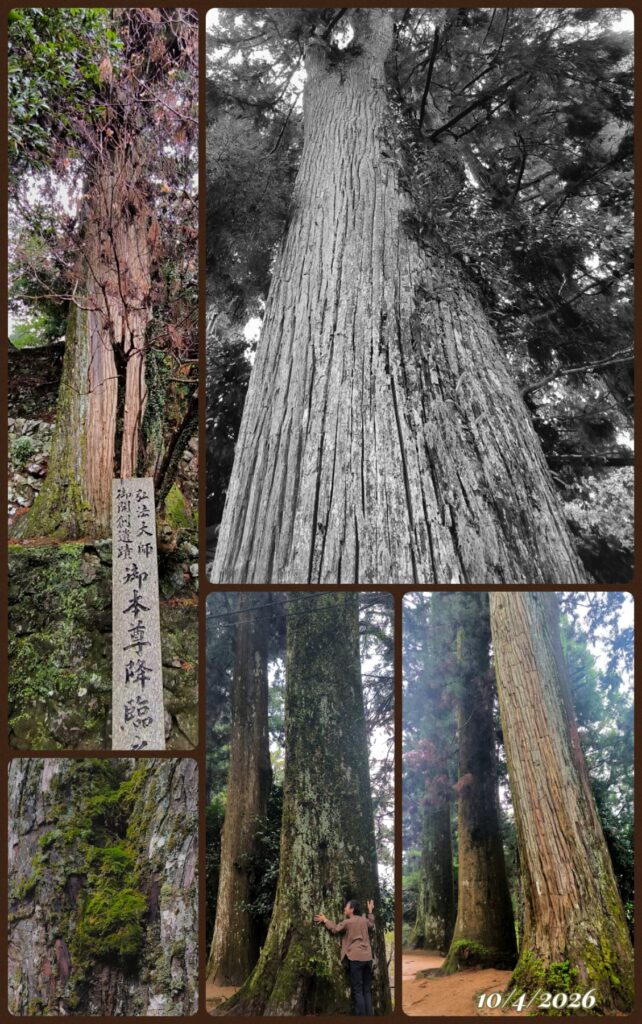
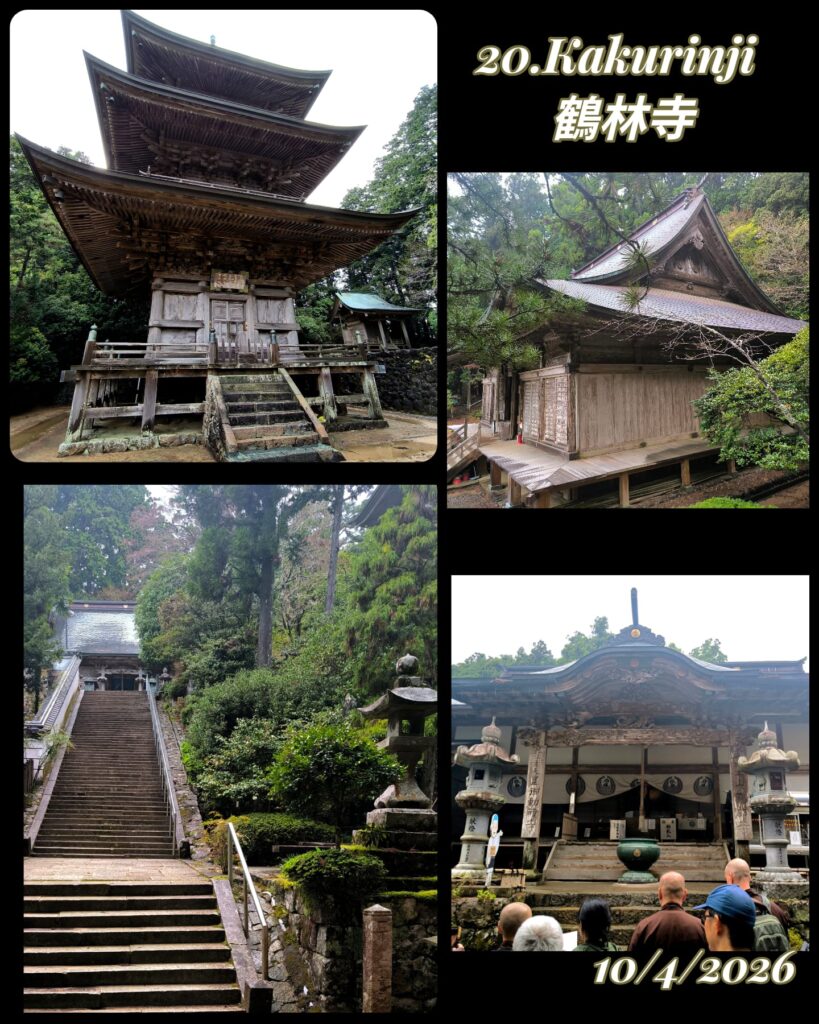
After lunch, we proceeded to Temple 20-Kakurinji (798) located at the top of Mt. Washigao at 470 m elevation. Rain had stopped and it was atmospheric when we drove through a forest cloaked in mist. We had a tranquil uphill walk to the temple gate passing by captivating giant cedar, cypress and pine trees, some over 1,000 years old. The name of this temple came from a legend which says that when Kobo Daishi was engaged in Buddhist training, two white cranes spread their wings and landed on an old cedar tree, seemingly to protect a small golden Jizo. Here one finds the only three-storied pagoda with distinctive railings that was completed in 1827, and the oldest cobblestone in the Tokushima Prefecture.
The Pilgrim’s Song is as follows-
At the sign of the forest of cranes
The Great Jizo king of heaven appears
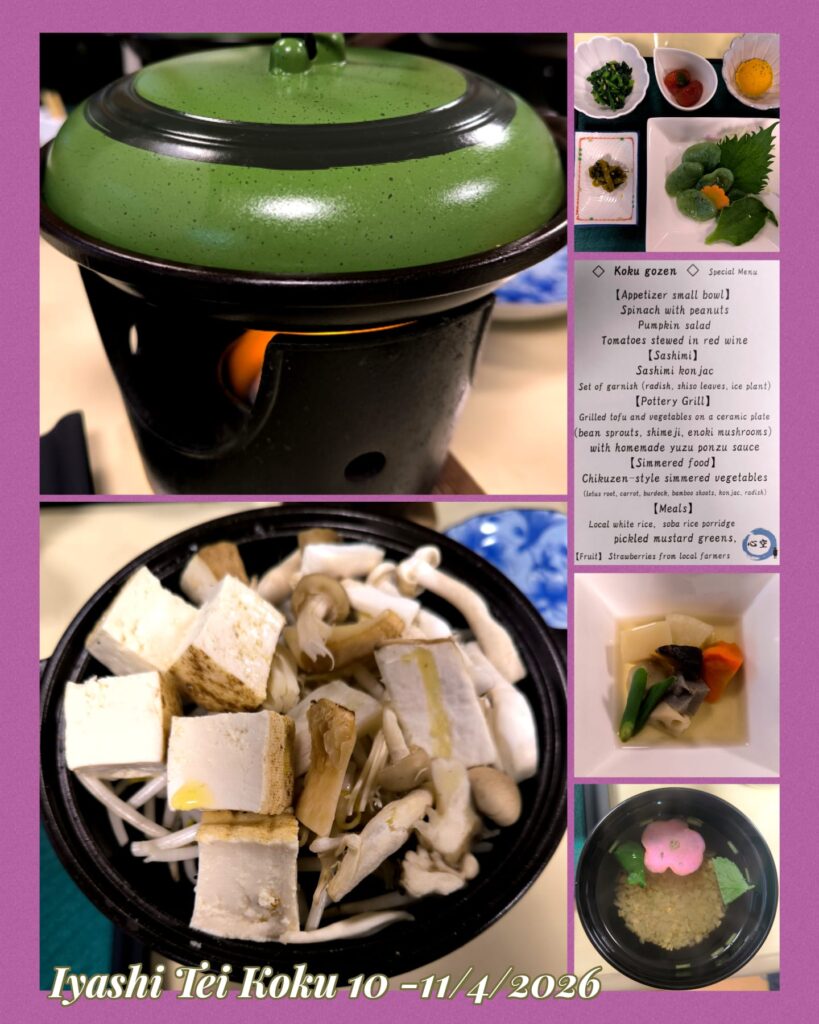
Then we proceeded to Iyashi Tei Koku right next to the Tairyuji Ropeway (2,775m in length and opened in 1992), where we stayed two nights. This time, I shared a room with Janet (an American) and Alexandra (a Swiss). We had dharma talk and sharing with Br Phap Xa on attachment to our ancestors and emotions in the evening.
Day 5 April 11 Temple 21
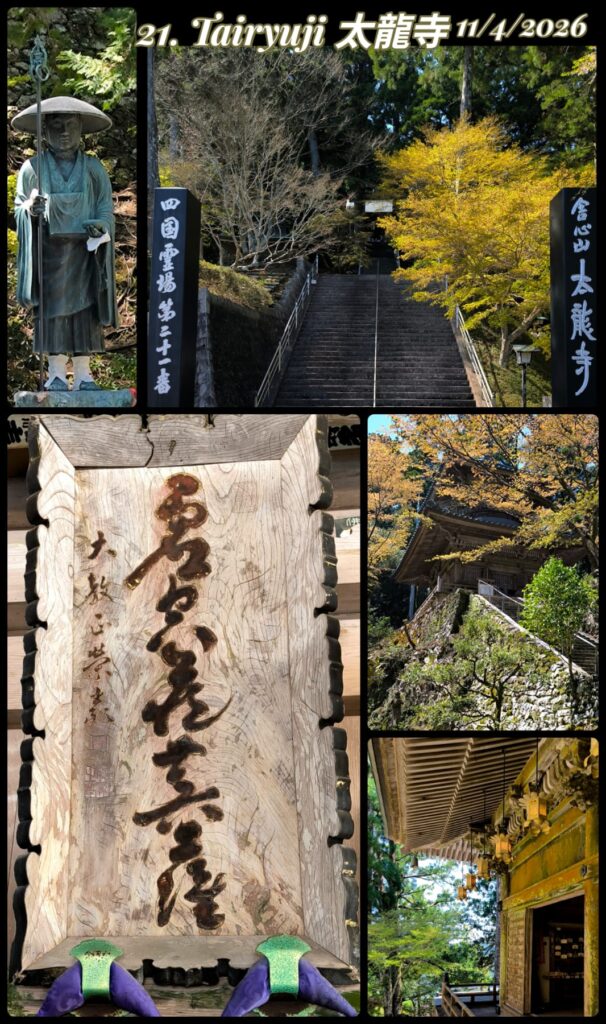
Temple 21-Tairyuji (793) with the following Pilgrim’s Song–
The Great Dragon eternal in Iwaya
Holding the heart for protection
Temple Tairyuji called “the Koya of the West” for its long history and its high elevation (600m), is where Kukai had his early ascetic training. It is one of my favourite temples when I first set foot on the henro in 2012. This temple is one of the few training facilities where Gumonji-bo the demanding 100-day ritual Kukai practiced in his youth, is still performed. During these 100 days, a practitioner has to chant a mantra (“Ku Ku Kuuzo Bosatsu”) one million times to strengthen his memory and understanding of the Akashagarbha Sutra.
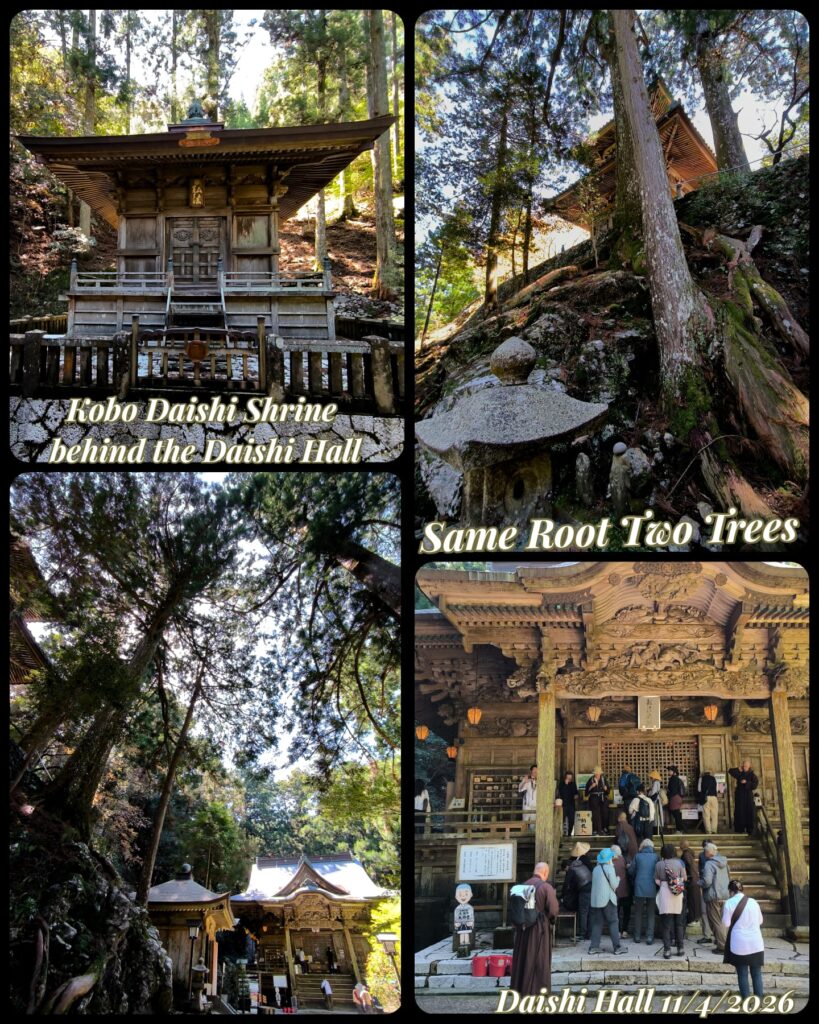
We had an enjoyable day beginning with meditation at 6am. At 9 am fit hikers departed for a two-hour hike to the temple. Given my hip problem, a strenuous hike is impossible. I therefore stayed behind with others to have dharma sharing with Sis Tu and to take the Ropeway (1,300 yen each way) at 11:40 am. We met up with the hikers at noon and performed the rituals in the Main Hall and Daishi Hall together. We had a nice bento after the visit.
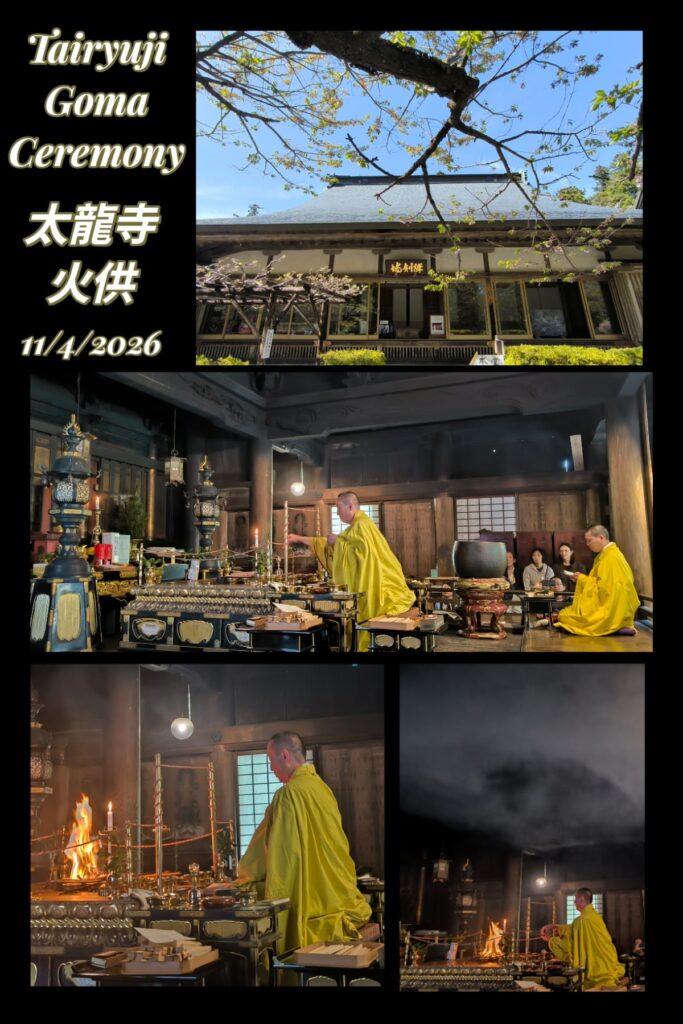
Hiro who knows the abbot of the temple, arranged a Goma (a fire ritual for purification and wishes) for us. Fire symbolizes the wisdom of the Buddha. We first wrote our prayers/wish on a wooden stick with our name and age. We sat around the platform in a hall and watched the abbot chanting and using mudras while his assistant was drumming. The abbot burned consecrated wooden sticks (gomagi) in a sacred hearth to symbolize the destruction of negative energies, ignorance and worldly desires, often to honour Fudo Myo-o. He also added offerings including rice, grains, and medicine herbs to the fire. It was the first time I participated and watched this ceremony.
It was after 3:10 pm when the group started hiking to the steep and rocky precipice Shashingatake located on the mountain slope approximately 600m southwest of the main temple. This is the spot where Kukai practiced the Gumoniji-bo. The group planned to take the 4:20 pm downhill ropeway. As the walk would take about 20 minutes one way, I gave up the idea to visit this spot. Instead, I took the 3:30pm ropeway with Sue and Peggy back to the lodge. It was a pity! But it might give me an excuse to visit the temple for the third time as I still have an unfinished business here. Once back in the lodge, I went straight to the onsen for a nice soak! We had our second total relaxation session with Sis Trai playing the violin. As Hiro would leave us the following day, he volunteered to sing us a few Japanese songs. He is actually a musician by training.
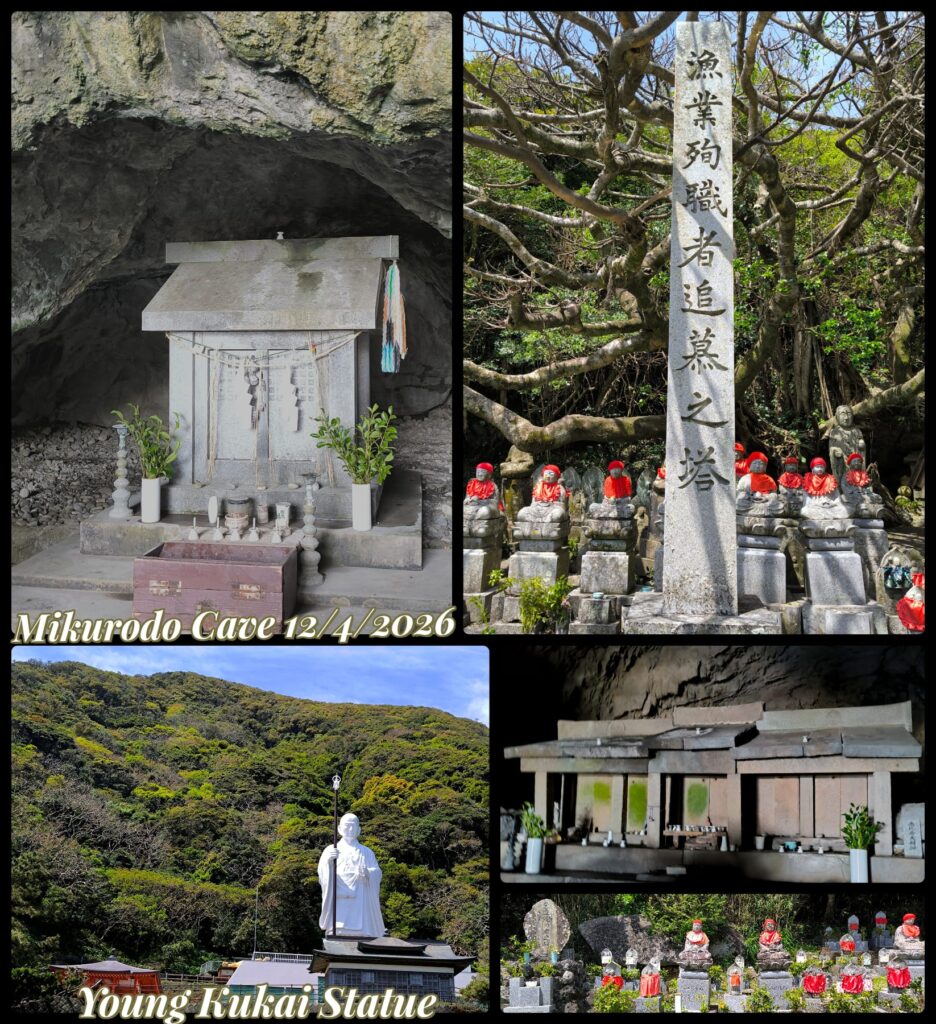
Day 6 April 12 Muroto Cape & Temple 24
Today’s Pilgrim Song is –
Shining star out of Toji Temple
Double if I am lost
We drove mainly along route 55 for about two hours to reach the Mikurodo Cave with a quick photo stop of the Statue of Young Kukai. This was my third visit to this cave where Kukai stayed during his ascetic training. When he chanted “Ku Ku Kuuzo Bosatsu” a million times here, Myojin, an incarnation of Ku Kuuzo Bosatsu, approached from the sky, plunged into his mouth and he was enlightened.
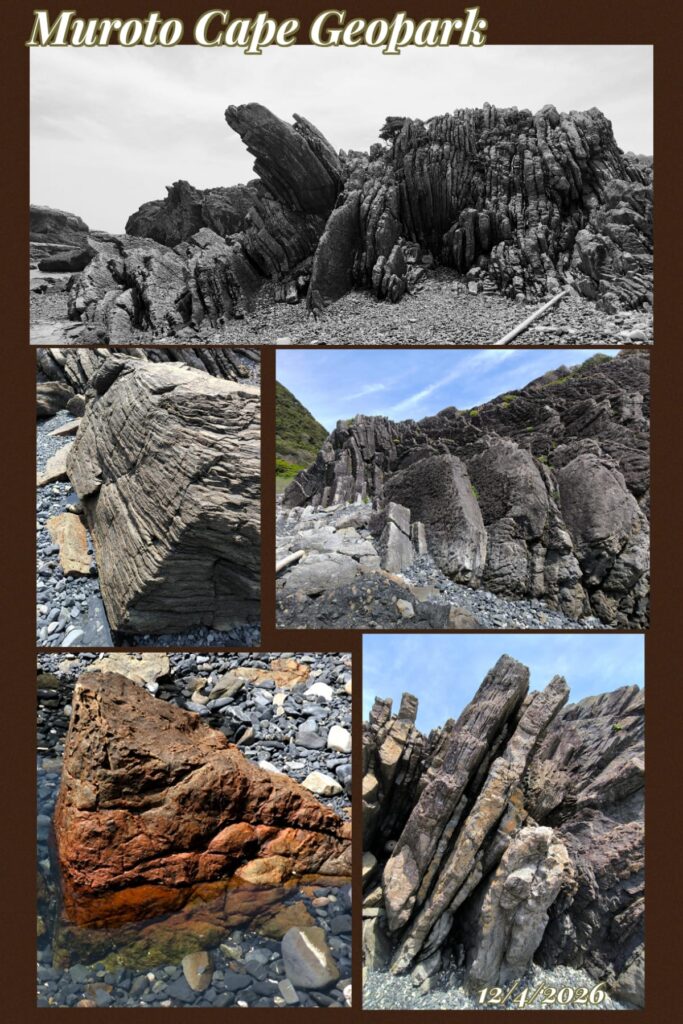
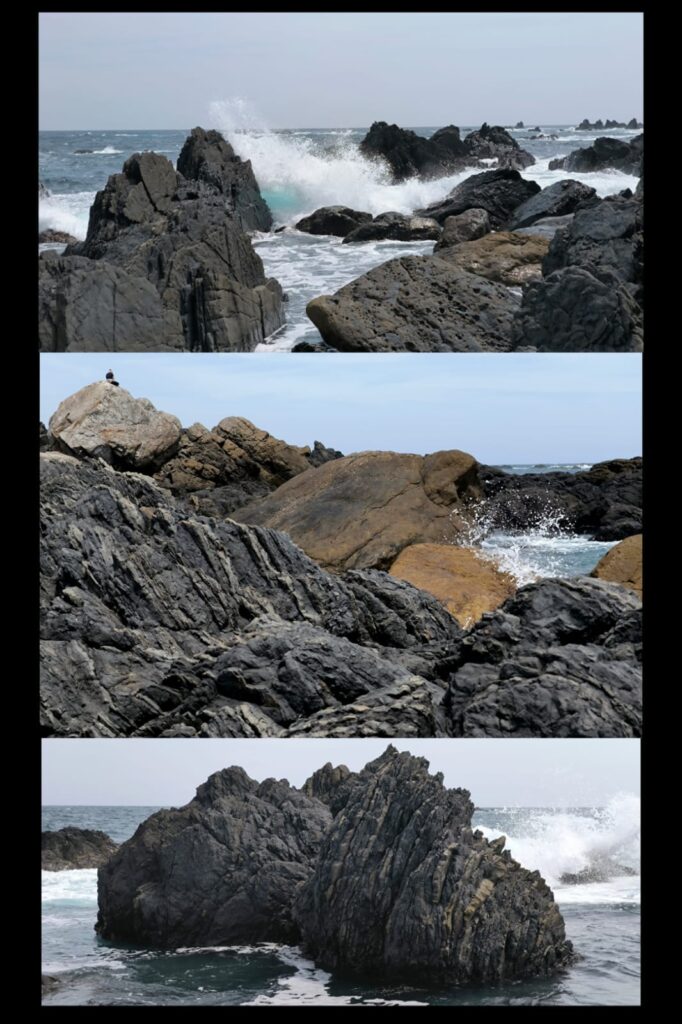
Then we explored the impressive Muroto UNESCO Global Geopark for over an hour and a half. Here the coastline has been raised by tectonic forces to over 100m above sea level. There are traces of massive earthquakes and uplifts. I had a lovely picnic lunch by myself looking at the expansive sea, and rugged coast while listening to the lashing waves.
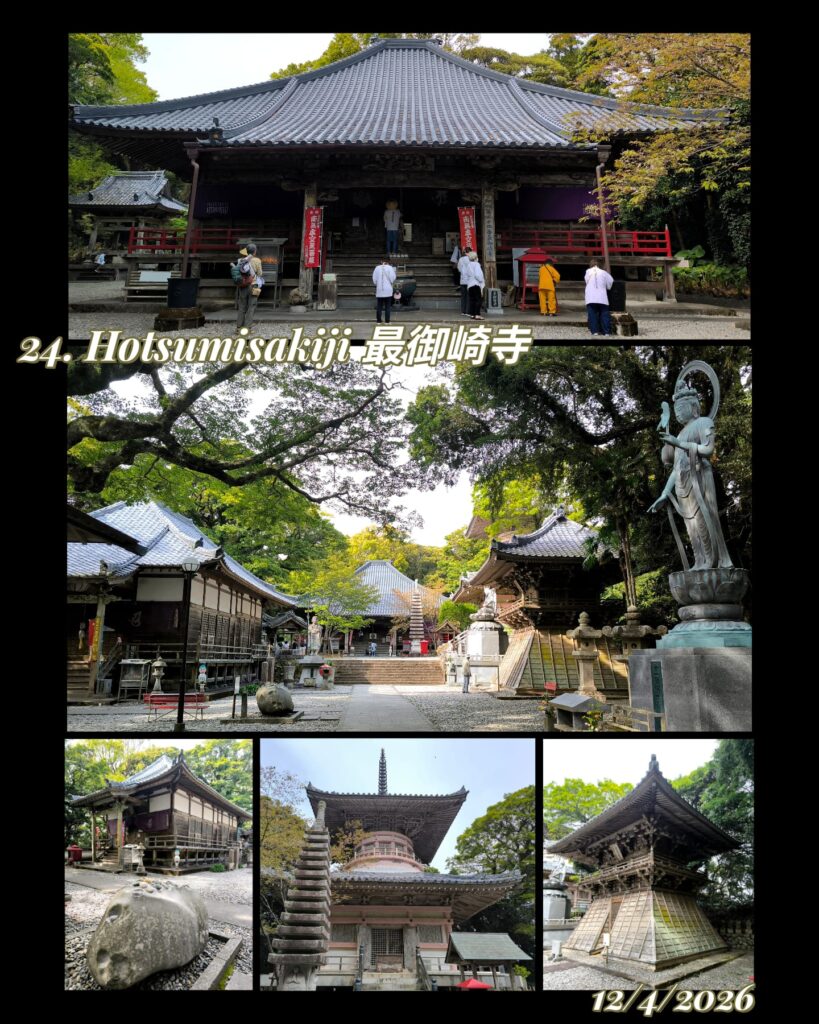
After lunch, we drove a short distance to Temple 24-Hotsumisakiji (807) with the following Pilgrim’s Song-
Shining star out of Toji Temple
Doubtful if I am lost
The temple located at the tip of Cape Muroto is the first of the pilgrimage temples in Kochi prefecture. It was venerated by emperors and had flourished with donations from warlords and feudal lords. Hence, its temple grounds are serene and beautiful. After performing the rituals, we walked to the lookout below with panoramic views of the rugged coastline of the Muroto Peninsula.
We had an hour-long bus ride to Mecure Kochi Tosa Resort and Spa. During the bus ride, we asked Hiro various questions about himself, his family and the henro. I through Reo asked why he abandoned his career as a musician to become a Sendatsu. Then he told his moving story as a struggling young musician in Tokyo after his study and eventual return to his birth place near Temple 1. He set off on his first henro on foot at the age of 21 when he was suffering and at a loss. During the henro, he met and was moved by nice people he met. This was a trans-formative journey. Then by good luck and under the guidance of the father of his good friend, he began his career as a sendatsu. We were sorry to say good-bye to Hiro and wished him good luck. I shared a room with Alexandra. I stayed in this hotel in 2024 and enjoyed both the food and the onsen. I was also glad to be able to sleep in a proper bed instead of on tatami as I have problem kneeing and getting up from the floor.
Day 7 April 13 Makino Botanical Garden & Temple 31
The original plan was to visit the Makino Botanical Garden for an hour followed by two temples in the afternoon. The planning team decided it would be better to spend two mindful hours walking in nature and visit Temple 31 in the afternoon. This was indeed a wise decision.
The Makino Botanical Garden was established on Mount Godasisan in 1958 to honour the outstanding achievements of Dr. Makino Tomitaro (1862-1957), a native of Kochi who is widely regarded as the “Father of Japanese Plant Taxonomy”. Throughout his lifetime, he collected over 400,000 plant specimens and assigned scientific names to over 1,500 plant species. He published the enduring “Makino’s Illustrated Flora of Japan”.
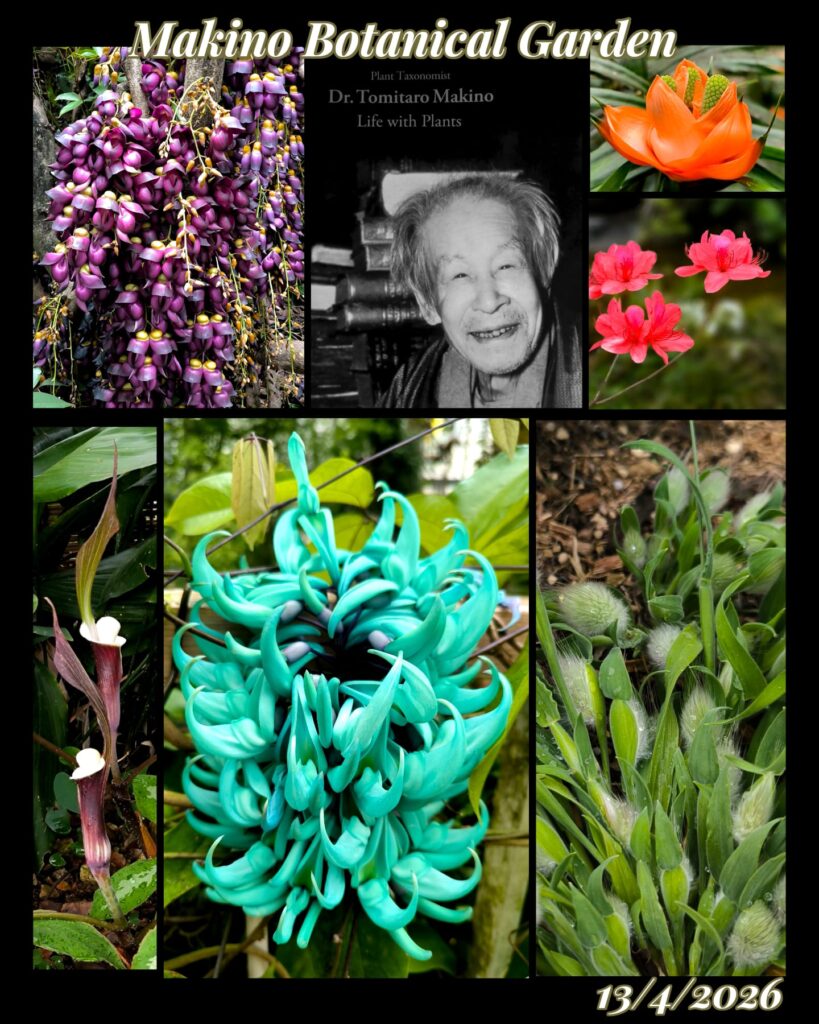
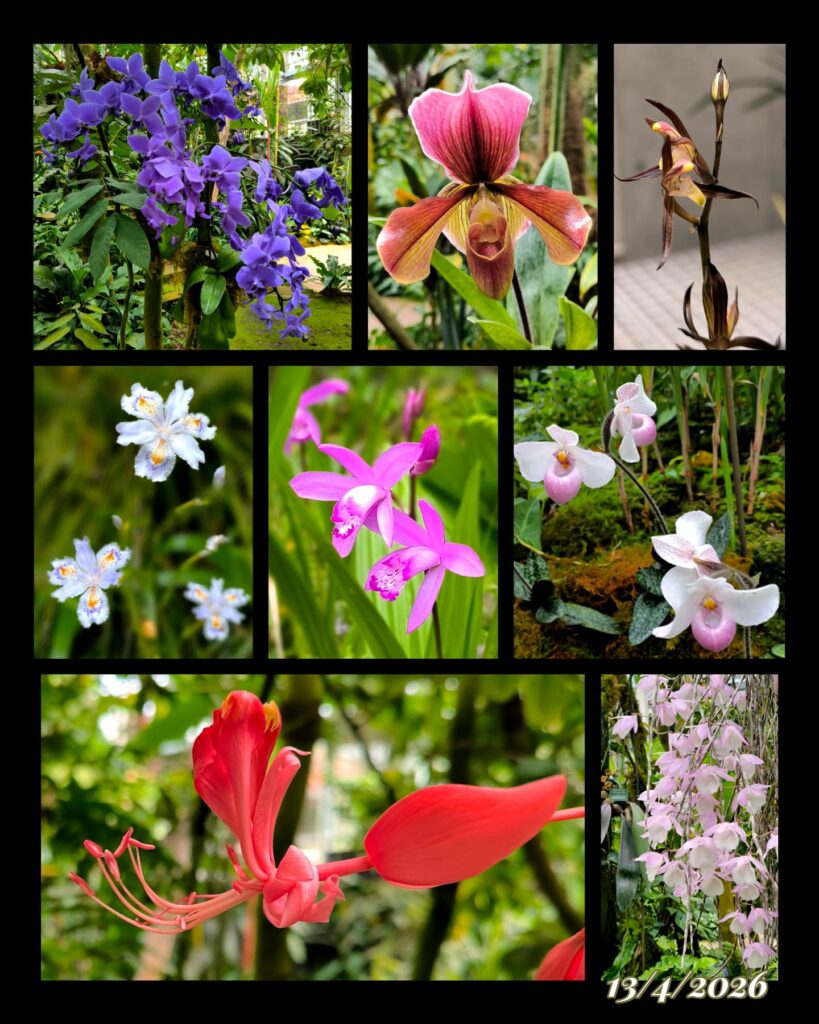
The garden with an area of some 8 hectares of undulating terrain showcases over 3,000 species of wild and cultivated plants associated with Dr. Makino. I walked mindfully on my own and spent time in a gallery looking at paintings and the Memorial Hall. When I indicated my interest in watching a 10-minute video, a staff kindly arrange the English version for me to watch by myself! I learn more about Dr Makino, plants he had named and, the garden in four seasons. I ended my walk at the Greenhouse. I like the garden and love to return one day.
Then we had a lovely big wooden “Lunch Box” in a nice restaurant in Kochi City. We took the same way back to Mount Godasisan to visit Temple 31-Chikurinji (724) with the following Pilgrim’s Song-
Hail the mother of the Buddha of Monju
If I am a child, I want milk
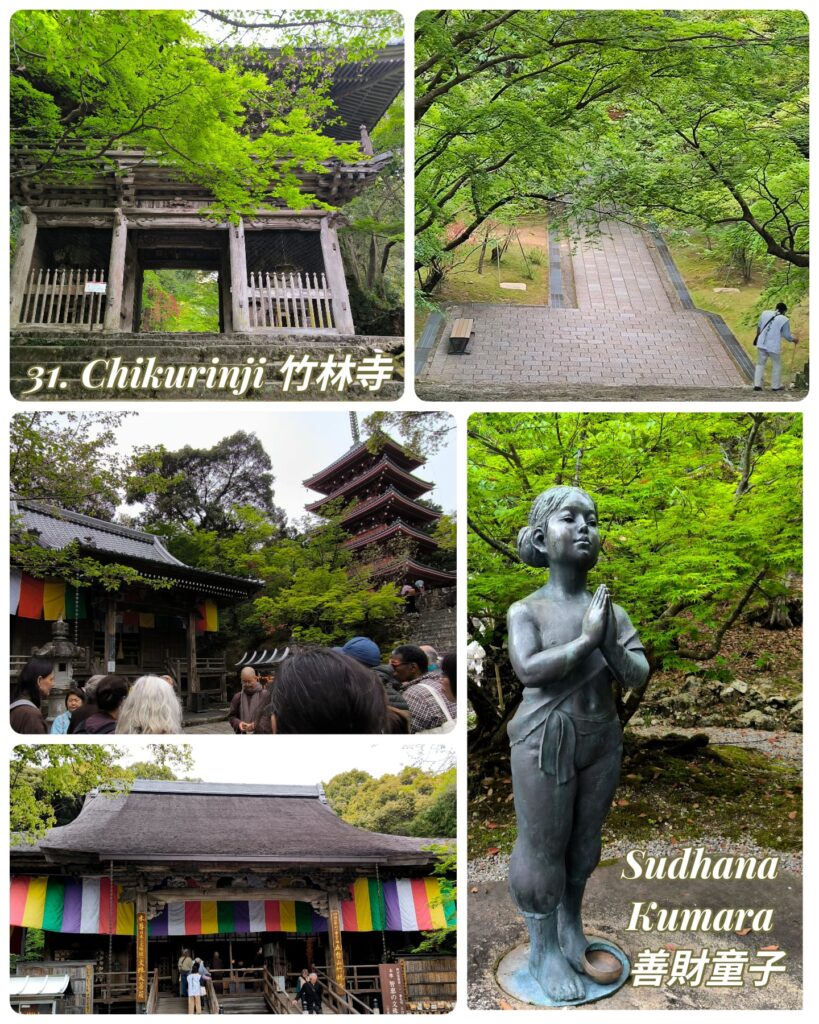
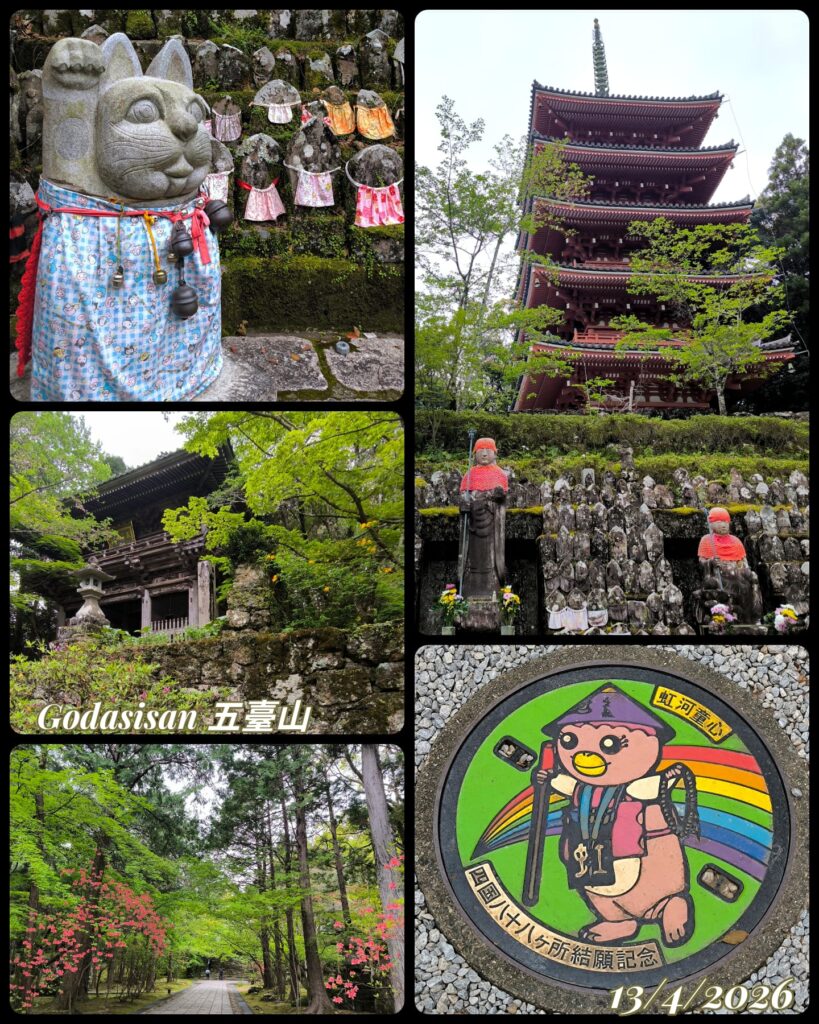
It is the only temple out of the 88 temples that enshrines Manjusri (Monju Bosatsu). Kirido Monju in Kyoto and Abe Monju-in in Nara are the only two other temples in Japan enshrining Manjusri as their principal deity. I fell in love with this temple on my first visit in the fall of 2023 and longed to return one day. My dream has come true: I enjoy walking mindfully and slowly through the serene temple grounds with a five-storied pagoda, garden, thick bamboo groves, moss-covered approach, and remains of ancient walls.
We drove to Tosa Ryu Onsen Sanyoso by the Kaamenohara Beach where I had dinner in 2023. It is a lovely Japanese hotel with onsen. I shared a nice room with sea view with Gesina. We had a sumptuous dinner again and a lazy night when I rushed to wash my clothes.